


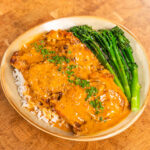


Savor the bold, peppery sizzle of Black Pepper Beef Chow Mein—tender beef meets wok-tossed noodles in every smoky bite!
Jump to:
What is Black Pepper Beef Chow Mein
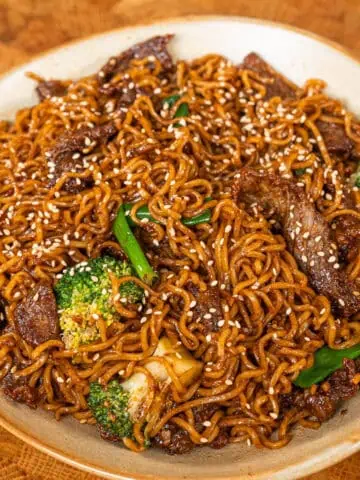
Black Pepper Beef Chow Mein is a bold, stir-fried noodle dish that combines juicy beef strips, springy chow mein noodles, and a peppery umami-rich sauce. The black pepper packs a punch, while oyster sauce, soy sauce, garlic cloves, and aromatics like ginger and spring onions elevate this dish into a weeknight favorite with takeout-level flavor that feels homemade and incredibly satisfying.
Where is Black Pepper Beef Chow Mein from?
This dish hails from Cantonese cuisine, originating in Guangdong, China, where stir-fry mastery, high-heat cooking, and bold, well-balanced flavors are celebrated with every chopstick twirl and savory slurp. Over time, it made its way into Western-Chinese kitchens, becoming a beloved comfort food across North America, the UK, and Southeast Asia, thanks to its versatility, quick preparation, and deeply seasoned profile.
How to Make It
First, marinate your thinly sliced beef with light soy sauce, sesame oil, garlic salt, and cornstarch for at least 15 minutes to tenderize the meat and infuse it with flavor. While it soaks up all that goodness, boil your chow mein noodles till al dente, rinse them under cold water to halt the cooking process, and set aside until needed.
Next, quick-fry your marinated beef strips in a hot wok until they’re just seared and still juicy, then remove them promptly so they stay tender and don't overcook. Sauté onions, garlic, and ginger in hot oil until fragrant, toss in vegetables like carrot matchsticks or beansprouts, add back the beef and noodles, then pour over your savory, peppery sauce. Stir-fry everything together until it’s glossy, fragrant, and coated with rich layers of flavor from edge to edge.
Ingredients
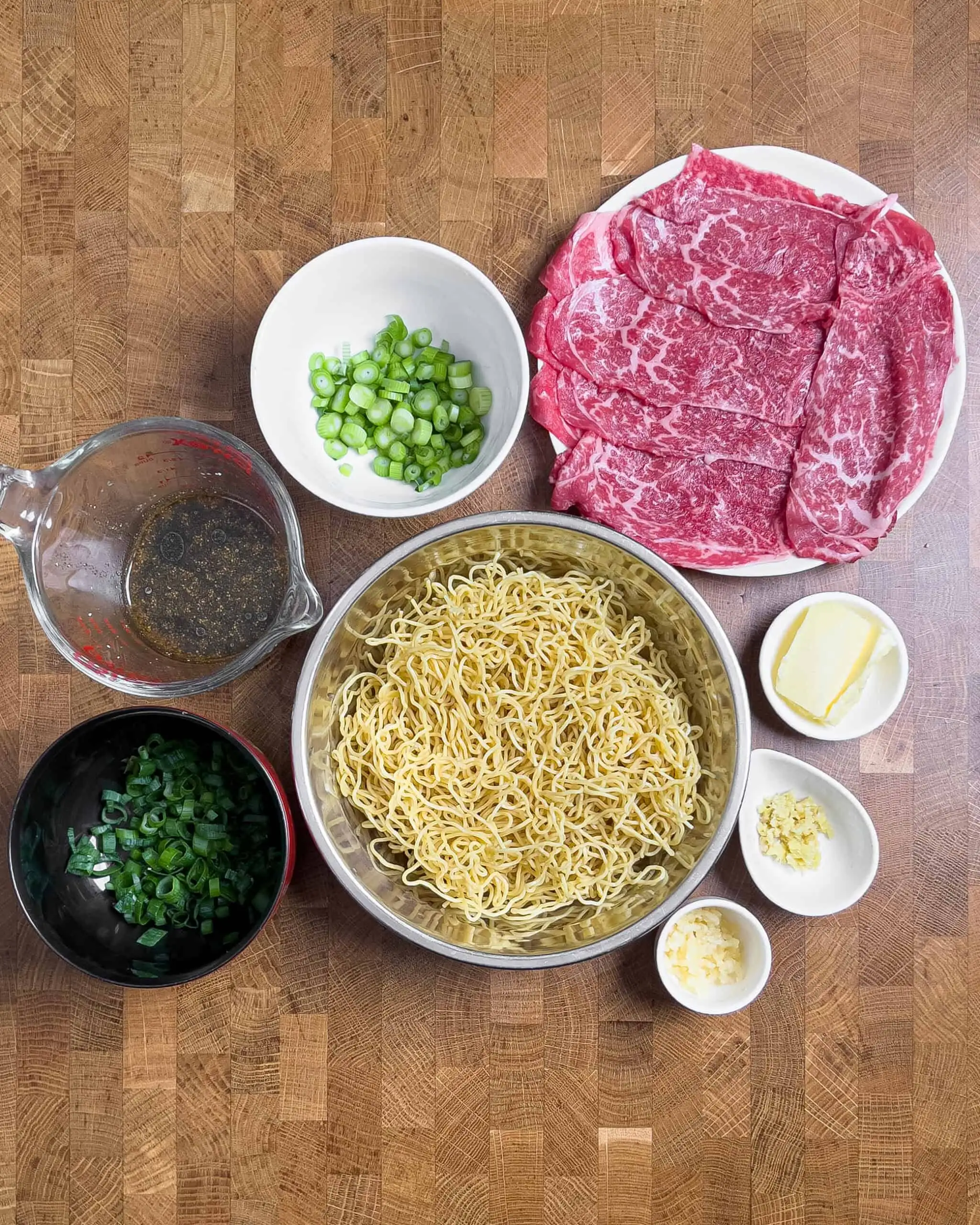
Here’s a rundown of everything you’ll need to whip up a foolproof, flavor-packed Black Pepper Beef Chow Mein—and what each ingredient brings to the wok:
- Chow mein noodles: These give the dish its iconic chewy texture and serve as the hearty base for soaking up all that savory sauce.
- Ribeye steak, thinly sliced (thawed if frozen): A tender, marbled cut that sears beautifully and brings rich, juicy beefy flavor to every bite.
- Vegetable oil or cooking oil: Used to stir-fry everything, this neutral oil ensures even cooking and helps develop that crave-worthy sear.
- Butter: Adds depth and richness, giving the dish a silky, slightly creamy finish that pairs perfectly with the peppery sauce.
- Onion, thinly sliced: Sweet and aromatic, onions caramelize slightly and balance the dish with their mellow sharpness.
- Garlic, minced: A bold base note—this infuses the entire dish with a warm, pungent flavor that makes the sauce irresistible.
- Ginger, minced: Adds a zingy brightness and subtle heat that cuts through the richness of the beef and butter.
- Spring onion, sliced (for garnish): Used fresh at the end, they add a pop of color, crunch, and a lightly sweet, oniony finish.
For the Black Pepper Sauce
- Chicken stock: This is your flavor foundation—it gives the sauce body and umami depth without being too heavy.
- Light soy sauce: Adds salinity and umami; it's the backbone of your seasoning blend.
- Oyster sauce: Brings sweetness and that deep, complex seafood-umami vibe you know and love in Chinese stir-fries.
- Dark soy sauce
This thickens the color of the dish and adds a deeper, more robust soy flavor. - Sugar: Just a touch to balance out all the salty and spicy notes—your secret weapon for a well-rounded sauce.
- Sesame oil: A few drops go a long way, lending nutty aroma and that toasted depth only sesame can provide.
- Coarsely ground black pepper: The star of the show—it delivers the bold, punchy heat that gives this dish its signature character.
- Cornstarch: Used to thicken the sauce so it clings to every strand of noodle and slice of beef.
To Garnish
- Sesame seeds: Lightly toasted, they add a gentle crunch and a nutty aftertaste that complements the stir-fry beautifully.
- Green onion: Fresh, sharp, and grassy—they give the final dish a burst of freshness and restaurant-style finish.
Steps:
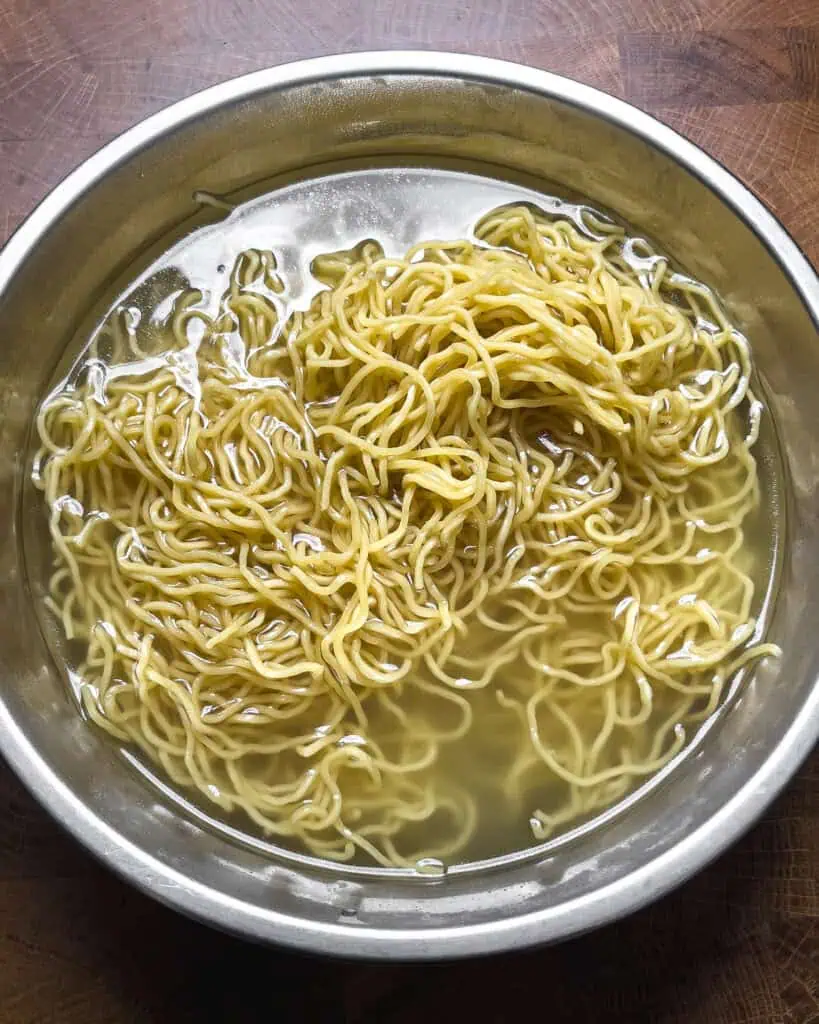
- Cook the noodles: Soak the chow mein noodles according to package instructions. Drain, rinse under cold water, and set aside.
- Make the sauce: In a small bowl, mix together the chicken stock, light soy sauce, oyster sauce, dark soy sauce, sugar, sesame oil, black pepper, and cornstarch. Stir until well combined and set aside.
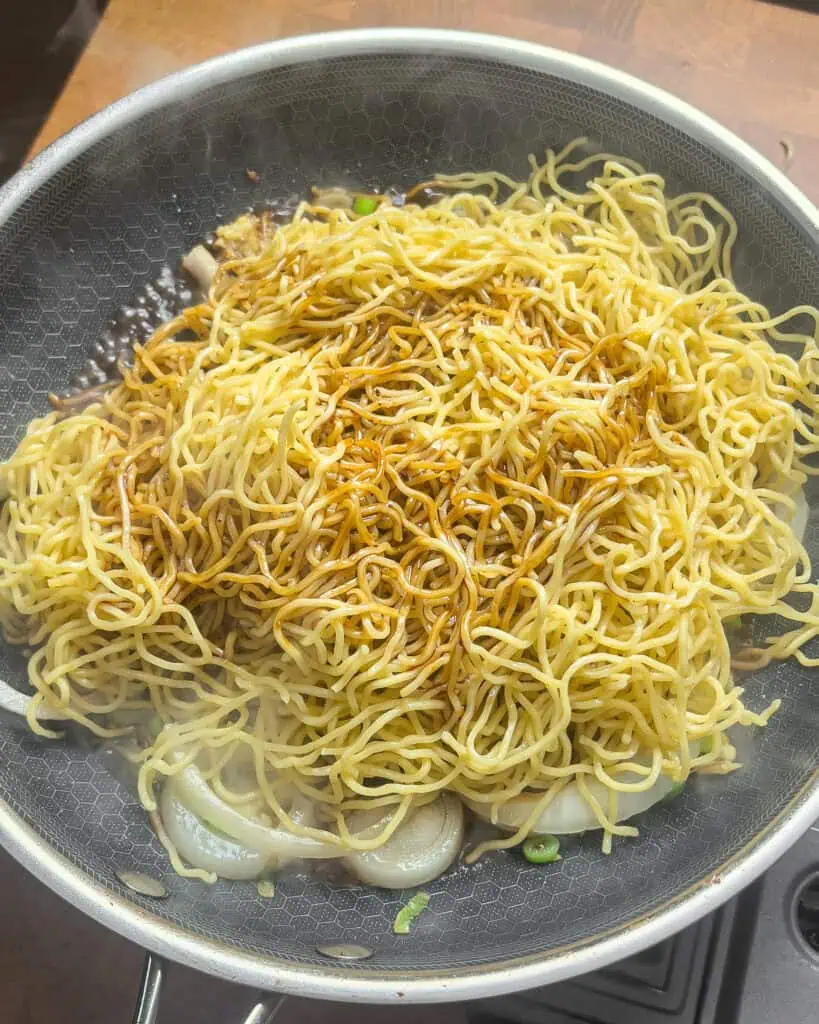
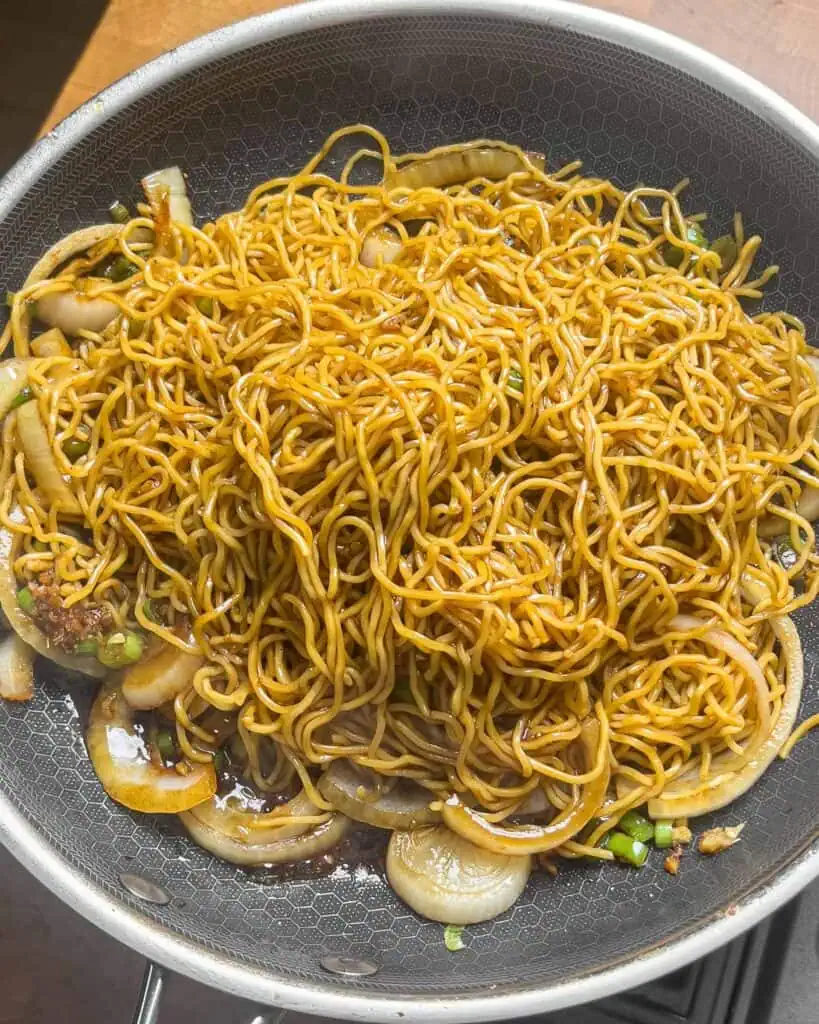
- Prepare the beef: Heat 1 tablespoon of vegetable oil in a large pan over medium heat. Add the thawed, thinly sliced beef and stir-fry until about 80% cooked. Remove from the pan and set aside.
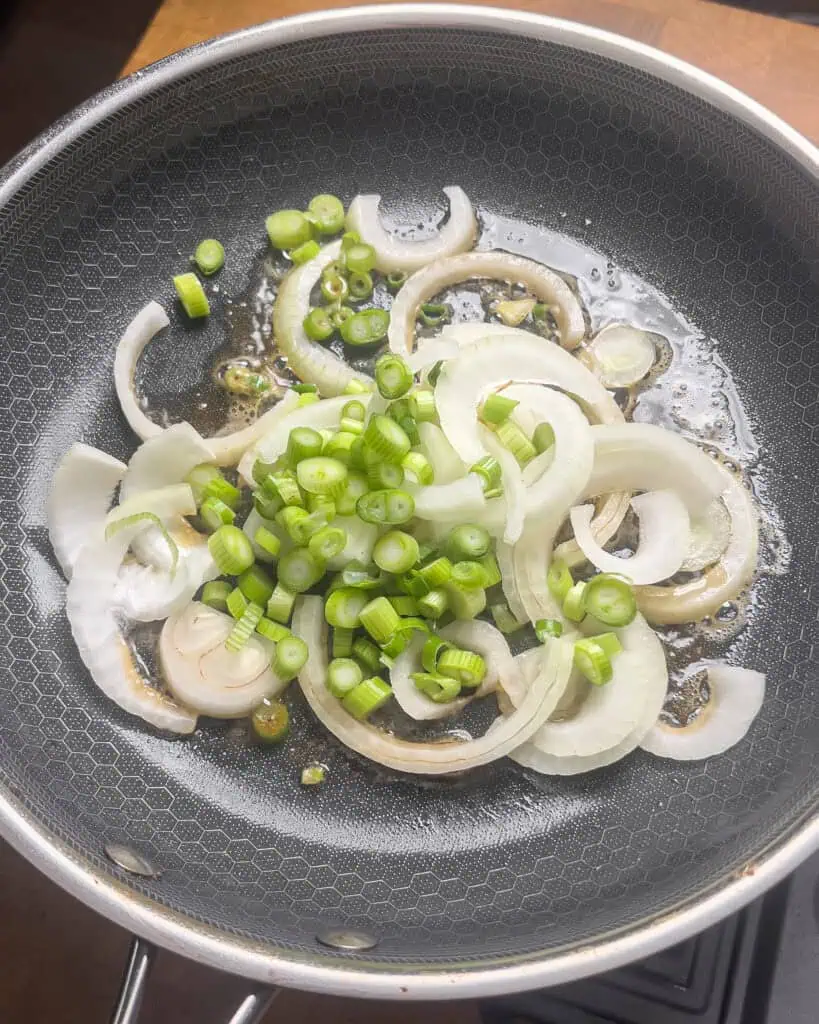
- Stir-fry the aromatics: In the same pan, melt the butter. Add onion, garlic, ginger and white part of spring onions. Stir-fry for 1–2 minutes until fragrant and the onions begin to soften.
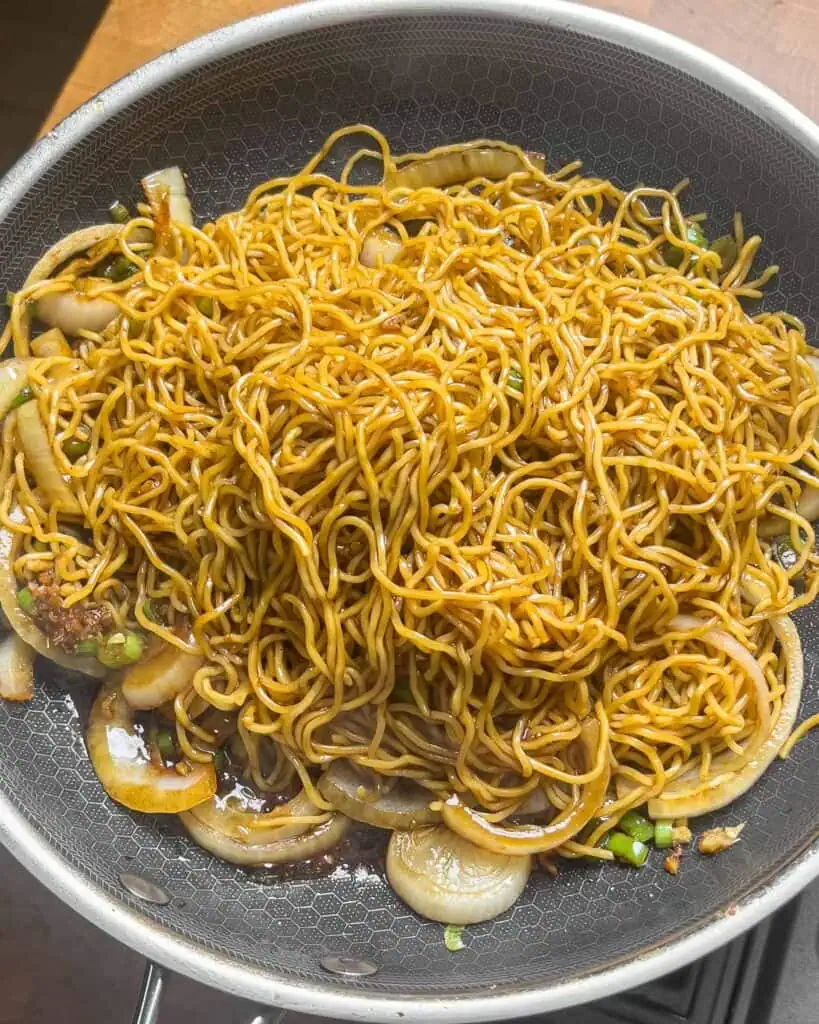
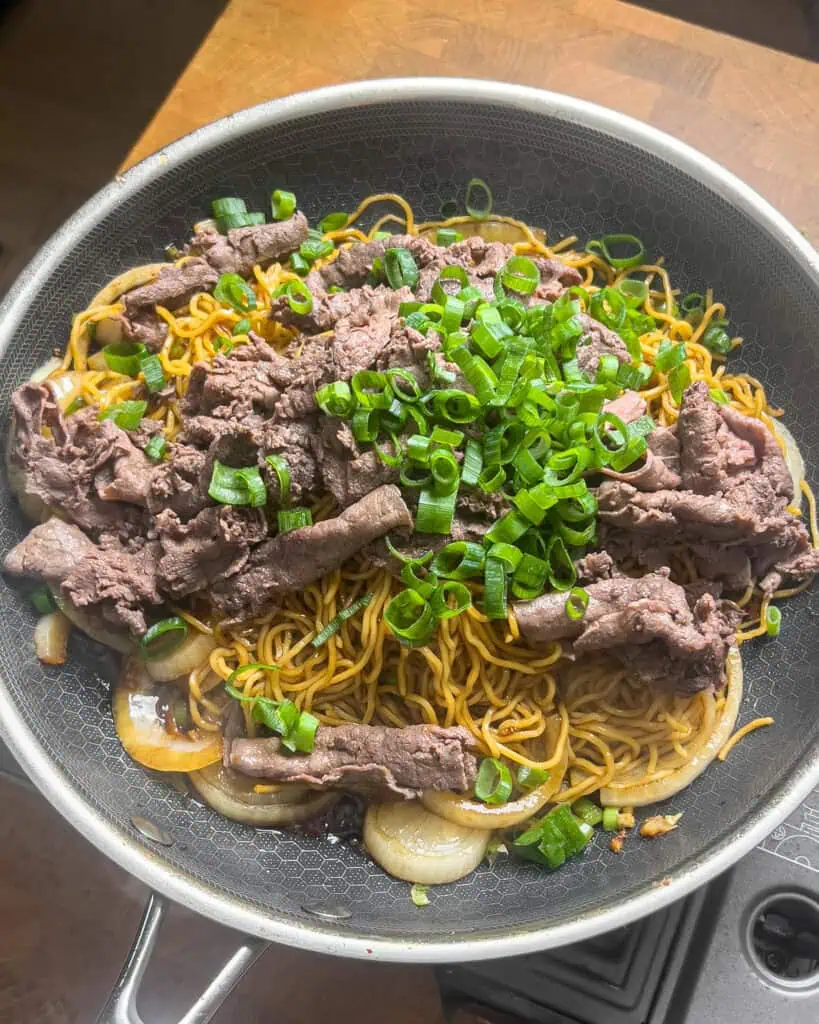
- Combine everything: Add the cooked noodles to the pan followed by the black pepper sauce and toss to combine. Return the partially cooked beef to the pan and add in green part of spring onions. Stir-fry everything together for 1–2 minutes, until the sauce thickens and coats the noodles and beef evenly.
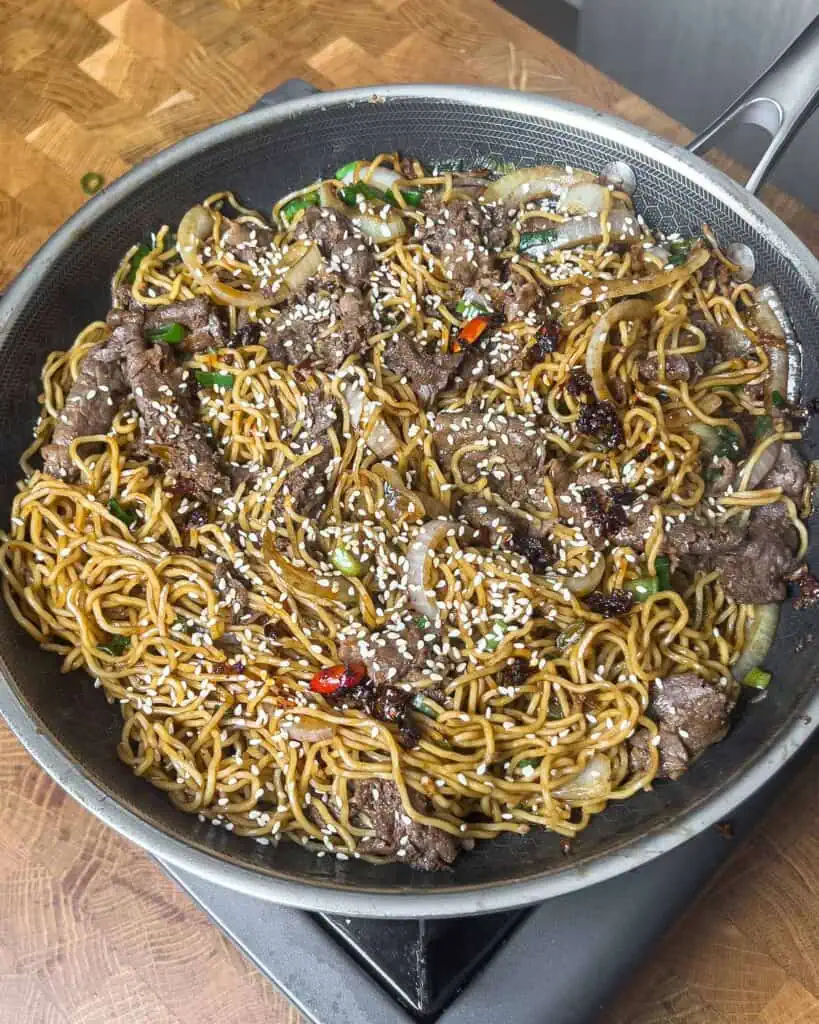
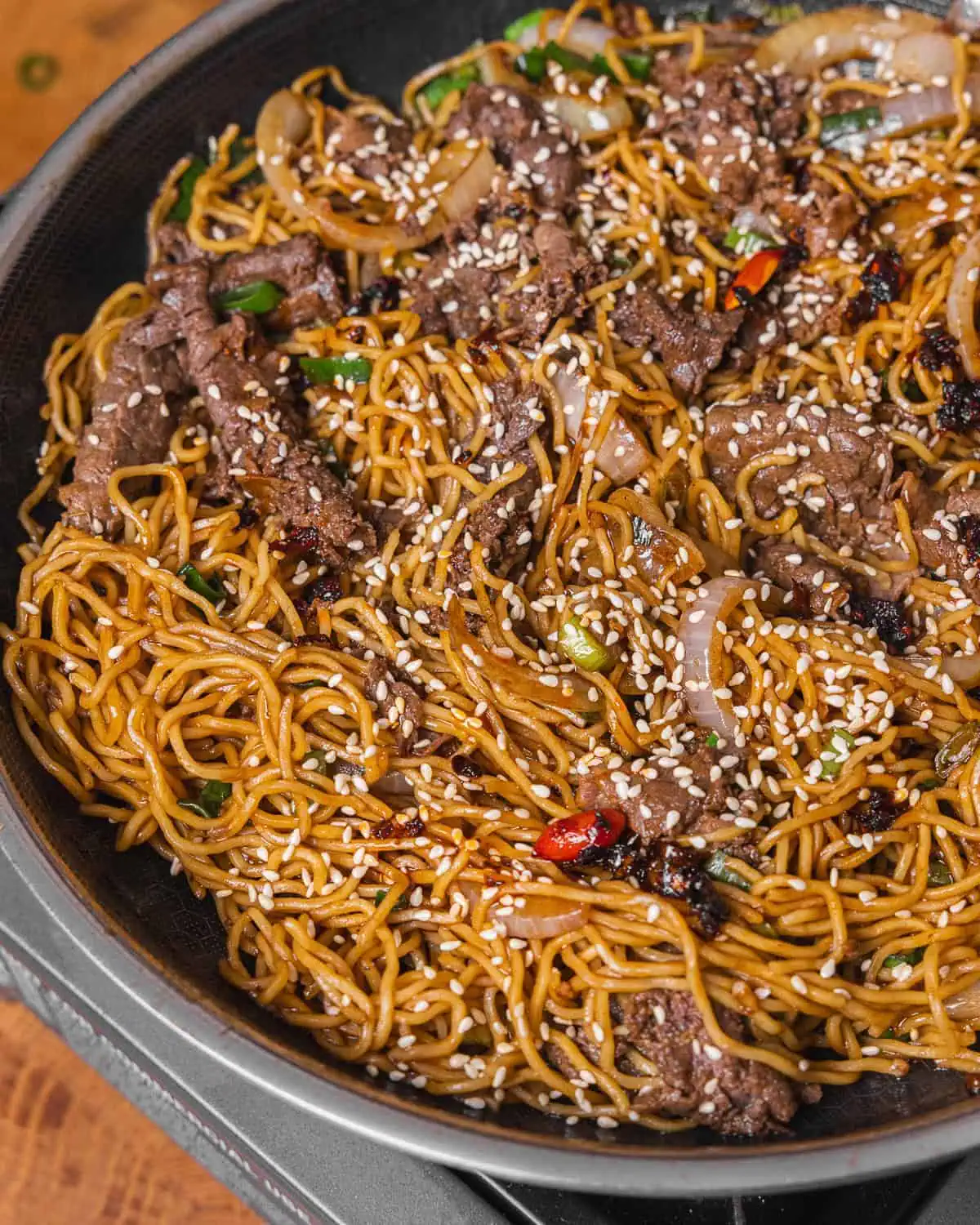
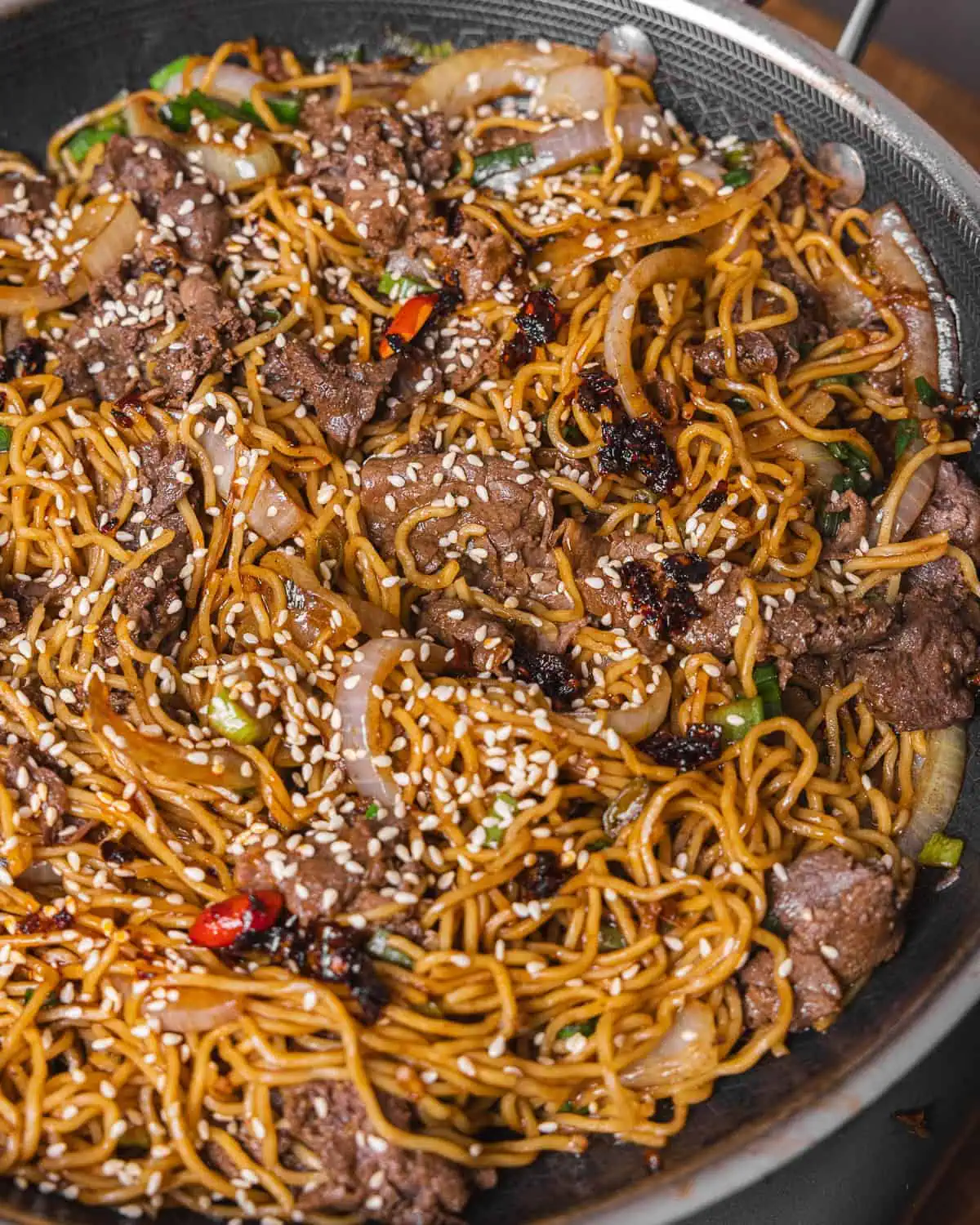
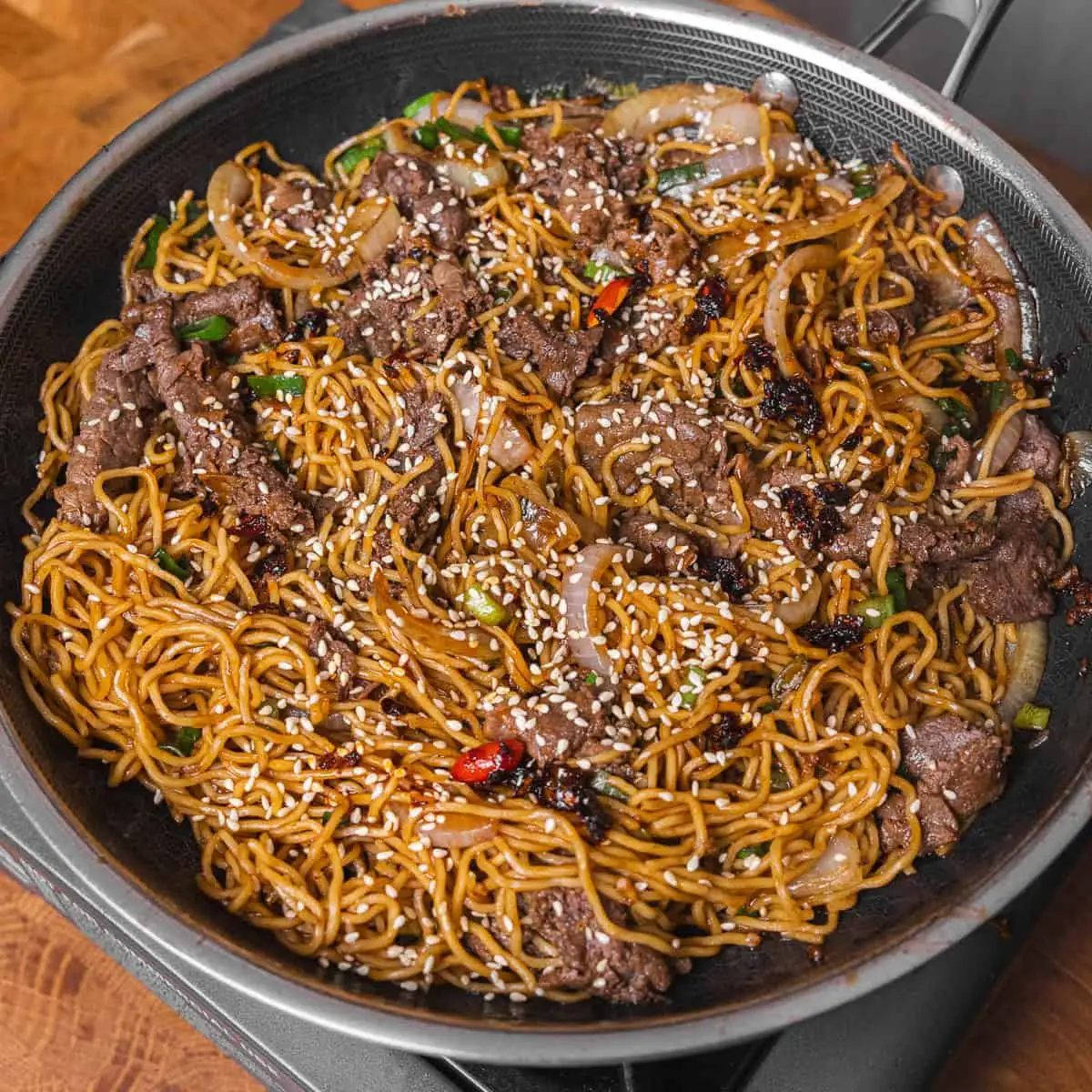
- Serve: Plate the chow mein and garnish with sesame seeds and sliced green onion.
Tips for Perfect Black Pepper Beef
Choose the Right Cut of Beef
Use well-marbled cuts like ribeye, flank steak, or skirt steak. These provide the right tenderness, flavor, and juiciness needed for high-heat cooking in a wok.
Avoid leaner cuts like round steak, which can dry out and become chewy. Thinly slice across the grain to guarantee melt-in-your-mouth bites in every forkful.
How to Marinate Quickly
Short on time? A 15-minute marinade of soy sauce, garlic salt, sesame oil, and cornstarch still works wonders for tenderness and flavor absorption.
The cornstarch creates a light coating that seals in moisture and protects the beef from overcooking—just like your favorite takeout joint does.
Mastering Wok Cooking & Wok Hei
Wok hei is the magic. Crank your wok up to high heat and let it smoke before adding oil to get that signature charred aroma.
Avoid crowding the pan; cook in batches to keep temperatures high. This prevents sogginess and gives your dish that deep, smoky character.
Picking the Best Noodles
Chow mein noodles are the go-to for their chewy texture. QQ noodles or dried versions are also solid alternatives with satisfying bounce.
Avoid noodles like hor fun or flat rice noodles that go mushy. Rinse cooked noodles in cold water to keep them firm and springy.
Serving Suggestions and Storage
Best Side Dishes to Serve With
Pair your chow mein with garlic stir-fried broccoli or snow peas for a crisp, green contrast that complements the rich sauce.
Egg drop soup or hot and sour soup makes an excellent starter—light enough to balance the hearty main without stealing the spotlight.
Garnishes That Add Flavor
Top your dish with toasted sesame seeds for a nutty crunch and added texture. It’s a small detail that makes a big difference.
Chopped green onions add color and fresh sharpness, elevating both the flavor and presentation to restaurant-level quality.
How to Store Leftovers
Let leftovers cool completely before storing in an airtight container. This prevents sogginess and locks in all those layers of flavor.
Properly stored in the refrigerator, leftovers keep well for up to three days. Reheat gently for best results without drying things out.
Reheating Tips
Skip the microwave if you want restaurant-quality leftovers. Use a hot skillet with a splash of water or broth to reheat evenly.
Stir constantly over medium-high heat to bring back the saucy shine and revive that just-cooked taste with minimal effort.
Variations
Veggie-Only Version
Substitute the beef with hearty vegetables like mushrooms, carrots, and savoy cabbage. Add tofu for extra protein and satisfying texture.
The black pepper sauce still delivers its signature punch, turning this into a plant-based version that doesn’t skimp on flavor.
Alternative Meats—Chicken or Pork
Swap in thinly sliced chicken breast or pork loin using the same marinade and cooking method. Both work beautifully with the bold sauce.
Chicken gives a lighter flavor while pork adds richness. Just be sure not to overcook—keep it juicy and tender.
Spicy vs. Mild Version
Turn up the heat with chili flakes or chili oil added to the sauce. White pepper gives extra depth with a sharp bite.
For a milder version, stick to black pepper only. You’ll still get big flavor without the extra burn.
Saucy vs. Dry Style
Double the sauce ingredients and stock for a slurp-worthy, glossy finish. Ideal for soaking up with extra noodles.
Prefer crispier noodles? Use less sauce and pan-fry noodles before combining. You’ll get more texture and bite.
Common Mistakes to Avoid
Overcooking the Beef
High heat is key—just sear the beef until browned, then remove. Overcooked beef loses tenderness fast.
Let it finish cooking in the sauce instead, locking in juiciness and soaking up all that flavor.
Not Slicing Against the Grain
Always slice beef against the grain. This shortens the muscle fibers and makes each bite tender, not tough.
It’s a small step, but one that guarantees better texture and easier chewing.
Using Low Heat
Stir-frying needs blazing heat to work its magic. Low heat steams your ingredients instead of searing them.
Crank it up and let your wok smoke before cooking. That’s how you achieve wok hei—the soul of stir-fry.
Skipping the Cornstarch Slurry
Cornstarch thickens the sauce and makes it cling to the noodles and beef like a silky, savory coat.
Without it, your sauce slips right off. Don’t skip this easy but essential step.
Frequently Asked Questions
Got questions about making Black Pepper Beef Chow Mein just right? You’re not alone. Here’s the lowdown on some of the most common “wait, can I…” moments.
Can I use spaghetti instead of chow mein noodles?
You totally can! While chow mein noodles are ideal for that signature chewy bite, spaghetti makes a surprisingly decent stand-in. Just cook it al dente, rinse in cold water, and stir-fry it like a pro.
It won’t have the QQ texture of dried chow mein noodles or egg noodles, but hey—it still slaps with the black pepper sauce. Don't let missing ingredients rain on your noodle parade.
Why is black pepper important in this dish?
Black pepper isn’t just seasoning here—it’s the star. It gives the dish its bold, punchy personality. The coarsely ground kind releases a warm, spicy aroma that’s unmistakable.
Without it, you’d just have a soy beef noodle stir-fry. Good, but not legendary. That pepper kick takes everything up a notch—like turning your volume to 11.
How can I make it less oily?
Easy fix! Cut down the butter and stick to a light drizzle of vegetable oil. Use a non-stick pan or well-seasoned wok to reduce the need for extra fat.
Drain any oil pooling at the bottom after cooking, and load up on veggies like beansprouts, spinach, or snow peas to keep it light but still satisfying.
Can I make this gluten-free?
Absolutely! Swap out regular soy sauce with gluten-free tamari or coconut aminos. Make sure your oyster sauce and dark soy sauce alternatives are also labeled gluten-free.
Use rice noodles or gluten-free egg noodles instead of traditional chow mein. The result? A dish that’s big on flavor but kind to your gut.
Let’s Wrap It Up
And that’s it! You've got yourself a delicious shrimp fried rice ready in under 20 minutes. Trust me, this recipe is going to become one of your go-tos for busy days or when you just want something comforting and tasty.
I can’t wait to see your versions of this dish! If you give it a try, tag me on Instagram (@geniuseatss) and show me how it turned out. I love seeing your creativity in the kitchen—it seriously makes my day. You guys rock!
Happy cooking, and I’ll catch you in the next one!
PrintBlack Pepper Beef Chow Mein

Savor the bold, peppery sizzle of Black Pepper Beef Chow Mein—tender beef meets wok-tossed noodles in every smoky bite!
- Prep Time: 10 minutes
- Cook Time: 10 minutes
- Total Time: 20 minutes
- Yield: 2 Servings 1x
- Category: Beef
- Method: Easy
- Cuisine: Chinese
Ingredients
- 200g chow mein noodles
- 225g ribeye steak, thinly sliced (thawed if frozen)
- 1 tbsp of vegetable oil or cooking oil
- 1 tbsp butter
- ½ onion, thinly sliced
- 4 cloves garlic, minced
- 1 tsp ginger, minced
- Spring onion, sliced (for garnish)
For the Black Pepper Sauce:
- ¼ cup chicken stock
- 1 tbsp light soy sauce
- 1 tbsp oyster sauce
- 1 tbsp dark soy sauce
- 1 tsp sugar
- 2 tsp sesame oil
- 1 tsp coarsely ground black pepper
- 1 tsp cornstarch
To Garnish:
- Sesame seeds
- Green onion
Instructions
- Cook the noodles:
Soak the chow mein noodles according to package instructions. Drain, rinse under cold water, and set aside. - Make the sauce:
In a small bowl, mix together the chicken stock, light soy sauce, oyster sauce, dark soy sauce, sugar, sesame oil, black pepper, and cornstarch. Stir until well combined and set aside. - Prepare the beef:
Heat 1 tablespoon of vegetable oil in a large pan over medium heat. Add the thawed, thinly sliced beef and stir-fry until about 80% cooked. Remove from the pan and set aside. - Stir-fry the aromatics:
In the same pan, melt the butter. Add onion, garlic, ginger and white part of spring onions. Stir-fry for 1–2 minutes until fragrant and the onions begin to soften. - Combine everything:
Add the cooked noodles to the pan followed by the black pepper sauce and toss to combine. Return the partially cooked beef to the pan and add in green part of spring onions. Stir-fry everything together for 1–2 minutes, until the sauce thickens and coats the noodles and beef evenly. - Serve:
Plate the chow mein and garnish with sesame seeds and sliced green onion.
Want more? Browse every noodle recipe in one place.

droversointeru
I believe this internet site has got very fantastic indited articles content.
Crystal
So delicious and easy!