




Savor the bold, peppery sizzle of Black Pepper Beef Chow Mein, tender beef meets wok-tossed noodles in every smoky bite!
Jump to:
- What Makes This Black Pepper Beef Chow Mein Different
- Which of This Site's Six Chow Meins You Want
- What You Need, and What the Card Does Not Ask For
- Cooking It: Six Steps in One Pan
- Every Photograph on This Page Has Chili Oil in It
- Tender Beef, and Noodles That Stay Dry Rather Than Saucy
- Serving, Storing and Reheating
- Swapping the Protein, the Heat and the Noodles
- Where Black Pepper Beef Chow Mein Goes Wrong
- Frequently Asked Questions
- Black Pepper Beef Chow Mein
What Makes This Black Pepper Beef Chow Mein Different
Chow mein is Cantonese, from Guangdong, and the version that travelled to takeout menus across North America, the UK and Southeast Asia is usually built on soy sauce and a slick of chili oil. This one is not. Its sauce is a quarter cup of chicken stock loosened with equal tablespoons of light and dark soy, and the heat comes from a whole teaspoon of coarsely ground black pepper rather than chili. Then there is a tablespoon of butter in the aromatics, which is not a Cantonese move at all, and it is the thing that makes this pan smell different from every other chow mein on this site.
It is a two serving, twenty minute recipe: ten minutes of prep, ten minutes in the pan, and the noodles only need soaking rather than boiling. The beef is 225g of thinly sliced ribeye, and it goes into a hot pan as it is.
Which of This Site's Six Chow Meins You Want
There are six chow mein recipes on Genius Eats and nothing has ever told you which one to cook. Here they are, straight from their cards:
- This one, black pepper beef: ribeye, butter, chicken stock and a teaspoon of cracked black pepper. The only one of the five with no chili in its ingredient list, and the only one with butter in it.
- Beef and Broccoli Chow Mein: also ribeye, but the steak gets a proper velveting marinade of baking soda, cornstarch, soy and Shaoxing wine first, and it runs to thirty minutes and two packs of noodles. Cook this one if you want the silky takeout texture on the beef.
- Cantonese Chow Mein: no meat at all. Egg noodles, bean sprouts, shallot and onion in a soy and oyster sauce, finished with chili oil and fried shallots. Fifteen minutes.
- General Tso-Style Chicken Chow Mein: chicken thighs, hoisin, rice vinegar and eight to ten dried chilies. Four servings and forty five minutes, so it is the one to cook for a table.
- Chili Oil Soy Sauce Chow Mein: the chili forward, meat free bowl.
- Kung Pao Chicken Chow Mein: chicken thighs, eight dried chillies, roasted peanuts and chilli oil on hokkien or egg noodles. Twenty five minutes, and the only one of the six that brings the kung pao peanut and dried chilli base to the noodles.
If beef noodles are what you are after rather than chow mein specifically, Mongolian Beef Noodles uses flank steak, instant ramen and chili bean paste, and it is far spicier than this.
What You Need, and What the Card Does Not Ask For
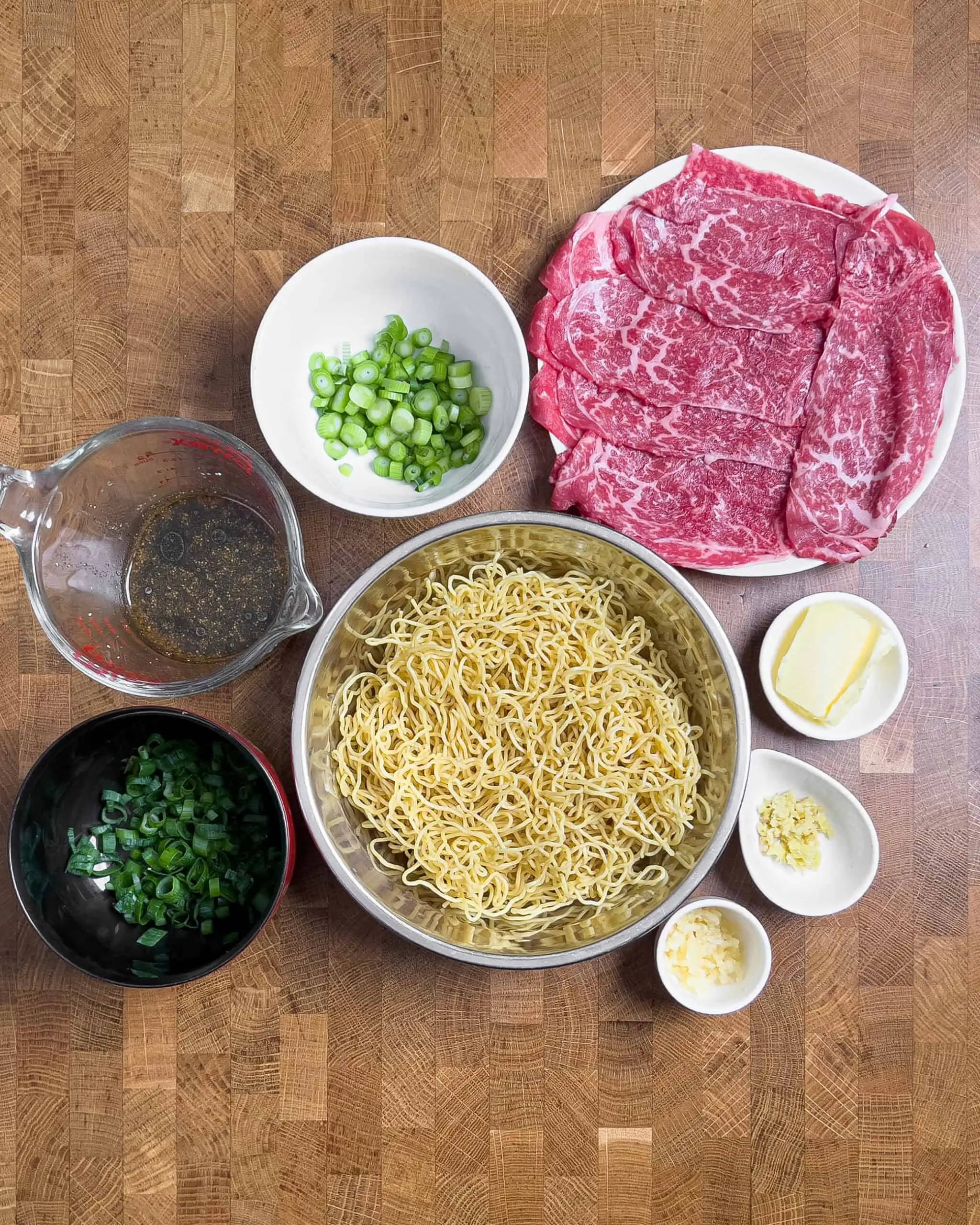
Eighteen lines, and the sauce is mixed in a jug before anything hits the heat. That is worth knowing before you start, because once the pan is going there is no time to measure.
For the beef and noodles
- 200g chow mein noodles: the fresh or dried egg noodles that stay springy. They are soaked and rinsed, not boiled soft, which is why they can take a minute of hard tossing later without turning to mush.
- 225g ribeye, thinly sliced: marbled enough to stay juicy in a sixty second sear. Slice it across the grain. Flank or skirt work too; round steak goes tough.
- 1 tablespoon vegetable oil: for the beef, on its own, before the butter goes anywhere near the pan.
- 1 tablespoon butter: melted into the empty pan after the beef comes out, and the onions go straight into it. This is the signature of this particular recipe.
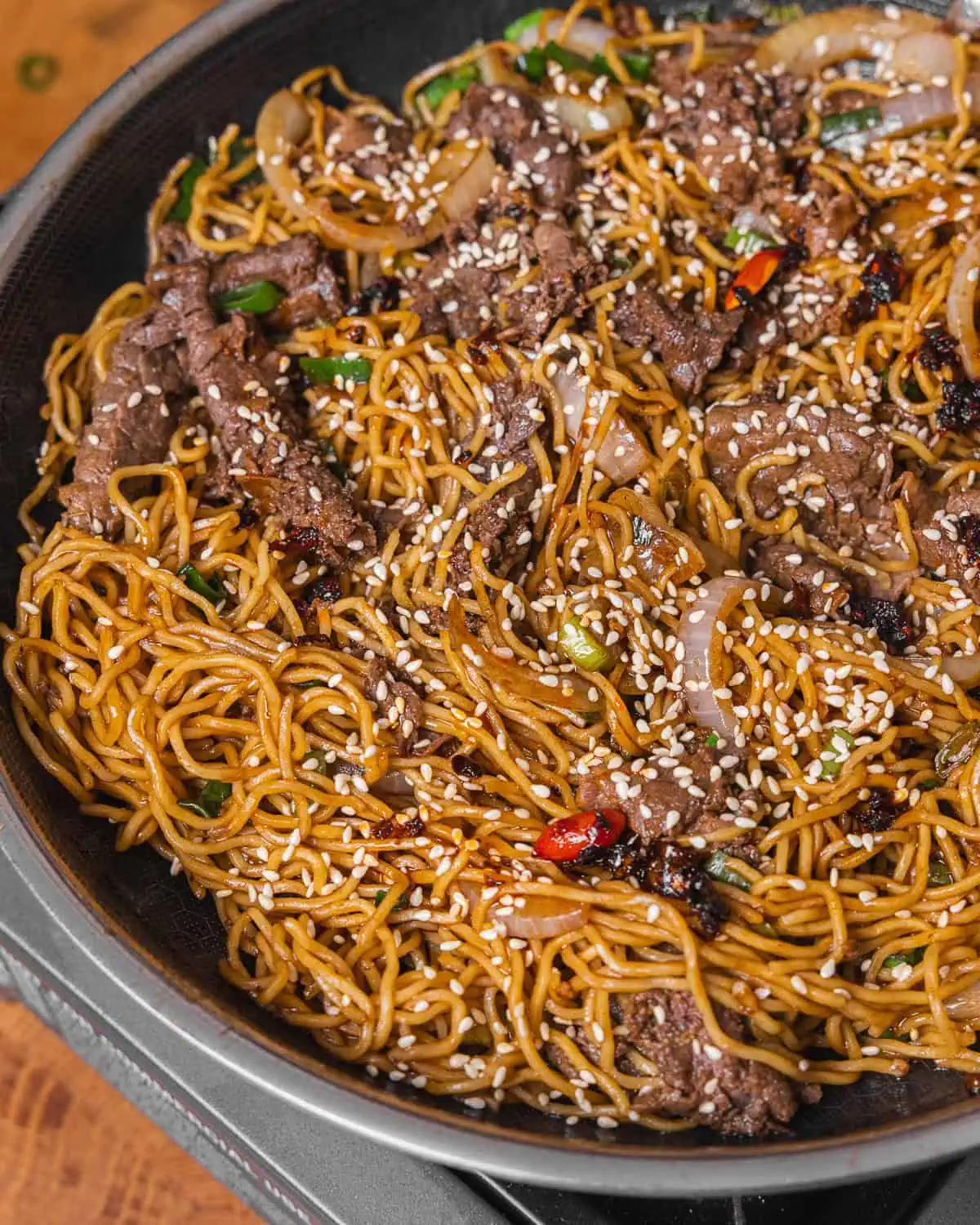
- ½ onion, thinly sliced: the only vegetable in the dish. It softens in the butter but keeps its shape, and you can see the rings through the finished noodles in every photograph here.
- 4 cloves garlic and 1 teaspoon ginger, both minced: in with the onion, one to two minutes, no longer.
- Spring onion, sliced: the card files this under garnish, but the recipe uses it twice. The white parts go in with the onion at step 4 and the green parts go in at the end with the beef. Slice it and keep the two colours in separate piles.
For the black pepper sauce
- ¼ cup chicken stock: the whole liquid of the dish. A quarter cup over two servings is why this finishes dry and glossy rather than soupy.
- 1 tablespoon light soy sauce: the salt.
- 1 tablespoon dark soy sauce: the colour. A full tablespoon is generous for dark soy, and it is the reason the noodles go from pale yellow to deep brown in the pan.
- 1 tablespoon oyster sauce: body and a savoury sweetness.
- 1 teaspoon sugar: rounds off the two soys.
- 2 teaspoon sesame oil: aroma, stirred into the cold sauce rather than added at the end.
- 1 teaspoon coarsely ground black pepper: the point of the recipe. Coarse, not fine, and ground fresh if you can.
- 1 teaspoon cornstarch: mixed into the cold sauce at step 2, not slurried in at the end. It will settle to the bottom of the jug while you cook the beef, so give it a stir again right before it goes in the pan.
To finish
- Sesame seeds: scattered over the top in the pan.
- Green onion: the second spring onion line on the card, for the final handful.
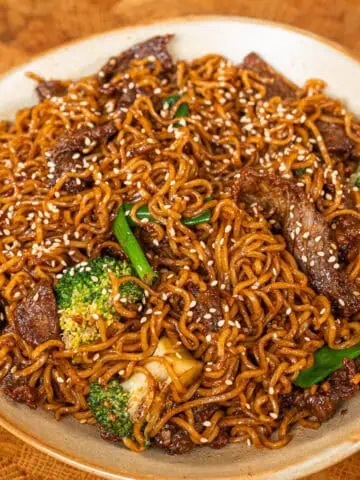
Three things people often expect here are not in this recipe, and the photographs settle it. There is no marinade: the ribeye in the ingredient shot is bare, unsalted and uncoated, and the method takes it from board to pan. There is no garlic salt, which appears nowhere else on this site either. And there are no extra vegetables: no carrot, no bean sprouts, no cabbage. Half an onion is the whole produce list. If you want bean sprouts in your chow mein, the Cantonese version above is the recipe that has them.
Cooking It: Six Steps in One Pan
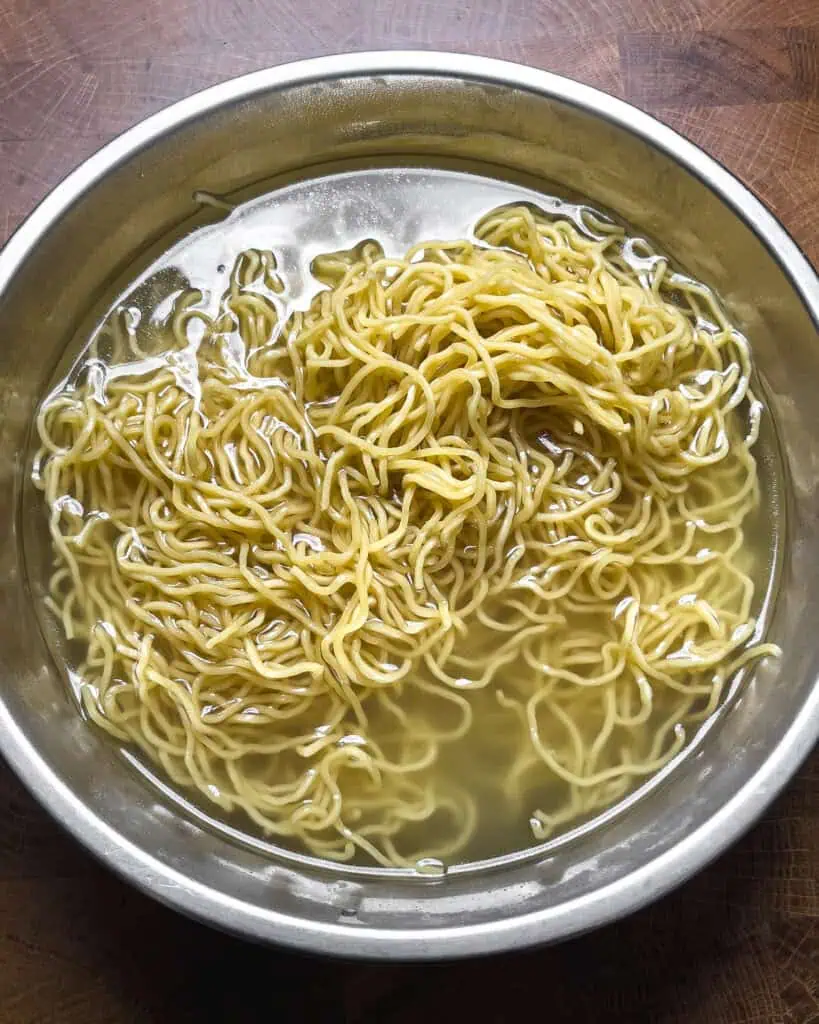
- Soak the noodles: cover the chow mein noodles and soak them according to the packet. Drain, rinse under cold water so they stop cooking, and leave them loose in the colander.
- Mix the sauce: in a jug or small bowl, stir the chicken stock, light soy, oyster sauce, dark soy, sugar, sesame oil, black pepper and cornstarch until the cornstarch has gone. Set it next to the stove.
- Sear the beef: heat the tablespoon of vegetable oil in a large pan over medium heat, lay the sliced ribeye in, and stir-fry it to about 80 percent cooked. Lift it out and set it aside. It finishes later, so pulling it early is the whole trick to keeping it tender.
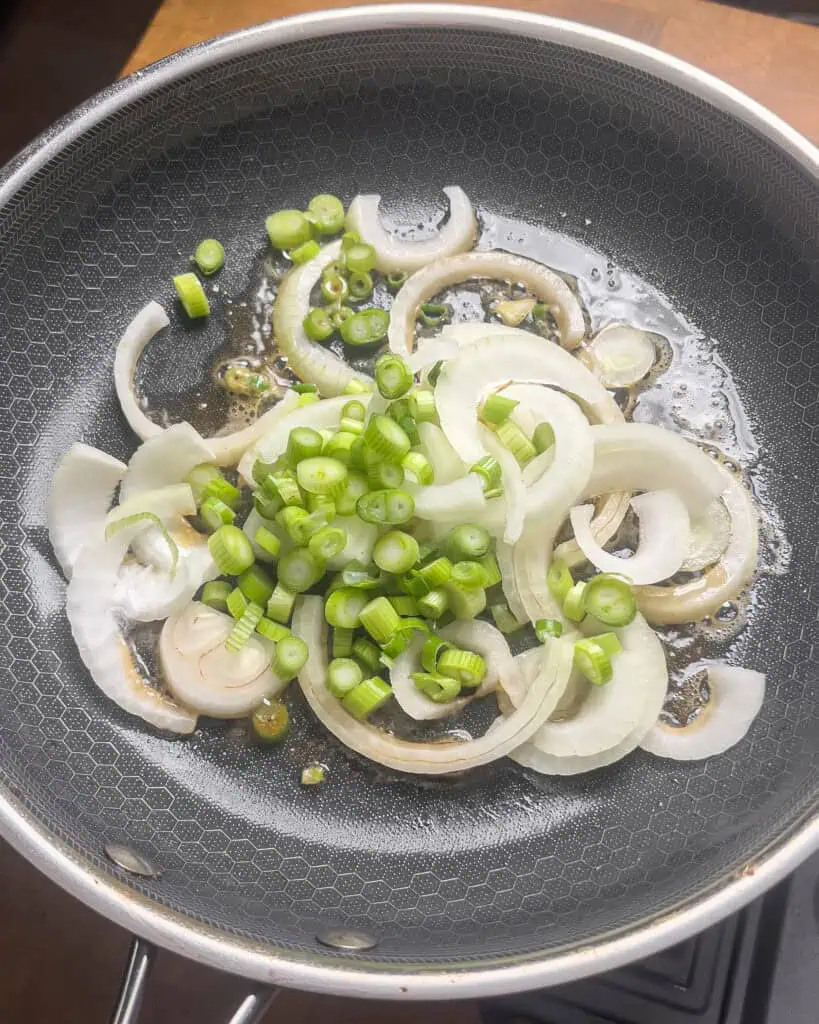
- Butter and aromatics: melt the butter in the same pan. In go the onion, garlic, ginger and the white parts of the spring onion, one to two minutes, until it smells sweet and the onion has gone translucent at the edges.
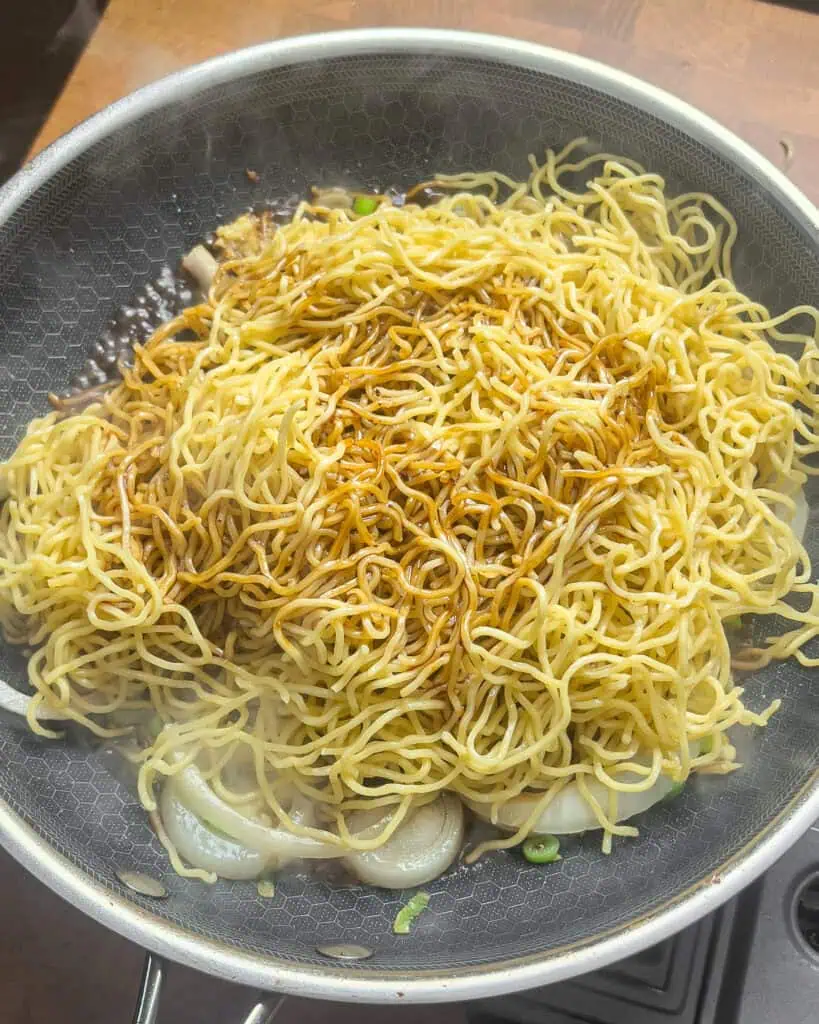
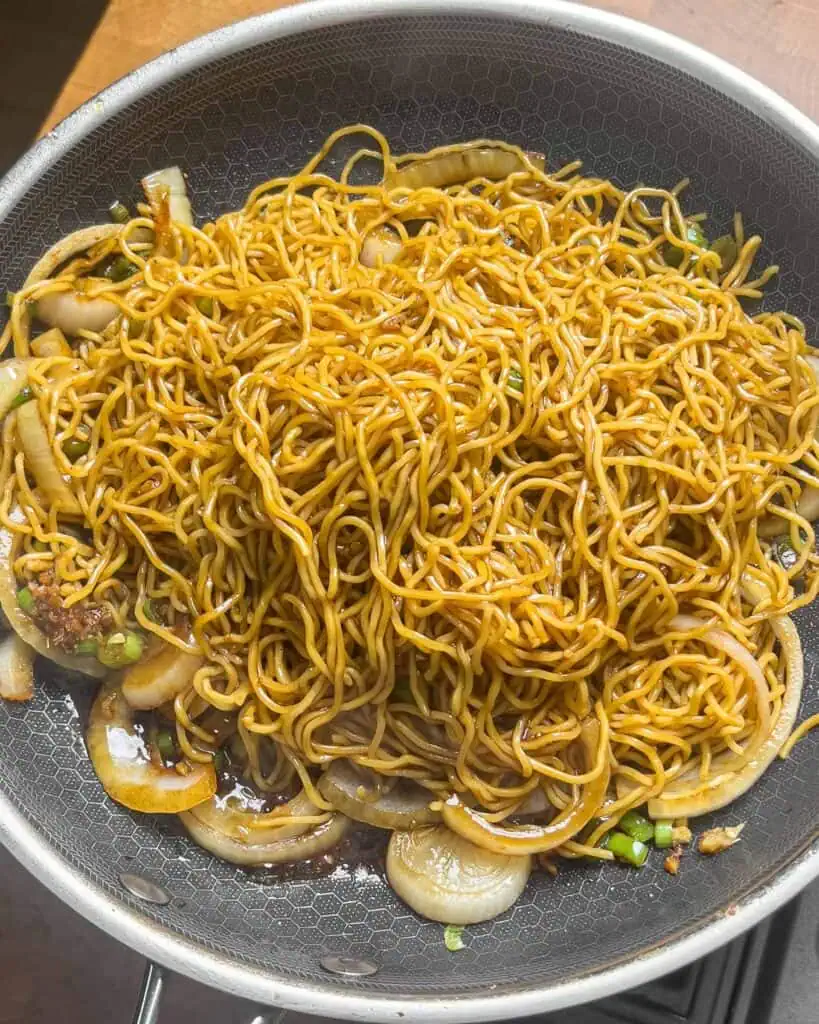
- Noodles, sauce, beef: add the drained noodles, pour the sauce over (stir it first), and toss until every strand has gone dark. Return the beef with the green parts of the spring onion and keep everything moving for one to two minutes, until the sauce has tightened and is clinging rather than sitting in the pan.
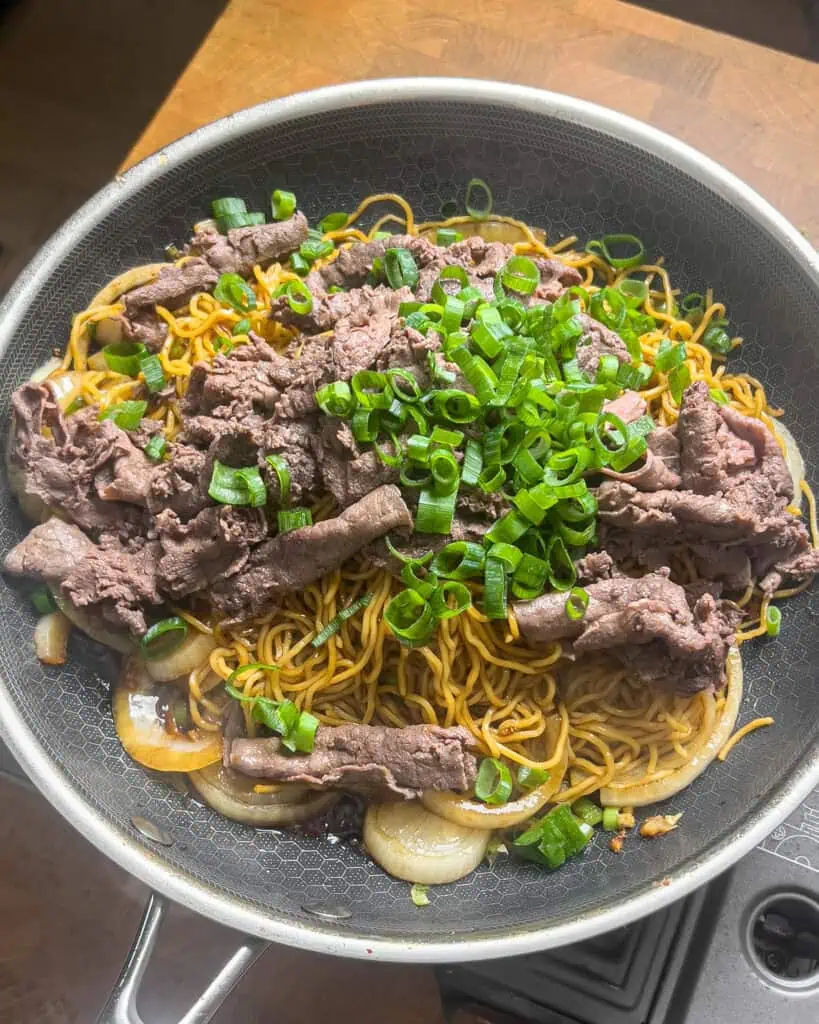
- Finish: off the heat, sesame seeds and sliced green onion over the top.
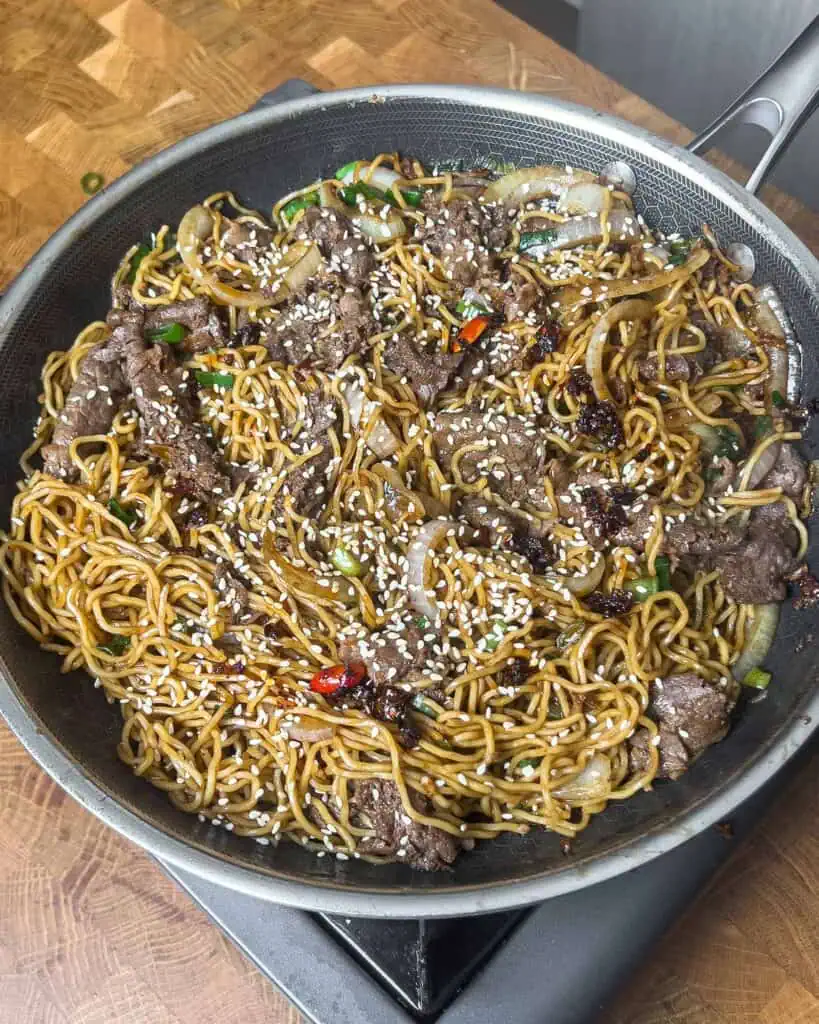
One note on the last step. The card says to plate it, and every photograph on this page is the pan, taken straight off the stove. Chow mein is better that way, eaten out of the pan it was tossed in while the noodles still have their edge.
Every Photograph on This Page Has Chili Oil in It
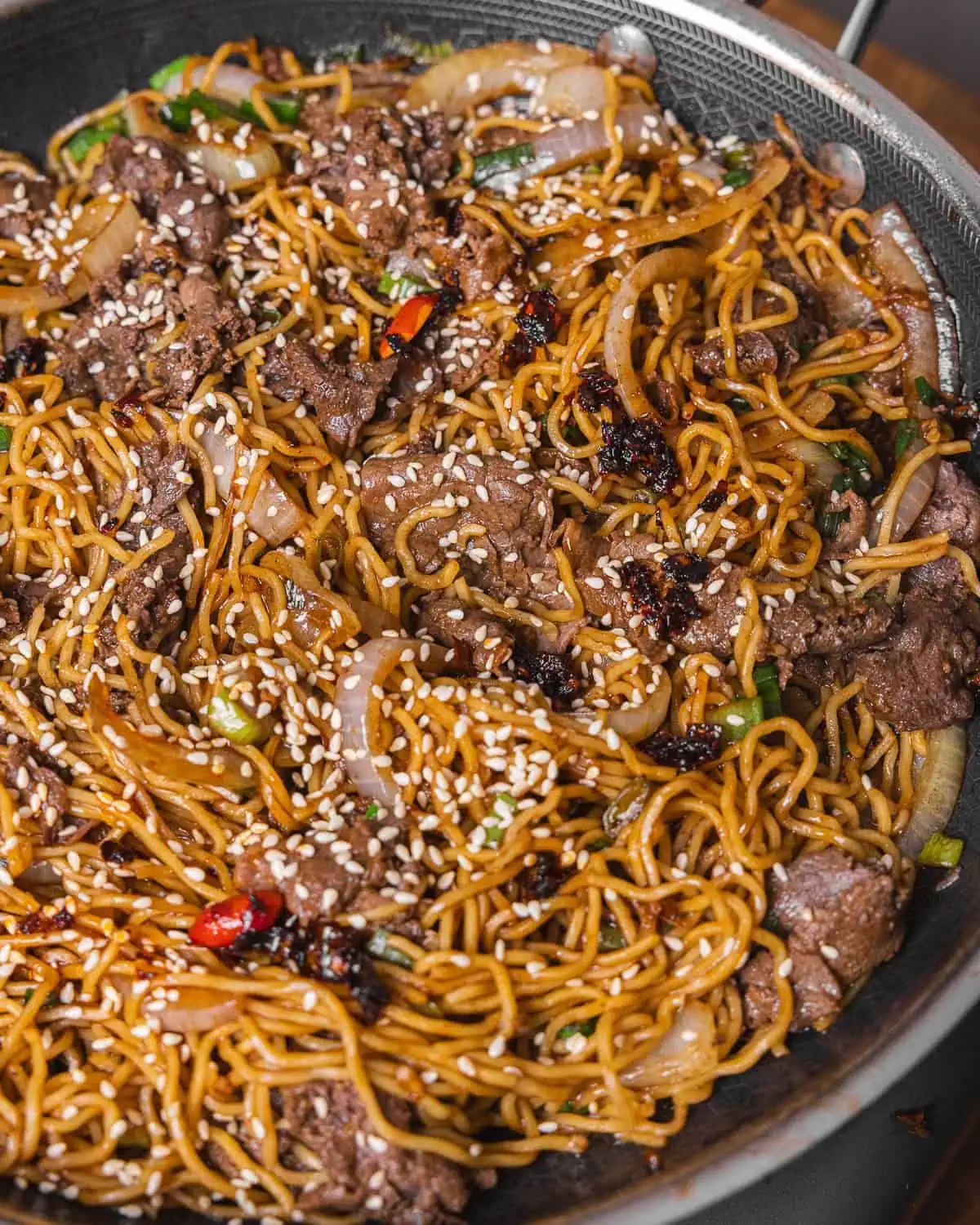
Look closely at the finished shots and you will find red chili slices and dark flecks of chili crisp right through the noodles. The recipe card has no chili in it anywhere, and the file name of one of these photographs says plainly that the dish was garnished with chili oil.
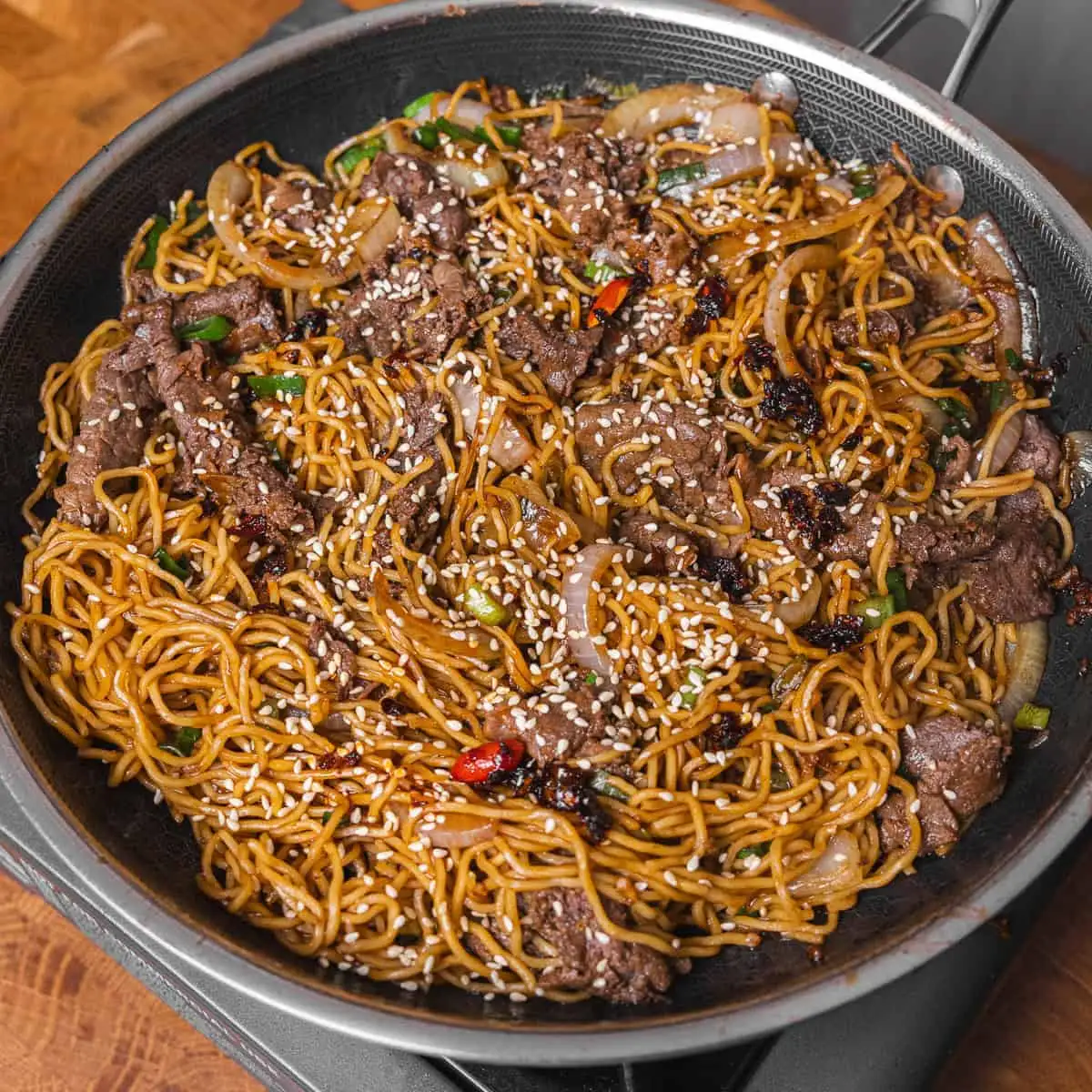
So the dish you are looking at is the recipe plus about a tablespoon of chili oil, stirred through at the end with the sesame seeds. Cook the card as written and you will get something darker and more peppery than it is hot, which is the point of a black pepper dish. If you want it to look like the pictures, add the chili oil at the very end, off the heat, so it stays bright.
Tender Beef, and Noodles That Stay Dry Rather Than Saucy
Two things decide whether this works, and neither of them is the sauce recipe.
The beef
Slice it across the grain, get the pan properly hot, and take the beef out at 80 percent. There is no cornstarch coating protecting it here, so the pan is doing all the work and a slice that stays in for an extra minute goes from juicy to chewy. If you want the velvety, slippery texture that takeout beef has, that comes from a baking soda and cornstarch marinade, and the Beef and Broccoli Chow Mein on this site is the recipe that does it properly.
The noodles
A quarter cup of stock across 200g of noodles and 225g of beef is not much liquid, and that is deliberate. It evaporates and tightens around the strands instead of pooling, which is what a dry style chow mein is supposed to do.
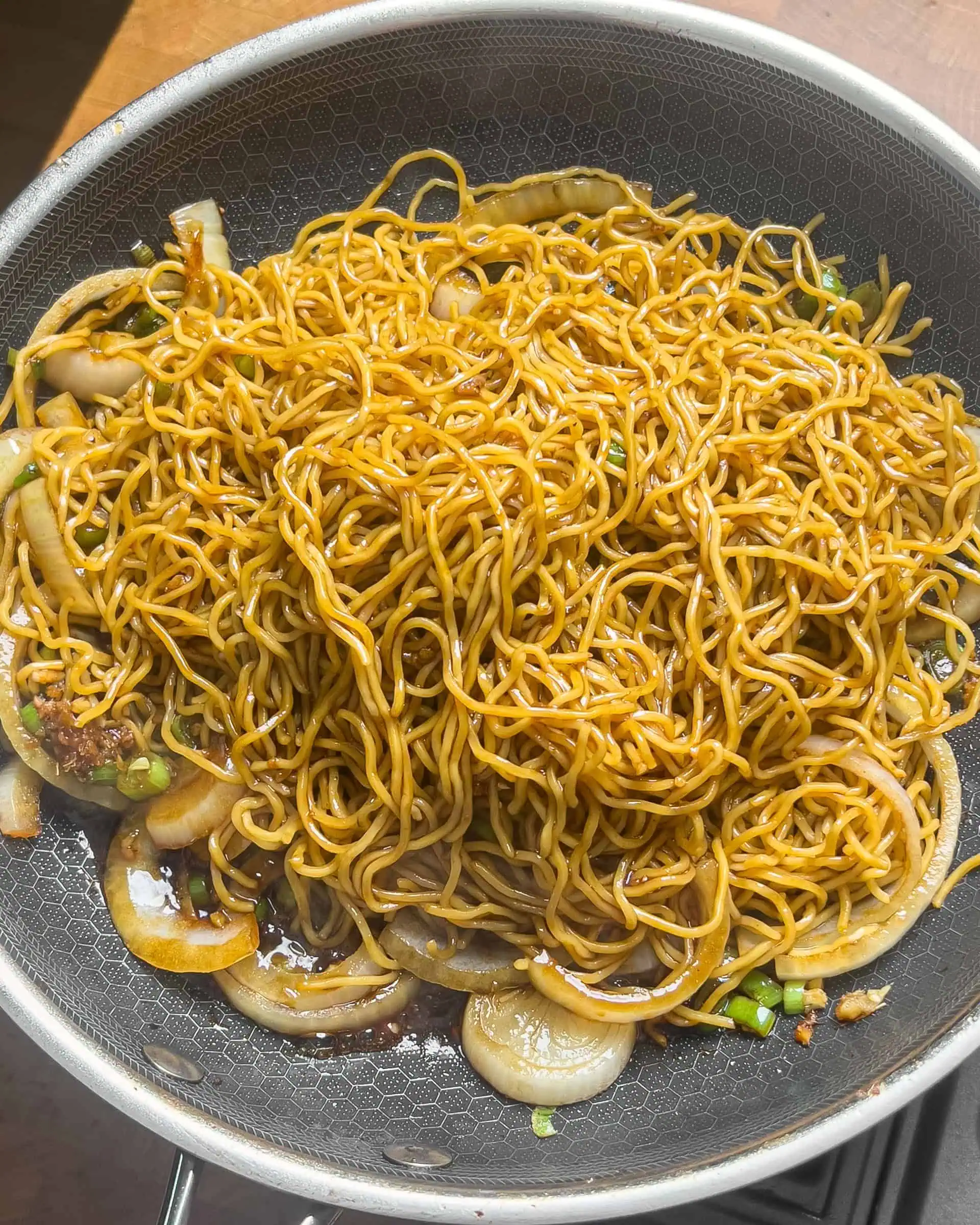
If you want it saucier, double the sauce and the stock together rather than just adding water, so the seasoning keeps up. If you want it drier and crisper, pan-fry the drained noodles on their own for a minute before the aromatics go in, then build on top of them.
Do not crowd the pan. Noodles and beef dropped into a pan that is not hot enough will steam, and steamed chow mein is grey and limp. Cook in two batches if your pan is small.
Serving, Storing and Reheating
This is a complete plate on its own at two servings, but it is rich, so something green and sharp alongside helps. Blanched or stir-fried broccoli, snow peas or bok choy with a little garlic does the job. A light soup to start, egg drop or hot and sour, balances it without competing. If you want the broccoli in the noodles rather than next to them, cook Beef and Broccoli Chow Mein instead.
If it is the beef and broccoli combination you are craving and you would rather have rice than noodles, Beef and Broccoli Fried Rice is the same flavours in a wok of rice.
Let leftovers cool fully before they go into an airtight container, or the steam trapped in the box turns the noodles soft. They keep about three days in the fridge.
Reheat in a hot pan, not the microwave. A splash of water or stock, high heat, constant tossing for a minute or two, and the sauce comes back to a shine. Add the sesame seeds and green onion fresh afterwards rather than reheating them. More toasted sesame noodle ideas if you have seeds left over.
Swapping the Protein, the Heat and the Noodles
Chicken, pork or no meat
Thinly sliced chicken thigh or pork loin both work with the same sauce and the same 80 percent sear. For a meat free version, mushrooms are the closest swap because they brown rather than steam, and firm tofu pressed dry adds the protein back. The black pepper sauce carries all of them.
More heat
A tablespoon of chili oil stirred in at the end is what the photographs on this page actually show. Chili flakes in with the aromatics give a drier heat. A little white pepper alongside the black sharpens it without adding chili at all.
Other noodles
Dried chow mein nests, fresh egg noodles and QQ noodles all have the bounce this needs. Spaghetti cooked al dente and rinsed cold is a genuinely decent substitute. Flat rice noodles and hor fun are the ones to avoid: they break and go pasty under this much tossing.
Where Black Pepper Beef Chow Mein Goes Wrong
Leaving the beef in until it is done
Step 3 says 80 percent for a reason. The beef gets another minute or two in the pan at step 5, and ribeye this thin has no margin. Pull it while it still looks slightly underdone in the middle.
Forgetting to re-stir the sauce
The cornstarch goes into the cold sauce at step 2 and then sits there while you cook the beef and the aromatics. It will have settled into a paste at the bottom of the jug. Stir it again right before you pour, or you will tip clear liquid over the noodles and a lump of starch in after it.
Cooking it on medium the whole way
The beef sear is the one step the card puts at medium. Everything after it wants the heat up. Low heat steams the noodles instead of frying them and you lose the smoky edge that makes a stir fry taste like one.
Slicing the beef with the grain
Find the direction the muscle fibres run and cut across them. It takes ten seconds and it is the difference between tender and tough, whatever else you do right.
Frequently Asked Questions
Can I use spaghetti instead of chow mein noodles?
Yes. Cook it al dente, rinse it under cold water, and stir-fry it exactly as you would the chow mein noodles. It will not have the springy bite of egg noodles, but it holds up to the sauce and does not go pasty.
Why coarsely ground black pepper and not fine?
A whole teaspoon of fine pepper would read as dusty heat spread evenly through the sauce. Coarse grind keeps its texture and gives you pockets of it, which is what a black pepper dish is for. Grinding it fresh matters more here than in most recipes, because there is no chili to hide behind.
How do I make it less oily?
Cut the butter to half a tablespoon rather than removing it, since it is a large part of why this recipe tastes the way it does, and use a non-stick pan so the tablespoon of oil for the beef is enough. Tip out any fat the ribeye renders before the butter goes in. Adding more vegetables, bean sprouts, spinach or snow peas, bulks it out without adding fat, though it does move the dish away from the card.
Can I make this gluten free?
The sauce can be: swap both soy sauces for tamari or coconut aminos and check that your oyster sauce is labelled gluten free, since many are not. The noodles are the harder part. Chow mein noodles are wheat and so are egg noodles, so a gluten free swap means rice noodles, which this recipe otherwise tells you to avoid because they break up under hard tossing. Use the thinner rice vermicelli, soak it only just until pliable, and toss gently rather than vigorously.
Is it really twenty minutes?
Yes, if the sauce is mixed and the spring onion is sliced before the pan goes on. The card gives ten minutes of prep and ten minutes of cooking, and the cooking really is that fast: a minute of beef, two of aromatics, two of tossing. All of the risk is in starting before you are ready.
Let’s Wrap It Up
And that is it. Black pepper beef chow mein, two servings, one pan, twenty minutes, and it tastes like the good takeout rather than the tired kind.
I can’t wait to see your versions of this dish! If you give it a try, tag me on Instagram (@geniuseatss) and show me how it turned out. I love seeing your creativity in the kitchen, it seriously makes my day. You guys rock!
Happy cooking, and I’ll catch you in the next one!
PrintBlack Pepper Beef Chow Mein

Savor the bold, peppery sizzle of Black Pepper Beef Chow Mein—tender beef meets wok-tossed noodles in every smoky bite!
- Prep Time: 10 minutes
- Cook Time: 10 minutes
- Total Time: 20 minutes
- Yield: 2 Servings 1x
- Category: Beef
- Method: Easy
- Cuisine: Chinese
Ingredients
- 200g chow mein noodles
- 225g ribeye steak, thinly sliced (thawed if frozen)
- 1 tbsp of vegetable oil or cooking oil
- 1 tbsp butter
- ½ onion, thinly sliced
- 4 cloves garlic, minced
- 1 tsp ginger, minced
- Spring onion, sliced (for garnish)
For the Black Pepper Sauce:
- ¼ cup chicken stock
- 1 tbsp light soy sauce
- 1 tbsp oyster sauce
- 1 tbsp dark soy sauce
- 1 tsp sugar
- 2 tsp sesame oil
- 1 tsp coarsely ground black pepper
- 1 tsp cornstarch
To Garnish:
- Sesame seeds
- Green onion
Instructions
- Cook the noodles:
Soak the chow mein noodles according to package instructions. Drain, rinse under cold water, and set aside. - Make the sauce:
In a small bowl, mix together the chicken stock, light soy sauce, oyster sauce, dark soy sauce, sugar, sesame oil, black pepper, and cornstarch. Stir until well combined and set aside. - Prepare the beef:
Heat 1 tablespoon of vegetable oil in a large pan over medium heat. Add the thawed, thinly sliced beef and stir-fry until about 80% cooked. Remove from the pan and set aside. - Stir-fry the aromatics:
In the same pan, melt the butter. Add onion, garlic, ginger and white part of spring onions. Stir-fry for 1–2 minutes until fragrant and the onions begin to soften. - Combine everything:
Add the cooked noodles to the pan followed by the black pepper sauce and toss to combine. Return the partially cooked beef to the pan and add in green part of spring onions. Stir-fry everything together for 1–2 minutes, until the sauce thickens and coats the noodles and beef evenly. - Serve:
Plate the chow mein and garnish with sesame seeds and sliced green onion.
Want more? Browse every noodle recipe in one place.
droversointeru
I believe this internet site has got very fantastic indited articles content.
Crystal
So delicious and easy!