



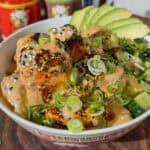








Enjoy bold flavors with Chili Oil Red Curry Wonton Ramen, a spicy, aromatic bowl of comfort!
Jump to:
- Frozen Dumplings, Instant Ramen and a Coconut Curry Broth
- Which of This Site's Red Curry Recipes You Actually Want
- What You Need, and What the Ingredient Photo Does Not Show
- Cooking It: Four Steps, Two Pots
- Getting the Paste and the Broth Right
- Turning the Heat Up or Down, and Swapping the Dumplings
- Storing and Reheating Without Mushy Noodles
- Frequently Asked Questions
- Chilli Oil Red Curry Wonton Ramen
Frozen Dumplings, Instant Ramen and a Coconut Curry Broth
Chilli Oil Red Curry Wonton Ramen is a bowl of instant ramen and frozen dumplings sitting in a Thai red curry broth built on coconut milk and chicken stock. The flavour base is Thai, the dumplings are Chinese, and the noodles in the photos on this page are a Korean instant pack, which is where the fusion label comes from. Nothing in it is made from scratch, and that is the point of it.
The recipe card puts it at 10 minutes of prep and 15 minutes of cooking, so 25 minutes in total. It needs two pots: one for the curry broth, and a second of boiling water for the dumplings and the noodles. You can run them at the same time and the broth will happily sit off the heat while the noodles finish.
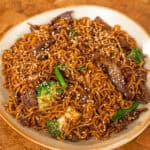
The card calls for 10 to 12 frozen dumplings across two bowls. It does not say which kind, and the photographs on this page do not agree with each other: the ingredient shot has folded wontons with a green filling, and the finished bowls are built with pleated, crescent shaped dumplings. Either works, so buy whichever your freezer aisle has.
Which of This Site's Red Curry Recipes You Actually Want
Three recipes here are built on the same jar of Thai red curry paste and they are not interchangeable. Read from their cards rather than their titles:
- This one: 2 packs of ramen noodles and 10 to 12 frozen dumplings in a broth of 2 cups of chicken stock to 1 cup of coconut milk, with kaffir lime leaves. There is no raw protein to cook, which is why it is the quickest of the three at 25 minutes.
- Thai Red Curry Chicken Ramen: 350g of chicken thigh, seasoned and seared before the broth is built, and a much richer liquid of 2 cups of coconut cream to half a cup of stock. 35 minutes, and a thicker bowl.
- Chili Oil Red Curry Pasta: the same red curry paste and the same lime leaves, but over pasta with shrimp, heavy cream and parmesan, and no coconut milk at all. The one to make if you want red curry without a soup.
What You Need, and What the Ingredient Photo Does Not Show

- Ramen noodles, 2 packs: the photo uses an instant pack. They are boiled in plain water in the second pot, not cooked in the broth.
- Frozen dumplings, 10 to 12: straight from the freezer, no thawing.
- Neutral oil, 1 tbsp: just enough to fry the aromatics in.
- Garlic, 3 cloves, minced, plus 1 teaspoon of ginger paste and 1 tablespoon of lemongrass paste: the three aromatics that hit the oil first. The pastes are the jarred kind, which is why there is nothing to peel or pound.
- Thai red curry paste, 2 tbsp: a ready made jar, the main source of heat and colour.
- Chicken stock, 2 cups, and coconut milk, 1 cup: the whole broth. That 2 to 1 ratio is what keeps this bowl soupy rather than creamy.
- Fish sauce, 2 tsp, and sugar, 2 tsp: between them, the entire seasoning. There is no salt in the recipe.
- Kaffir lime leaves, 4: they go in whole and stay whole, as the pot photos show. They are there for the smell, and they are not meant to be eaten.
- To finish: fried shallots, sliced red chili, spring onion and chili oil: all four are on every finished bowl on this page, and all four go on after the broth is ladled.
Three things the list does not have, and that matters when you shop. There is no lime juice: the only citrus in the recipe is those four kaffir lime leaves. There is no ramen seasoning sachet, so the packets that come with the noodles stay in the drawer and the broth does all the work. And there are no vegetables on the list, even though the card's steps mention them, so add whatever greens you like, bok choy or spinach go in with the noodles, or leave them out as the photographs do.
Cooking It: Four Steps, Two Pots
- In a pot, heat 1 tablespoon of oil over medium high heat. Add the garlic, ginger, lemongrass and red curry paste and fry for 2 minutes.


The two photographs split this one step in two. In the first, the garlic and the two pastes are going into the oil on their own, with no red curry paste in the pot at all. In the second, the curry paste has been fried out on its own: it has darkened to a reddish brown and the orange oil has started to separate out at the edges, which is the visual cue that it is done. Adding everything together the way the card says gets you there too. If you want the paste fried harder, give the aromatics a head start and stir the curry paste in after, which is what the pictures show.
- Add the chicken stock, coconut milk, fish sauce, sugar and kaffir lime leaves. Stir until combined, bring to a boil and simmer for 10 to 12 minutes. Turn off the heat and set it aside.


Those 10 to 12 minutes are visible in the two photos. The first is the moment everything goes in, with the coconut milk still sitting in white patches on top and the lime leaves bright green. The second is the same pot at the end, an even orange with the fat carried through it. When the broth looks like the second photo, it is ready, and the card has you take it off the heat there so it can wait for the noodles.
- In a second pot of boiling water, cook the dumplings, any vegetables you are adding, and the ramen.
- Plate the ramen in a bowl with the vegetables and the dumplings. Ladle the curry broth over, then garnish with fried shallots, chili, spring onion and chili oil.


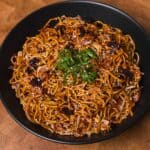
The first of those two is worth a second look, because it is the clearest evidence of how this bowl is seasoned. The noodles are pale, plain and unsauced, which is what instant noodles look like when they are boiled in water with none of the sachet in it. Everything you taste in the finished bowl arrives with the broth and with the four things you scatter on last.
Getting the Paste and the Broth Right
Two decisions carry this recipe, and both of them happen in the first pot.
Fry the paste before any liquid goes near it. Two tablespoons of jarred curry paste tipped into stock will taste raw and flat. Fried in oil first, as in the second step photo, it darkens and the oil carries the colour and the spice through the whole pot.
The 2 to 1 ratio is the dial. Two cups of stock to one of coconut milk is a soup you drink, not a sauce you coat noodles in. Shift it toward the coconut milk for something richer and shorter, or toward the stock for something lighter. For reference, the chicken version of this bowl on this site runs the ratio the other way, 2 cups of coconut cream to half a cup of stock, and comes out thick enough to cling.
Taste it before it comes off the heat. Two teaspoons of fish sauce and two teaspoons of sugar are the entire seasoning, so if it tastes thin, that is the pair to adjust, and there is no salt in the recipe to hide behind.

Turning the Heat Up or Down, and Swapping the Dumplings
Heat. As written it is mildly spicy: 2 tablespoon of curry paste spread through 3 cups of liquid. The chili oil and the fresh sliced chili go on at the very end, bowl by bowl, so you can serve one person a hot bowl and another a mild one out of the same pot. If you want the broth itself hotter, that is more curry paste in step 1, not more chili oil at the end.
Dumplings. Pork, prawn or vegetable all work. You cannot change what is inside a frozen dumpling once it is in your freezer, so this is a shopping decision rather than a cooking one, and it is the single biggest change you can make to how the bowl tastes.
Vegetarian. Three lines need changing and no more: vegetable dumplings, vegetable stock in place of the chicken stock, and soy sauce in place of the fish sauce. Check the label on your curry paste as well, since many Thai red curry pastes contain shrimp paste.
Rice noodles. They swap straight in for the ramen and give you a lighter bowl. They do not make the dish gluten free, though, because the dumpling wrappers are wheat and so is most soy sauce if you have made the vegetarian swap above.
Storing and Reheating Without Mushy Noodles
Store the broth in one container and the noodles and dumplings in another, in the fridge for up to 3 days. Noodles left sitting in hot curry broth keep absorbing it and turn soft, which is the one thing that stops this reheating well.
The broth is also the part worth making in advance. The card ends step 2 by taking it off the heat and setting it aside, so it is already designed to sit, and a pot of it in the fridge turns this into a five minute dinner the next night: bring the broth back to a simmer, boil fresh noodles and dumplings, and build the bowl the same way.

Frequently Asked Questions
Do I use the ramen seasoning sachet?
No. The ingredient list is 2 packs of ramen noodles and nothing else from the packet, and the noodles in the photo above are plain and pale, which is what they look like boiled in water alone. All the seasoning here is in the curry broth. When a recipe on this site does want the sachet it says so: Ramen Carbonara uses a full one and Spicy Garlic Ramen uses half.
Wontons or gyoza, which dumplings do I buy?
Either. The card asks for 10 to 12 frozen dumplings and does not name a shape. The ingredient photo on this page shows folded wontons with a green filling, and the finished bowls show pleated dumplings, so both have been through this broth.
Is there lime juice in this recipe?
No. The only citrus is the four kaffir lime leaves, and they go into the broth whole for their smell rather than for sourness. If you want the bowl sharper, a squeeze of lime over the top at the table is an addition to the recipe and not part of it.
Can I make the broth ahead?
Yes, and it is the easiest way to shorten this. Step 2 finishes with the broth off the heat and set aside, so making it a day early changes nothing about the method. Keep it separate from the noodles, reheat it to a simmer, and boil the dumplings and noodles fresh.
How spicy is the red curry broth?
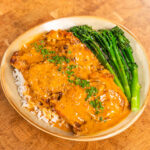
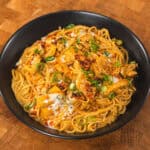
Mildly spicy as written. Two tablespoons of curry paste go into three cups of liquid, and the sharper heat you can see in the photos is the chili oil and the fresh chili sitting on top, both of which are added at the end and are entirely up to you.

RATE MY DISH!
If you enjoy my dish make sure to leave a comment and rating down below. I highly appreciate it!
Tag me on Instagram @geniuseatss so I can see your creation! Don't forget to follow me on TikTok, Youtube, Pinterest and Facebook for more recipes and contents!
Thank you so much and enjoy my recipes!
PrintChilli Oil Red Curry Wonton Ramen

Enjoy bold flavors with Chili Oil Red Curry Wonton Ramen, a spicy, aromatic bowl of comfort!
- Prep Time: 10
- Cook Time: 15
- Total Time: 25 minutes
- Yield: 2 Servings 1x
- Category: Noodles
- Method: Easy
- Cuisine: Asian
Ingredients
- 2 packs of ramen noodles
- 10-12 frozen dumplings
- 1 tbsp of neutral oil
- 3 cloves of garlic, minced
- 1 tsp of ginger, paste
- 1 tbsp of lemongrass, paste
- 2 tbsp of Thai red curry paste
- 2 cup of chicken stock
- 1 cup of coconut milk
- 2 tsp of fish sauce
- 2 tsp of sugar
- 4 kaffir lime leaves
To garnish:
- Fried Shallots
- Chili
- Spring onion
- Chili Oil
Instructions
- In a pot, heat 1 tablespoon of oil over medium high heat. Add garlic, ginger, lemongrass and red curry paste. Sauté for 2 minutes.
- Add chicken stock, coconut milk, fish sauce, sugar and kaffir lime leaves. Stir until combined and bring the sauce to a boil and simmer for 10-12 minutes. Turn off the heat and set aside.
- Then, cook your wontons, veggies and ramen in hot boiling water.
- Plate your ramen in a bowl along with the veggies and wontons. Laddle the curry soup and garnish with fried shallots, chili, spring onions and chili oil. Enjoy!
Want more? Browse every noodle recipe in one place.



droversointeru
I love your blog.. very nice colors & theme. Did you create this website yourself? Plz reply back as I’m looking to create my own blog and would like to know wheere u got this from. thanks
imis
delicious. Absolutely underrated perfection. I use it for fish and prawn especially. Always a hit. Always easy!!!
zoritoler imol
Excellent post. I was checking constantly this blog and I'm impressed! Extremely useful info specially the last part 🙂 I care for such info a lot. I was looking for this certain info for a very long time. Thank you and best of luck.
ABM
Really love how you balance entertainment with educational value so perfectly always