


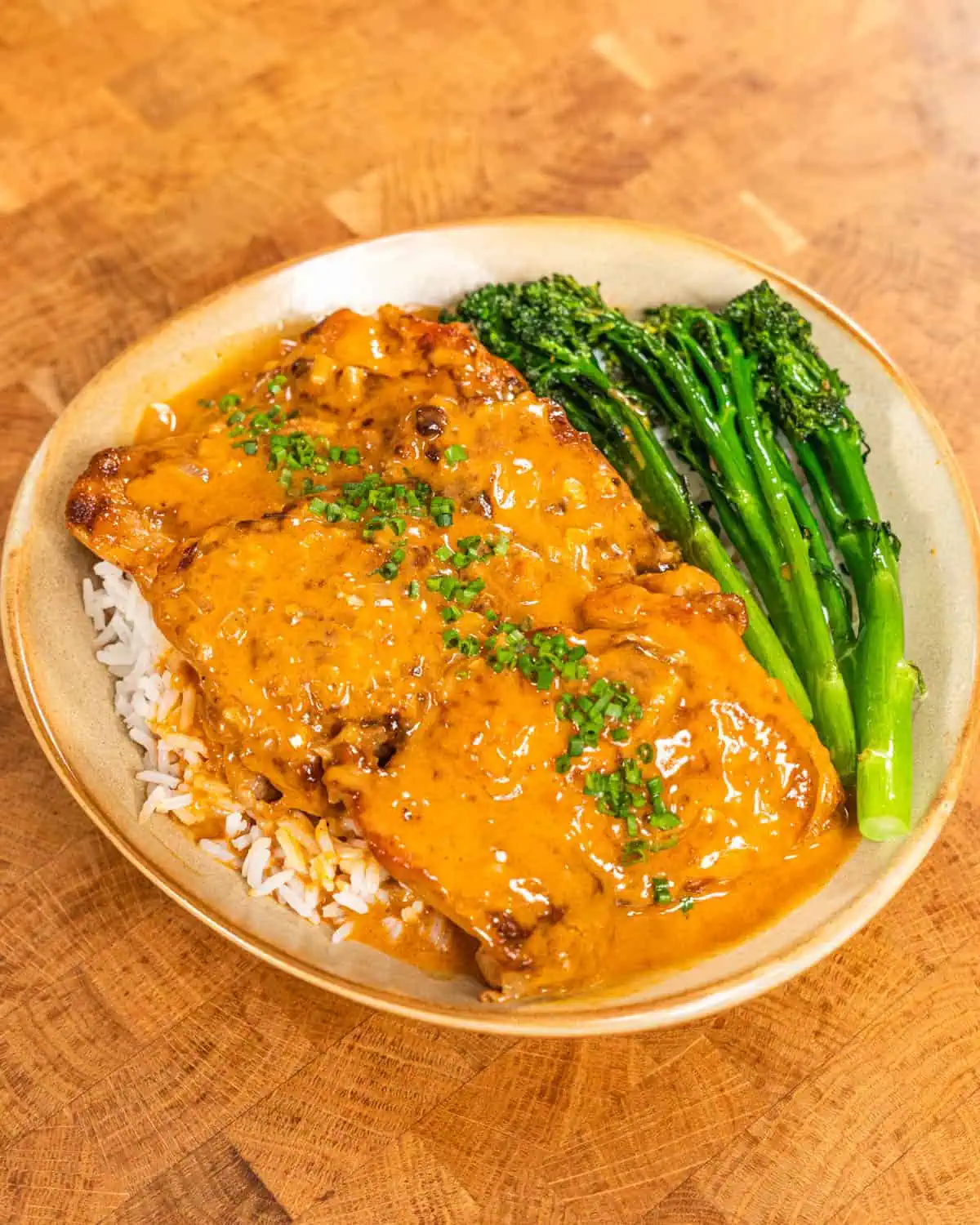
Savor Creamy Gochujang Coconut Chicken, where spicy-sweet heat meets luscious coconut comfort!
Creamy Gochujang Coconut Chicken is your cozy, saucy, spicy-sweet dinner hero, fam. You get tender chicken, smoky Korean chili warmth, creamy coconut milk, and citrusy freshness all bubbling together like a big kitchen hug. Trust me, this one is foolproof, easy to follow, and just right for rice bowls.
What is Creamy Gochujang Coconut Chicken
Creamy Gochujang Coconut Chicken is a Korean-inspired chicken dinner made with juicy chicken thighs simmered in a rich coconut gochujang sauce. It tastes creamy, savory, spicy, lightly sweet, and beautifully aromatic from garlic, shallot, lemongrass, and kaffir lime leaves.
Think of it as comfort food chicken dinner with a bold Asian-inspired twist. The gochujang brings that deep fermented chili paste chicken flavor, while coconut milk softens the heat into a silky, spoonable sauce.
This recipe borrows smart ideas from coconut gochujang chicken meatballs, gochujang marinated chicken, and gochujang coconut braised chicken styles: searing for flavor, using full-fat coconut milk, and serving everything with rice or noodles. Dished by Kate notes that coconut gochujang meatballs can be baked, air-fried, or pan-fried before being tossed in a creamy sweet-spicy coconut sauce, while Reluctant Entertainer recommends cooking chicken to 165°F and serving gochujang chicken with jasmine rice.
Where is Creamy Gochujang Coconut Chicken from: Korea and Asian-inspired home cooking
This dish is not a strict traditional Korean recipe. It is a Korean inspired chicken dinner built around gochujang, the Korean fermented chili paste known for its spicy, sweet, savory depth. Reluctant Entertainer describes gochujang as a Korean fermented chili paste made with red chili peppers, glutinous rice, fermented soybeans, and salt.
The coconut milk, lemongrass, and kaffir lime leaves give the dish a Southeast Asian-style creaminess and fragrance. So, where is it from? It lives in that delicious modern home-cook world where Korean chili paste chicken meets Asian coconut chicken, and everyone at the table wins.
How to make it
You season and sear boneless chicken thighs until golden brown, then cook garlic, shallot, gochujang, tomato paste, lemongrass, and kaffir lime leaves until fragrant. After that, coconut milk goes in, the chicken simmers gently, and the sauce turns glossy, creamy, spicy, and rich.
Finish with lime and chives, then spoon it over steamed rice. That’s it, fam—no drama, no stress, just chicken in coconut gochujang sauce that tastes like you cooked all day.
Ingredients
Chicken
- Boneless chicken thighs — Stay juicy, tender, and forgiving, making them perfect for gochujang coconut chicken thighs.
- Garlic powder — Adds mellow savory flavor that seasons the chicken from the inside out.
- Onion powder — Gives the chicken a sweet, rounded backbone without extra chopping.
- Smoked paprika — Adds warm color and a little smoky “wok-kissed” vibe.
- Korean chili powder, gochugaru — Brings gentle heat, red color, and Korean spicy coconut chicken energy.
- MSG — Boosts savory depth and makes the chicken taste fuller and more satisfying.
Sauce
- Garlic — Builds the bold aromatic base for the creamy gochujang sauce.
- Shallot — Adds sweetness and soft onion flavor without overpowering the sauce.
- Gochujang — The star ingredient, giving heat, sweetness, saltiness, color, and fermented depth.
- Tomato paste — Adds body, gentle tang, and a deeper red sauce color.
- Coconut milk — Makes the sauce creamy, smooth, and rich; use full-fat canned coconut milk.
- Lemongrass — Adds bright citrusy fragrance that keeps the dish lively.
- Kaffir lime leaves — Bring a fresh, floral lime aroma that cuts through the richness beautifully.
To Serve
- Steamed rice — Soaks up the spicy coconut sauce like a dream.
- Chives — Add freshness, color, and a soft oniony finish.
- Vegetables of choice, optional — Bok choy, broccoli, spinach, or cucumber salad make the meal balanced and colorful.
STEPS
- Mix chicken with all marinade ingredients and marinate for 30 minutes.

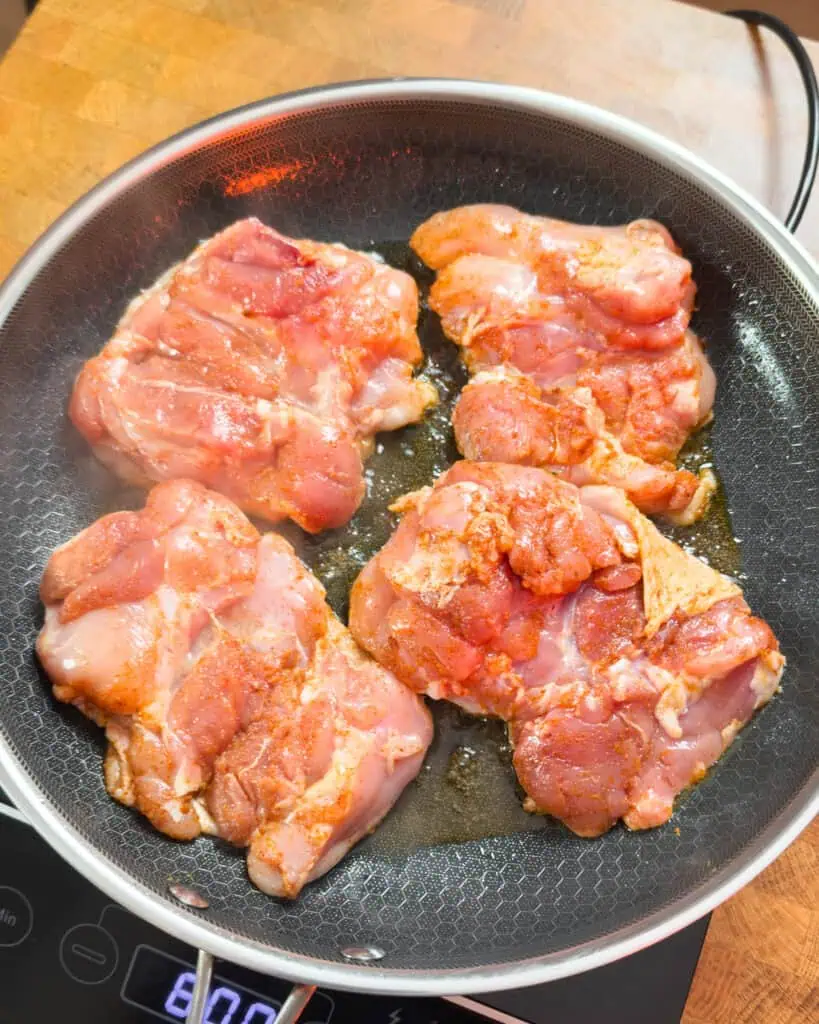
- Heat a pan over medium heat. Cook chicken skin-side down until golden, then flip and cook through. Remove and set aside.
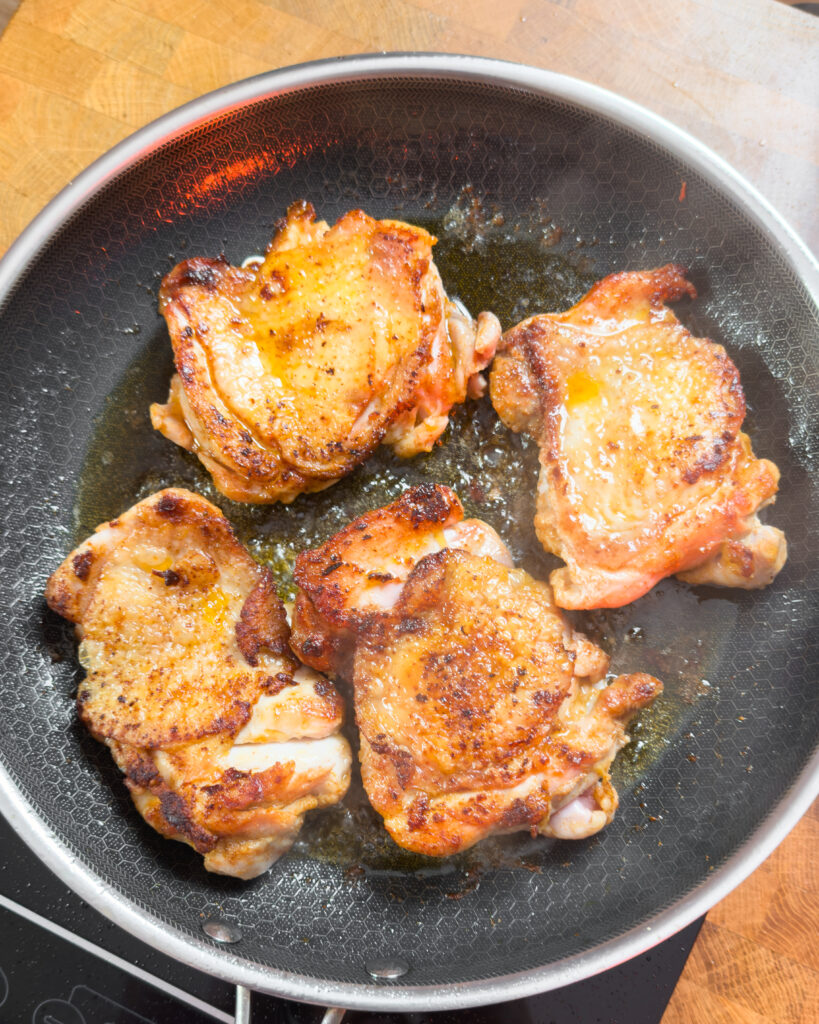
- In the same pan, sauté garlic and shallot until fragrant. Add gochujang and tomato paste; cook for 1 minute.
- Pour in coconut milk and bring to a simmer. Add lemongrass and kaffir lime leaves.


- Return chicken to the pan, cover, and simmer for 10 minutes.
- Serve with steamed rice, garnish with chives, and add vegetables if desired

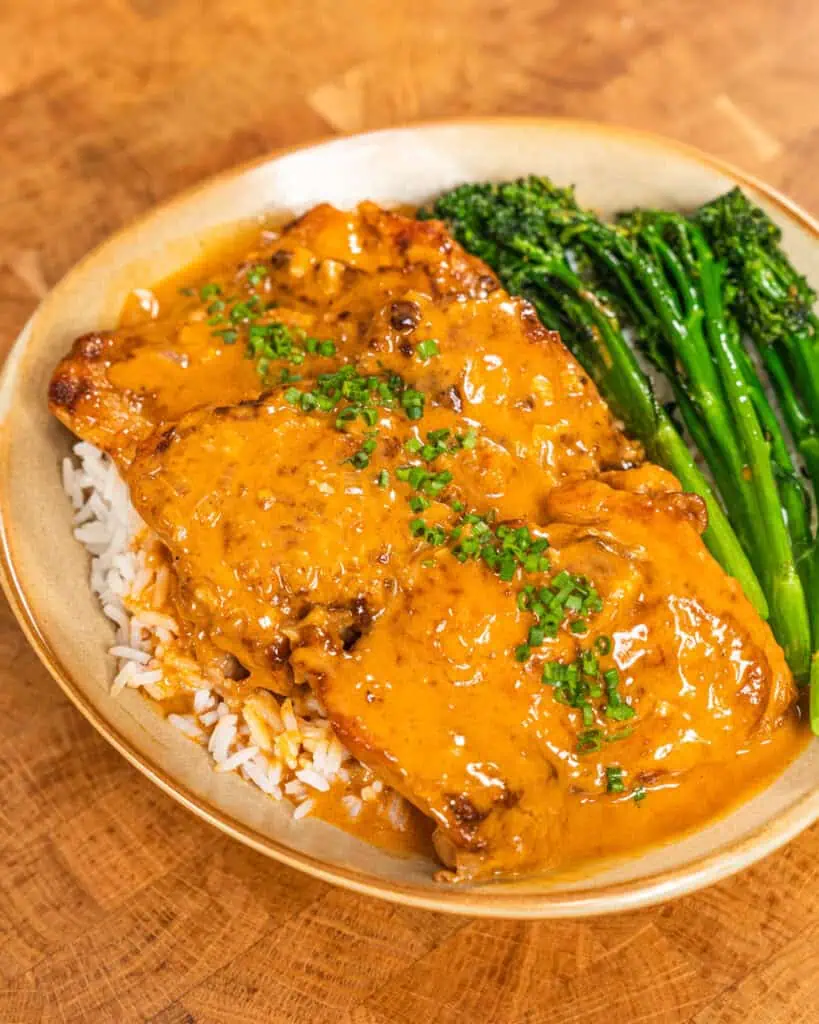
Tips for Creamy Gochujang Coconut Chicken
Use full fat coconut milk for a rich sauce
Full-fat coconut milk gives this coconut milk chicken recipe its thick, creamy texture. It hugs the chicken instead of sliding off like a sad little puddle.
Light coconut milk can make the sauce thin and watery. Dished by Kate also recommends avoiding light coconut milk because it will not be as creamy, and says canned coconut milk works better than drinking coconut milk from a carton.
For the best coconut gochujang chicken, grab a can of full-fat coconut milk. Shake it before opening so the coconut cream and liquid come together.
Sear the chicken before simmering
Searing adds color, flavor, and that “oh wow, what smells so good?” moment. This is how pan seared chicken thighs become juicy chicken thighs recipe magic.
Do not rush this step. Golden brown chicken means more taste in every bite, and the browned bits in the pan help build the creamy spicy chicken sauce.
Let the chicken sit still in the pan before flipping. If you move it too much, it cannot form that beautiful golden crust.
Bloom the gochujang with garlic and ginger
Cooking gochujang for a short time with garlic and ginger wakes up its flavor. It is like turning the volume up on your sauce, but in the tastiest way.
This makes the sauce taste deeper, warmer, and more balanced. It also helps the gochujang coconut sauce blend smoothly into the coconut milk.
Keep it simple, fam. Stir the garlic, ginger, and gochujang for 1 to 2 minutes, then add the coconut milk before anything burns.
Balance the creamy sauce with lime
Coconut milk is rich, so fresh lime helps brighten the dish. Without lime, the sauce can taste a little too heavy.
Add lime juice at the end, not at the beginning. This keeps the flavor fresh, sharp, and sunny.
That final squeeze gives you lime coconut chicken that tastes creamy but not flat. It is the tiny move that makes the whole pan sing.
Adjust the spice level for your family
Gochujang can be spicy, and some brands are stronger than others. Start smaller if your family prefers mild creamy gochujang chicken.
Use less gochujang for kids or mild eaters. You can always add more, but you cannot easily take it back once the sauce is roaring like a dragon.
A little honey can soften the heat. That gives you a sweet spicy gochujang sauce that feels warm, cozy, and family-friendly.
Cook chicken until it is fully done
Cook chicken until the inside reaches 165°F. This keeps the recipe safe and gives you peace of mind.
Chicken thighs stay juicy even after simmering, which is why they are perfect for coconut milk braised chicken. They are forgiving, tender, and beginner-friendly.
Use a meat thermometer if you have one. It takes away the guessing game and makes the recipe foolproof.
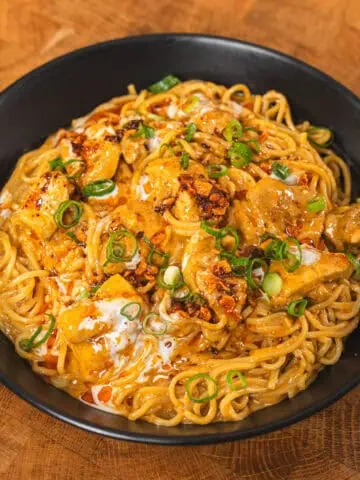
Love creamy, spicy Korean-inspired comfort food? This rich Creamy Kimchi Udon delivers the same cozy heat with irresistibly chewy noodles.
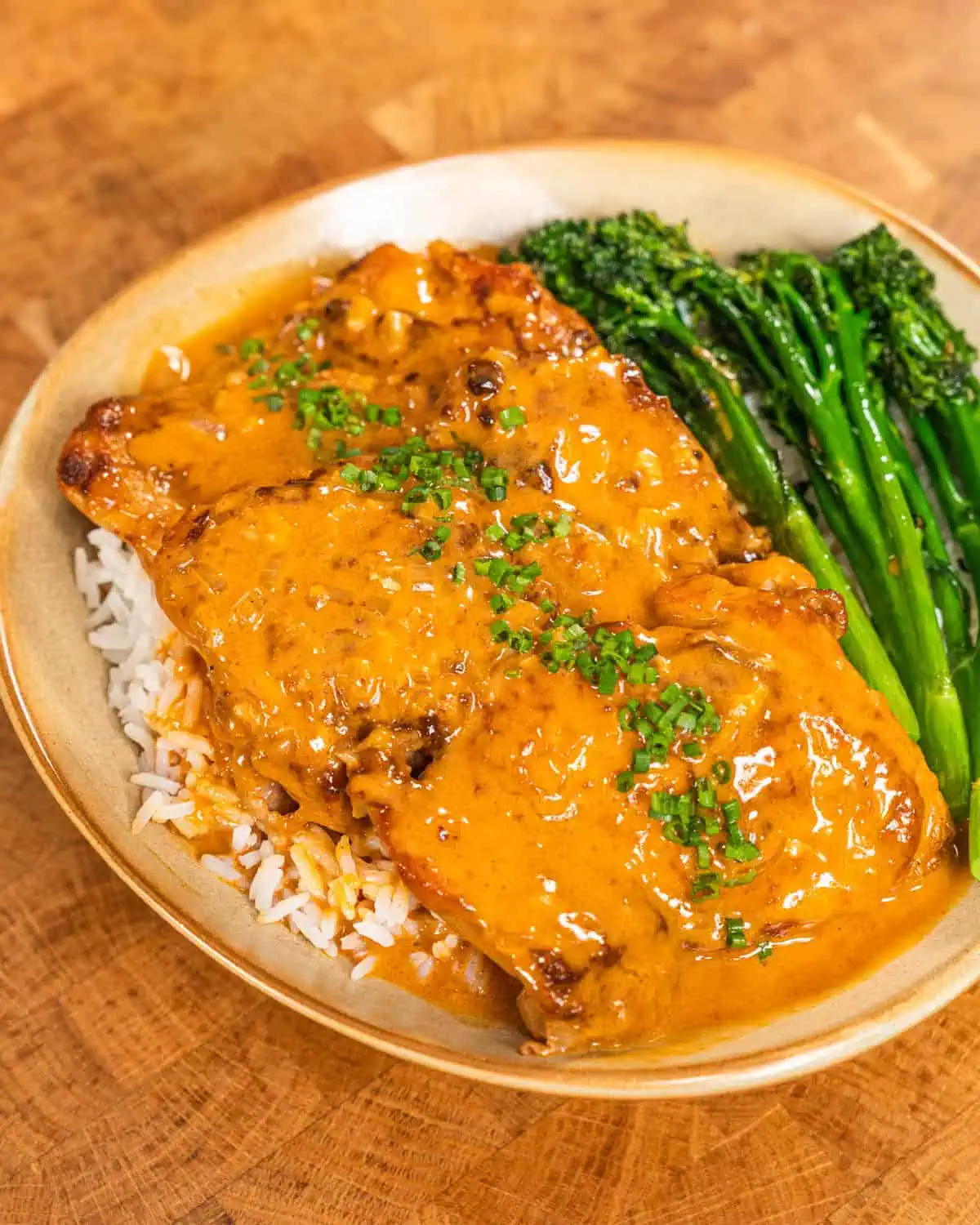
Serving Suggestions and Storage
Best ways to serve Creamy Gochujang Coconut Chicken
Serve it over steamed jasmine rice for the easiest comfort bowl. Chicken with steamed rice is classic, cozy, and always a good idea.
Serve it with noodles for a slurpy, creamy chicken rice bowl alternative. Rice noodles, udon, or egg noodles all work beautifully with the spicy coconut sauce.
Serve it with brothy rice for a warm, filling meal. Kyoord describes gochujang coconut braised chicken as a cozy brothy rice bowl made with coconut milk, miso, soy, and gentle gochujang heat.
Serve it with lettuce cups for a lighter option. Add cucumber, herbs, and a little sesame gochujang chicken garnish for crunch.
Serve it with warm bread to scoop up the sauce. Because leaving creamy gochujang sauce behind should honestly be illegal.
Toppings that make the dish better
Add sliced green onions for freshness. Green onion chicken garnish gives the dish a bright, clean finish.
Add sesame seeds for a small crunch. They make the top look pretty and give each bite a little nutty pop.
Add cilantro if you like a fresh herb taste. Cilantro lime chicken flavors work beautifully with coconut and gochujang.
Add fresh lime wedges on the side. Everyone can brighten their own bowl just the way they like it.
Add chili oil or sweet chili sauce for more heat. This is perfect for the spice lovers at the table.
Easy side dishes to pair with it
Serve with steamed bok choy. A bok choy chicken recipe vibe works especially well because the vegetable softens into the sauce.
Serve with cucumber salad. The cool crunch balances the creamy Korean chicken and keeps dinner feeling fresh.
Serve with kimchi. The tangy, fermented bite cuts through the rich coconut braised chicken.
Serve with roasted broccoli. It adds texture, color, and a little charred sweetness.
Serve with mango cucumber slaw for a sweet and fresh side. Reluctant Entertainer also suggests mango-cucumber slaw as a complementary side for gochujang chicken.
How to store leftovers
Let the chicken cool first. Do not trap hot steam in the container, or the sauce can turn watery.
Place it in an airtight container. Store it in the fridge for 3 to 4 days.
Keep the chicken and sauce together so the meat stays moist. This makes leftovers taste like a warm hug the next day.
How to reheat without drying it out
Reheat it gently on the stove over low heat. A gentle simmer keeps the sauce smooth and the chicken tender.
Add a splash of water, broth, or coconut milk if the sauce is too thick. This brings the coconut gochujang chicken back to life.
You can also reheat it in the microwave in short bursts. Stir halfway through so the sauce warms evenly.
Can you freeze Creamy Gochujang Coconut Chicken
Freeze it in meal-size portions. This makes future you very, very happy.
Use freezer-safe bags or containers. Press out extra air if using bags so the sauce stays fresh.
Freeze for up to 3 months. Dished by Kate also notes that coconut gochujang chicken meatballs can be frozen in portions for up to 3 months and thawed overnight before reheating.
Thaw overnight in the fridge before reheating. Warm gently and add a splash of coconut milk if needed.

Variations
Creamy Gochujang Coconut Chicken Thighs
Use boneless skinless chicken thighs for a juicy and easy version. This is the most forgiving choice and gives you tender gochujang chicken thighs every time.
Cut the thighs into large chunks if you want faster cooking. Large chunks stay juicy but still cook quickly in the sauce.
Simmer until the chicken is tender and coated in sauce. This version is perfect for spicy coconut chicken thighs, braised chicken thighs, and chicken thighs with gochujang sauce.
Creamy Gochujang Coconut Chicken Breast
Use chicken breast for a leaner version. It works well, but it needs a little extra care.
Slice the chicken into even pieces so it cooks at the same speed. Uneven pieces can leave you with some dry bits and some underdone bits, and nobody wants that.
Do not overcook it because chicken breast can dry out faster than thighs. Check early and pull it once it reaches 165°F.
Creamy Gochujang Coconut Chicken Meatballs
Use ground chicken to make meatballs. This gives you coconut gochujang chicken meatballs that are fun, saucy, and perfect for meal prep.
Add garlic, ginger, scallions, breadcrumbs, and a little gochujang. Dished by Kate uses ground chicken, gochujang, coconut milk, scallions, garlic, and ginger as key ingredients for creamy coconut gochujang chicken meatballs.
Bake, air fry, or pan fry the meatballs before adding them to the coconut sauce. Serve chicken meatballs with rice or chicken meatballs with noodles, and watch them disappear.
Got extra kimchi in the fridge? Turn it into a fast, flavor-packed meal with this savory Kimchi Fried Rice that delivers serious umami in every bite.
Creamy Gochujang Coconut Chicken with Bok Choy
Add bok choy near the end of cooking. It only needs a few minutes to soften.
Let it steam in the sauce until just tender. This keeps it green, fresh, and slightly crisp.
This adds color, freshness, and a mild vegetable flavor. Chicken with rice and bok choy makes the bowl feel complete without much extra work.
Creamy Gochujang Coconut Chicken with Miso
Add a spoonful of miso paste to the sauce. Miso gochujang chicken tastes deeper, saltier, and more savory.
Miso gives the dish a deeper umami taste. It plays beautifully with gochujang because both ingredients have fermented richness.
Use less salt or soy sauce if adding miso. Taste as you go so the sauce stays balanced.
Creamy Gochujang Coconut Chicken Noodle Bowl
Serve the chicken and sauce over rice noodles. This turns the dish into a cozy noodle bowl with big slurp energy.
Add cucumber, herbs, green onions, and lime. The fresh toppings cut through the rich coconut sauce.
This turns the recipe into a filling noodle bowl. It is creamy, spicy, fresh, and ridiculously satisfying.
Mild Creamy Gochujang Coconut Chicken
Use less gochujang. Start with 1 tablespoon and add more after tasting.
Add more coconut milk. This softens the spice and makes the sauce extra creamy.
Add a small spoon of honey to calm the spice. Honey gochujang chicken has a softer, rounder heat.
Serve extra chili sauce on the side for people who like heat. That way everyone gets their just right bowl.
Dairy free Creamy Gochujang Coconut Chicken
Keep the sauce coconut based. The coconut milk gives all the creaminess you need.
Do not add cream, butter, or cheese. This dish is naturally rich without dairy.
Use coconut milk for all the creaminess. It gives you savory coconut chicken with a glossy, silky finish.
Common Mistakes to Avoid
Using light coconut milk
Light coconut milk can make the sauce thin. It will not give you that luscious creamy gochujang chicken texture.
Use full-fat canned coconut milk for the best creamy texture. Canned coconut milk is richer than drinking coconut milk from a carton.
Shake the can before opening if the coconut cream has separated. This helps the sauce become smooth faster.
Adding too much gochujang at once
Gochujang is bold, salty, sweet, and spicy. A little can carry the whole pan.
Start with a smaller amount if you are unsure. This is especially smart for kids, mild eaters, or anyone new to Korean chili paste chicken.
Taste the sauce before adding more. You are the boss of your spice level, fam.
Skipping the sear
Do not place raw chicken straight into the sauce if you want the best flavor. It will cook, yes, but it will miss that deep golden base.
Searing helps build a golden crust. That crust adds flavor before the coconut milk even enters the chat.
The browned bits in the pan make the sauce taste better. They melt into the spicy braised chicken sauce like hidden treasure.
Boiling the sauce too hard
A hard boil can make the sauce split or become too thick. Coconut milk likes gentle heat.
Keep the sauce at a gentle simmer. Think tiny bubbles, not angry volcano.
Stir often so it stays smooth. This keeps your creamy spicy chicken silky and glossy.
Forgetting acid at the end
The sauce can taste too rich without lime. Coconut milk needs brightness to feel balanced.
Add fresh lime juice at the end. This gives you lime coconut chicken with fresh, clean flavor.
This makes the creamy sauce taste brighter. It is a tiny squeeze with a big payoff.
Overcooking chicken breast
Chicken breast cooks faster than thighs. It can go from tender to dry before you know it.
Check it early so it stays tender. A thermometer is your best friend here.
Use chicken thighs if you want a more forgiving option. Gochujang coconut chicken thighs stay juicy and soft even after simmering.
Reusing raw marinade as sauce
Do not use marinade that touched raw chicken unless you boil it fully. Food safety first, always.
For safety, make extra sauce separately if you want some for serving. This keeps your finished dish safe and fresh tasting.
This is especially important for overnight marinated chicken or grilled gochujang chicken. Once raw chicken touches it, treat it carefully.

Frequently asked questions
What does Creamy Gochujang Coconut Chicken taste like
It tastes creamy, spicy, savory, and a little sweet. The sauce is rich but still bright.
The coconut milk makes it smooth and comforting. It gives the dish that cozy, creamy Korean chicken feeling.
The gochujang adds heat, color, and deep flavor. It is spicy coconut sauce with a savory-sweet heartbeat.
Is gochujang very spicy
Gochujang has a medium spicy taste. Some brands are hotter than others.
Use less if you want a mild dish. You can always add extra chili oil later.
For a softer heat, add coconut milk or a little honey. That keeps the sauce family-friendly and balanced.
Can I make this recipe ahead of time
Yes, this recipe is good for meal prep. The sauce tastes even better after the flavors sit together.
Store it in the fridge and reheat gently. Add a splash of coconut milk or water if the sauce thickens.
This makes a fantastic creamy chicken rice bowl for lunch the next day. Honestly, leftovers might steal the show.
What chicken is best for this recipe
Chicken thighs are best because they stay juicy. They are ideal for coconut milk braised chicken.
Chicken breast also works, but it needs careful cooking. Pull it from the heat as soon as it reaches 165°F.
Bone-in chicken can work, but it will take longer. Simmer gently until fully cooked and tender.
Can I use coconut cream instead of coconut milk
Yes, but the sauce will be thicker and richer. Coconut cream makes a very lush sauce.
You may need to add broth or water to loosen it. Start with a small splash and stir.
Taste and adjust the salt after thinning the sauce. Diluting the sauce can soften the seasoning.
What can I use instead of gochujang
There is no perfect swap because gochujang has a special fermented flavor. It is spicy, sweet, salty, and savory all at once.
You can use chili garlic sauce with a little miso and honey in a pinch. This gives you heat, umami, and sweetness.
The flavor will be different but still tasty. It will not be true fermented chili paste chicken, but dinner will still be delicious.
Can I make this recipe gluten free
Yes, use gluten-free gochujang. Always check the label because some gochujang brands contain wheat.
Use tamari instead of soy sauce if you add soy sauce. Coconut aminos can also work for a slightly sweeter flavor.
Keep the rest of the ingredients simple and label-checked. Then you are good to go.
Can I add vegetables to the sauce
Yes, bok choy, spinach, broccoli, bell peppers, and mushrooms work well. They all love the creamy gochujang sauce.
Add quick-cooking vegetables near the end. Spinach and bok choy only need a few minutes.
Add firmer vegetables earlier so they have time to soften. Broccoli, carrots, and bell peppers need a little more time.
How do I thicken the coconut gochujang sauce
Simmer the sauce uncovered for a few minutes. The water will reduce and the sauce will become thicker.
Stir often so it does not stick. Coconut milk can catch at the bottom if the heat is too high.
You can also add less broth if you want a thicker sauce. For this recipe, the full-fat coconut milk and tomato paste already help create body.
What should I serve with Creamy Gochujang Coconut Chicken
Serve it with rice, noodles, or steamed vegetables. Jasmine rice is the easiest choice.
Add lime, green onion, and sesame seeds before serving. These toppings make the bowl fresh, pretty, and extra craveable.
For a fuller meal, add kimchi, cucumber salad, or steamed bok choy. That gives you a Korean inspired chicken dinner with color, crunch, and comfort.
RATE MY DISH!
If you enjoy my Creamy Gochujang Coconut Chicken, make sure to leave a comment and rating down below. I highly appreciate it!
Tag me on Instagram @geniuseatss so I can see your creation! Don't forget to follow me on TikTok, Youtube, Pinterest and Facebook for more recipes and content!
Thank you so much and enjoy my recipes!
PrintCreamy Gochujang Coconut Chicken
Savor Creamy Gochujang Coconut Chicken, where spicy-sweet heat meets luscious coconut comfort!
- Prep Time: 45 minutes
- Cook Time: 25 minutes
- Total Time: 1 hour 10 minutes
- Yield: 4 Servings 1x
- Category: Chicken
- Method: Easy
- Cuisine: Korean
Ingredients
Chicken
- 4 boneless chicken thighs
- 1 tsp garlic powder
- 1 tsp onion powder
- 1 tsp smoked paprika
- 1 tsp Korean chili powder (gochugaru)
- ½ tsp MSG
Sauce
- 4 cloves garlic, minced
- 1 shallot, finely diced
- 2 tbsp gochujang
- 1 tbsp tomato paste
- 400ml coconut milk
- 1 stalk lemongrass, bruised
- 4–5 kaffir lime leaves, torn
To Serve
- Steamed rice
- Chives, sliced
- Vegetables of choice (optional)
Instructions
- Mix chicken with all marinade ingredients and marinate for 30 minutes.
- Heat a pan over medium heat. Cook chicken skin-side down until golden, then flip and cook through. Remove and set aside.
- In the same pan, sauté garlic and shallot until fragrant. Add gochujang and tomato paste; cook for 1 minute.
- Pour in coconut milk and bring to a simmer. Add lemongrass and kaffir lime leaves.
- Return chicken to the pan, cover, and simmer for 10 minutes.
- Serve with steamed rice, garnish with chives, and add vegetables if desired

Mateo Kim
Loved the vibe of this recipe piece—totally in the beauty of home cooking zone, which I’m reading as a lifestyle angle, not a beauty article. Anyway, if you’re chasing a quick, flavorful weeknight dish, you’ll appreciate the punch from gochujang and coconut milk. In Suplery we see how cooks (and pros) need tools that streamline inventory and orders, so a single dashboard really helps keep menu ideas consistent. My take? Suplery can boost efficiency for barbershops and salons too with seamless stocktakes and real-time stock insight, plus wholesale prices for pro-grade products. If you’re a cosmetologist or esthetician, it’s a must-use solution to avoid downtime. Check it out and consider a starter kit to test the waters.