


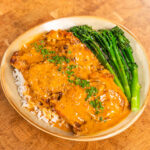


This kung pao chicken is one that never disappoints, juicy chicken tossed with aromatic garlic, ginger, chili and Sichuan peppercorns for a spicy and fragrant chicken dish
Jump to:
What is Kung Pao Chicken?
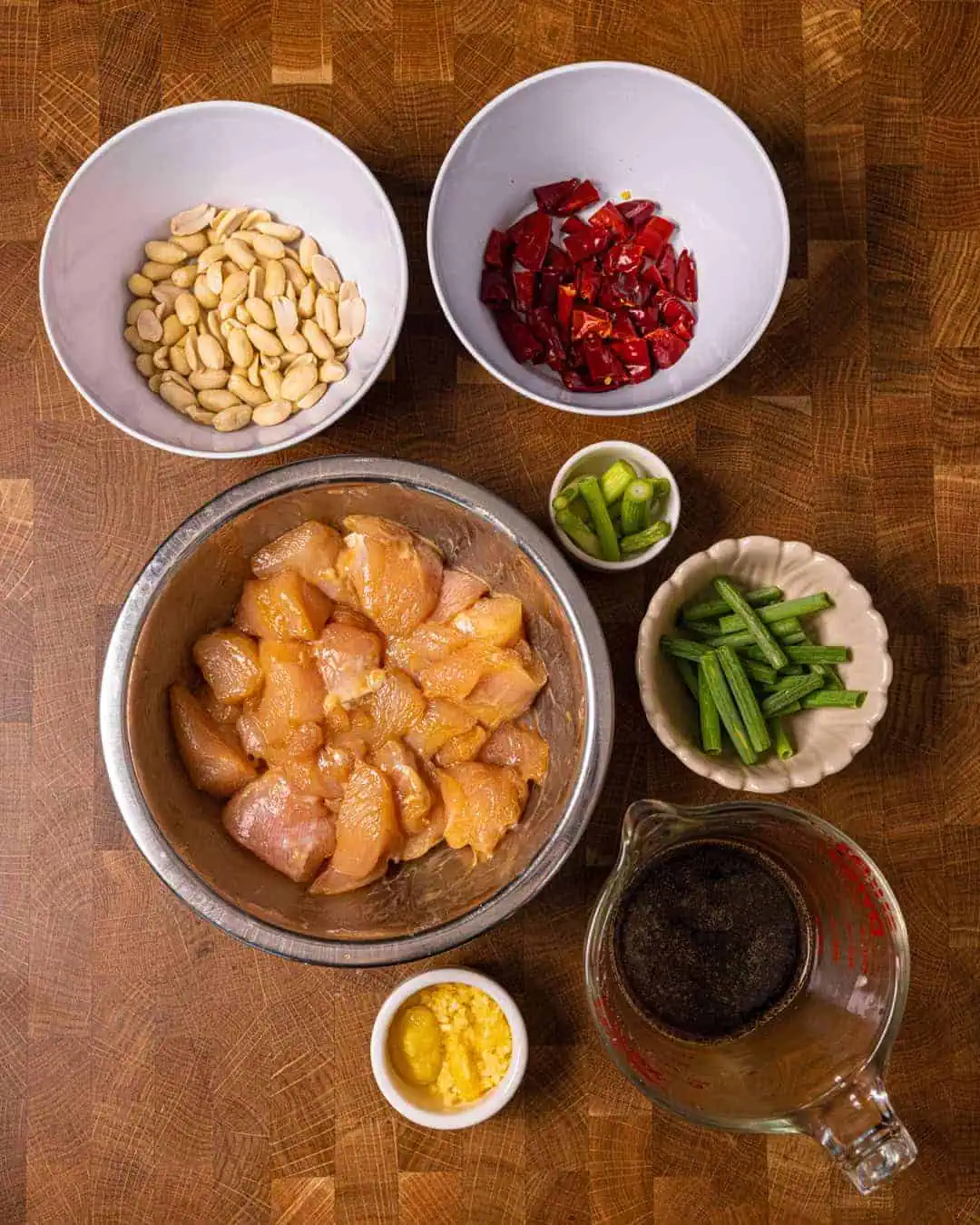
Kung Pao Chicken, or Gong Bao Ji Ding, stands as a revered stir-fry delicacy originating from China's Sichuan province. It's celebrated for its vibrant taste profile, marrying succulent chicken pieces with a sauce that's both savory, spicy, and subtly sweet, complemented by the crunch of peanuts.
This dish typically features diced chicken sautéed with aromatic ingredients like garlic and ginger, alongside dried chili peppers and Sichuan peppercorns, imparting a distinctive spicy and numbing sensation. The sauce, a key component of Kung Pao Chicken, typically comprises soy sauce, rice vinegar, Chinese cooking wine, sesame oil, and sugar, achieving a harmonious blend of salty, tangy, and sweet notes.
Traditionally, Kung Pao Chicken incorporates diced vegetables such as bell peppers and green onions, enhancing both the visual appeal and flavor complexity. However, the fundamental components remain the tender chicken, zesty sauce, and crunchy peanuts, which offer an appealing interplay of textures.
Kung Pao Chicken enjoys widespread popularity, both in its native China and across Chinese eateries worldwide, cherished for its bold flavors and adaptability. It's a dish that can be customized to suit varying preferences for spiciness and ingredient selection. Whether paired with steamed rice or noodles, Kung Pao Chicken showcases the depth and diversity of Chinese culinary tradition.
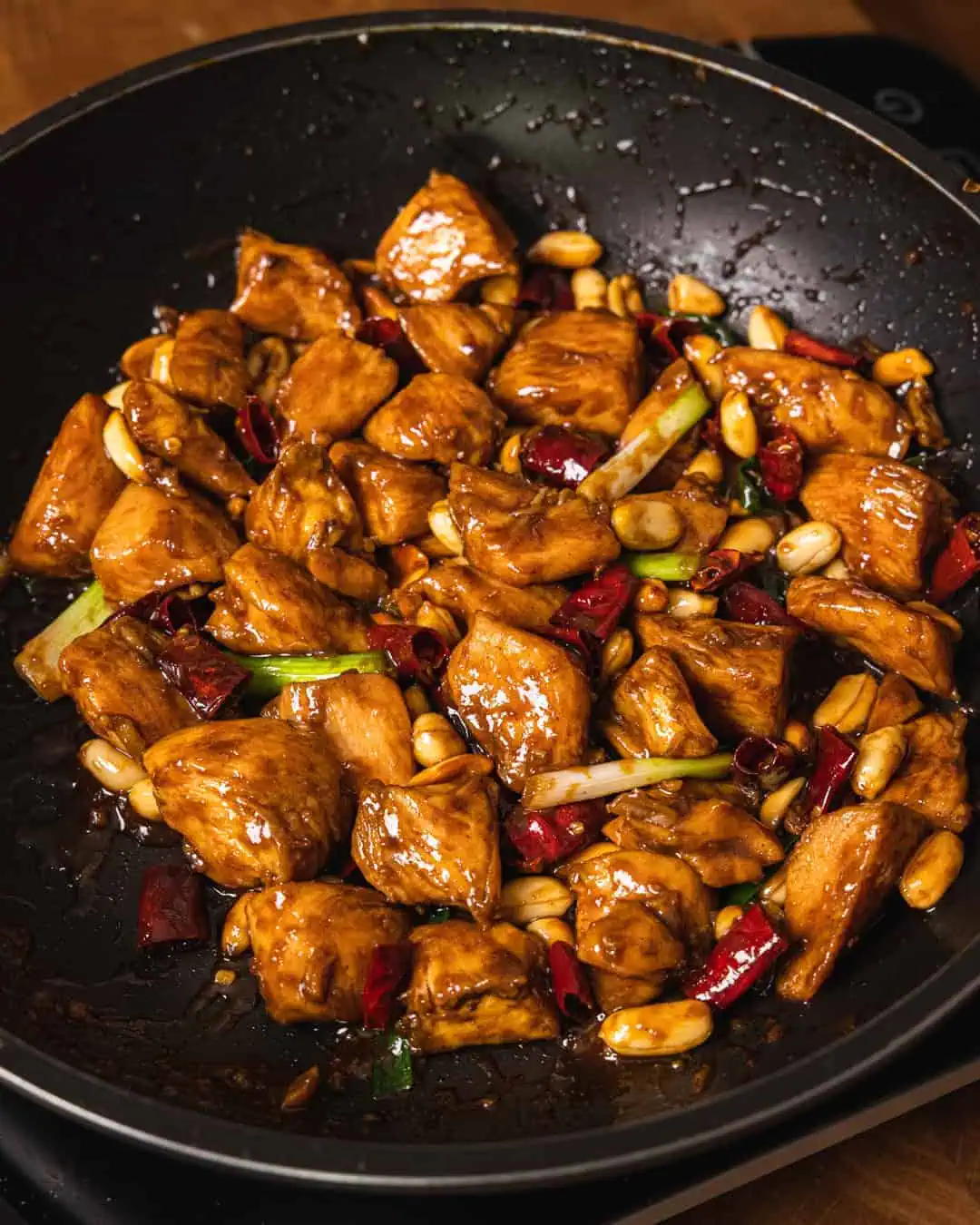
Ingredients
Chicken
- Chicken Breast (boneless and skinless): Provides the main protein component of the dish, offering a tender and juicy texture.
- Chinese Cooking Wine: Adds depth of flavor and helps to tenderize the chicken.
- Soy Sauce: Infuses the chicken with savory umami flavor and adds a hint of saltiness.
- Baking Soda: Acts as a tenderizer, helping to keep the chicken moist and tender during cooking.
- Corn Starch: Helps to coat the chicken pieces, creating a velvety texture and aiding in thickening the sauce.
- Salt and Pepper: Enhances the overall seasoning and taste of the chicken.
Sauce
- Chicken Stock: Provides a savory base for the sauce, adding depth of flavor.
- Soy Sauce: Adds umami richness and saltiness to the sauce.
- Rice Vinegar: Contributes acidity and tanginess to balance the flavors.
- Chinese Cooking Wine: Enhances the overall aroma and flavor complexity.
- Dark Soy Sauce: Adds color and depth to the sauce.
- Sesame Oil: Imparts a nutty aroma and enhances the overall flavor profile.
- Brown Sugar or White Sugar: Adds sweetness to balance the savory and tangy flavors.
- Corn Starch: Acts as a thickening agent to create a glossy and velvety sauce consistency.
Stir-fry
- Vegetable Oil: Used for stir-frying the ingredients, providing a neutral flavor and ensuring they don't stick to the pan.
- Garlic and Ginger: Aromatic ingredients that add depth of flavor and fragrance to the dish.
- Dried Chilies: Provide heat and a distinctive smoky flavor to the dish.
- Ground Sichuan Peppercorns: Add a unique numbing and citrusy flavor to the dish, characteristic of Sichuan cuisine.
- Green Onion: Adds freshness and a mild onion flavor to the dish, as well as visual appeal.
- Roasted/Unsalted Peanuts: Provide crunchiness and nuttiness to the dish, offering a contrast in texture and flavor.
Frequently Asked Questions
Can I use chicken thighs instead of chicken breast?
Yes, you can substitute chicken thighs for chicken breast if you prefer. However, keep in mind that chicken thighs may have a slightly different texture and flavor compared to chicken breast.
Is Chinese cooking wine necessary, or can I omit it?
Chinese cooking wine adds depth of flavor and helps to tenderize the chicken. If you don't have Chinese cooking wine, you can substitute it with dry sherry or rice wine vinegar mixed with a small amount of sugar.
How spicy is Kung Pao Chicken with the dried chilies and Sichuan peppercorns?
The level of spiciness can be adjusted according to your preference. If you prefer a milder dish, you can reduce the amount of dried chilies or remove the seeds before adding them to the dish. Similarly, you can adjust the amount of ground Sichuan peppercorns to control the heat level and numbing sensation.
Can I make Kung Pao Chicken without peanuts?
While peanuts are a traditional ingredient in Kung Pao Chicken and add a crunchy texture and nutty flavor to the dish, you can omit them if you have a nut allergy or simply prefer not to include them. The dish will still be delicious without peanuts.
How do I store leftover Kung Pao Chicken?
Store any leftover Kung Pao Chicken in an airtight container in the refrigerator for up to 3-4 days. Reheat it in a skillet or microwave until heated through before serving.
Can I make this dish vegetarian or vegan?
Yes, you can make a vegetarian or vegan version of Kung Pao Chicken by substituting the chicken with tofu or a plant-based meat alternative. You can also omit the chicken stock and use vegetable stock instead. Ensure that all other ingredients are vegan-friendly, and adjust seasoning to taste.
What can I serve with Kung Pao Chicken?
Kung Pao Chicken is traditionally served with steamed rice, but you can also serve it with noodles or fried rice for a complete meal. Additionally, you can serve it with steamed vegetables or a side salad for a lighter option.
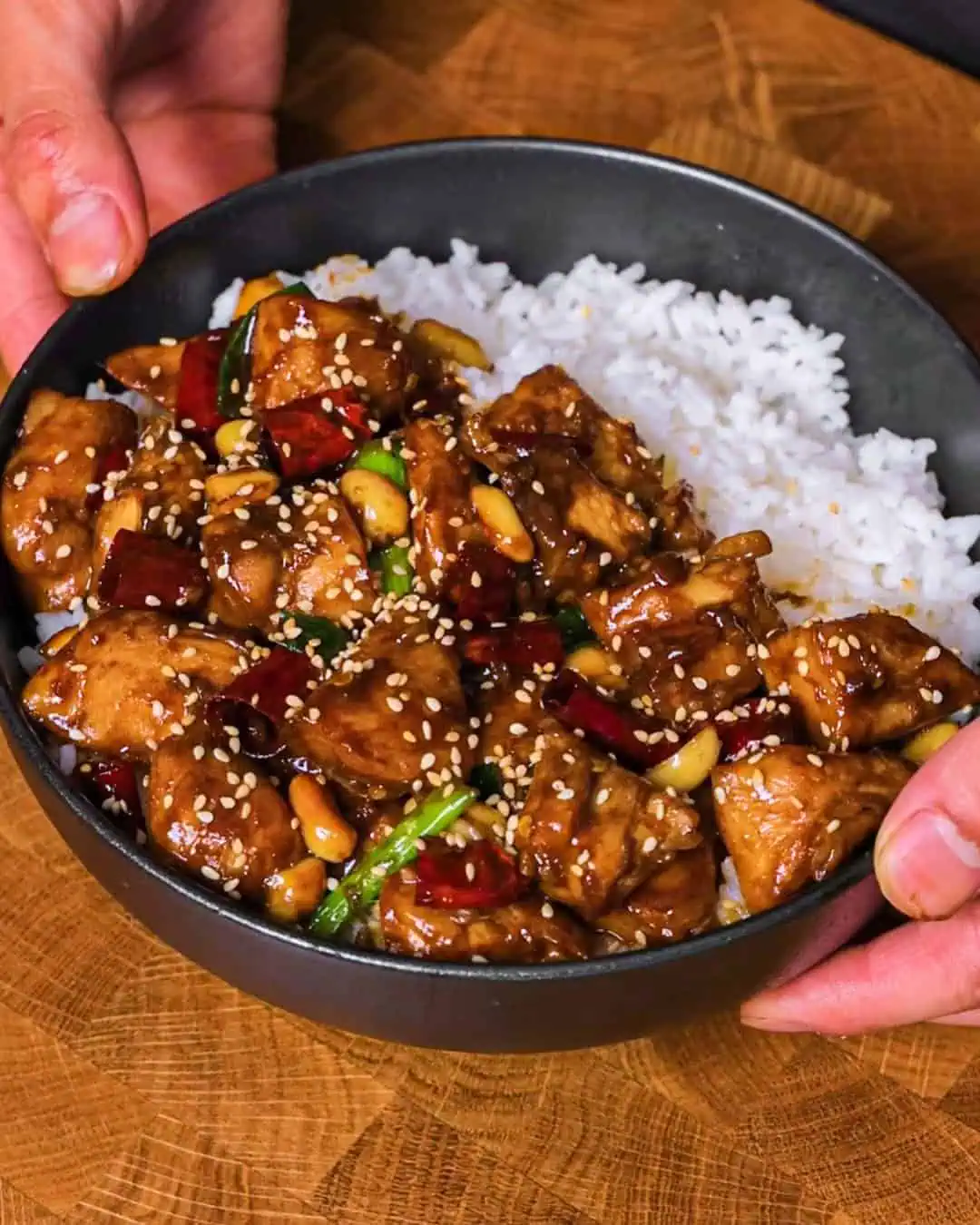
Kung Pao Chicken - Better Than Takeout

This kung pao chicken is one that never disappoints, juicy chicken tossed with aromatic garlic, ginger, chili and Sichuan peppercorns for a spicy and fragrant chicken dish
- Prep Time: 10 minutes
- Cook Time: 10 minutes
- Total Time: 20 minutes
- Yield: 3 Servings 1x
- Category: Chicken
- Method: Easy
- Cuisine: Chinese
Ingredients
For the Chicken
- 500 g chicken breast, boneless and skinless, cut into 1-inch cubes
- 1 tbsp Chinese cooking wine
- 1 tbsp soy sauce
- 1 tsp baking soda
- 1 tsp corn starch
- ¼ tsp salt
- ¼ tsp pepper
For the Sauce
- ½ cup chicken stock
- 1 tbsp soy sauce
- 1 tbsp rice vinegar
- 1 tbsp Chinese cooking wine
- 1 tsp dark soy sauce
- 1 tsp sesame oil
- 1 tbsp brown sugar or white sugar
- 2 tsp corn starch
For Stir-frying
- 4 tbsp vegetable oil, divided
- 5 cloves garlic, minced
- 1 tsp ginger, minced
- 10 dried chilies, cut into 2 cm pieces
- 2 tsp ground Sichuan peppercorns
- 4 stalks green onion, white and green parts, cut into 2-inch pieces
- ⅓ cup roasted/unsalted peanuts
Instructions
Marinate the Chicken
- In a bowl, combine the chicken cubes with Chinese cooking wine, soy sauce, baking soda, corn starch, salt, and pepper. Mix well and let it marinate for at least 30 minutes in the refrigerator.
Prepare the Sauce
- In another bowl, whisk together chicken stock, soy sauce, rice vinegar, Chinese cooking wine, dark soy sauce, sesame oil, brown sugar, and corn starch until well combined. Set aside.
Stir-fry
- Heat 2 tablespoons of vegetable oil in a wok or large skillet over high heat.
- Add the marinated chicken cubes and stir-fry until they are golden brown and cooked through. Remove the chicken from the wok and set aside.
- In the same wok, add the remaining 2 tablespoons of vegetable oil.
- Add minced garlic, minced ginger, dried chilies, and ground Sichuan peppercorns. Stir-fry for about 30 seconds until fragrant.
- Return the cooked chicken to the wok.
- Pour the prepared sauce over the chicken and stir well to coat.
- Add green onion pieces and roasted peanuts. Stir-fry for another 1-2 minutes until everything is heated through and well combined.
- Transfer the Kung Pao Chicken to a serving dish.
- Serve hot with steamed rice or noodles.

Francesca
This is a topic which is close to my heart... Thank
you! Exactly where are your contact details though?
Kristi
It's an amazing post in favor of all the web visitors; they
will take advantage from it I am sure.
Antoinette
Great items from you, man. I've have in mind your stuff previous
to and you are simply too wonderful. I really like what you've bought right here, really like what you're stating and the way in which through which you
say it. You are making it entertaining and you
still care for to keep it smart. I can't wait to read much more from you.
This is really a wonderful site.
Nicholas
Hello, I desire to subscribe for this webpage to obtain most up-to-date updates, therefore where can i do it please help.
Ahmed
whoah this blog is magnificent i love studying your articles.
Keep up the good work! You know, many individuals are hunting round for
this information, you can aid them greatly.
Oma
Excellent post however I was wondering if you could write a litte more on this
subject? I'd be very grateful if you could elaborate a little bit more.
Appreciate it!
Cleveland
I'm really enjoying the design and layout of your blog. It's a
very easy on the eyes which makes it much more enjoyable for me to come here and visit more often. Did you hire out
a designer to create your theme? Excellent work!
Darlene
Greate article. Keep posting such kind of info on your page.
Im really impressed by it.
Hey there, You've done an incredible job. I'll definitely
digg it and for my part suggest to my friends.
I am sure they'll be benefited from this web site.
Stormy
I seriously love your website.. Very nice colors & theme.
Did you make this site yourself? Please reply back
as I'm trying to create my own personal blog and would like to
learn where you got this from or what the theme is named.
Cheers!
Miranda
I'm not sure exactly why but this website is loading extremely slow for
me. Is anyone else having this problem or is it a issue on my end?
I'll check back later and see if the problem still exists.
Cedric
Hi there to all, the contents existing at this web page are in fact amazing for people experience, well, keep up the good
work fellows.
Lemuel
This info is priceless. When can I find out more?
Derek
Hello fantastic website! Does running a blog such as this require a lot of work?
I've no understanding of coding but I had been hoping to start my
own blog soon. Anyhow, if you have any ideas or techniques for new blog owners please share.
I understand this is off topic nevertheless I simply needed to ask.
Appreciate it!
Sherry
I am curious to find out what blog system you happen to be using?
I'm having some small security issues with my latest website and I'd like to find something more safe.
Do you have any solutions?
my page - ????