


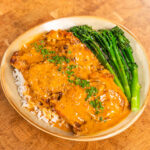


Savor Mongolian Beef noodles with tender beef, savory-sweet sauce, and slurpable comfort.
Let’s talk Mongolian Beef Noodles, fam. This is that cozy, sweet-savory noodle bowl you crave when takeout is calling your name, but you want something homemade, foolproof, and just right. Think wok-kissed beef, glossy sauce, and slurp-worthy noodles that hug every drop of flavor.
What is Mongolian Beef Noodles
Mongolian Beef Noodles is a comforting Asian-style beef noodle dish made with tender beef, chewy noodles, and a sticky, sweet soy-based sauce. It’s bold, rich, and deeply satisfying, like a warm hug in noodle form after a long day.
Where is Mongolian Beef Noodles from
(mention Location)
Despite the name, Mongolian Beef Noodles isn’t traditionally from Mongolia. It’s inspired by Chinese-American cuisine, especially flavors popular in Taiwanese and Chinese restaurant cooking, where sweet soy sauces and quick stir-fries shine.
How to make it
You stir-fry tender beef until juicy, toss it with garlic, ginger, noodles, and a glossy Mongolian beef sauce, then cook everything fast and hot until the noodles are perfectly coated. Simple moves, big payoff, trust me.

Ingredients
Velveted Beef
- Flank steak, thinly sliced against the grain – Stays tender and juicy while soaking up the sweet soy beef noodles flavor.
- Baking soda – Softens the beef fibers for that melt-in-your-mouth texture.
- Cornstarch – Creates a protective coating that locks in moisture and helps thicken the sauce later.
- Water – Helps evenly distribute the velveting ingredients over the beef.
- Soy sauce – Adds savory depth and classic Mongolian beef flavor.
- Dark soy sauce – Deepens color and gives the beef noodles that rich umami look.
- Shaoxing wine – Boosts aroma and rounds out the savory beef noodle stir fry.
- Sesame oil – Adds nutty warmth and authentic Asian-style beef noodles flavor.
- Cooking oil – Prevents sticking and ensures quick, even searing.
Stir-Fry
- Instant ramen noodles (seasoning packets discarded) – Absorb the sticky Mongolian beef noodle sauce beautifully.
- Vegetable oil – Handles high heat and keeps the noodle skillet from burning.
- Garlic, minced – Delivers bold, garlicky soy beef noodles aroma.
- Fresh ginger, minced – Adds warmth and balances the sweet soy glaze.
- Onion, thinly sliced – Brings gentle sweetness and texture to the beef noodle bowl.
- Dried chilies – Add optional heat for spicy Mongolian beef ramen vibes.
Mongolian Beef Sauce
- Soy sauce – Forms the salty backbone of the Mongolian beef noodle gravy.
- Dark soy sauce – Enhances color and intensifies umami flavor.
- Oyster sauce – Adds richness and depth to the sticky beef noodle sauce.
- Chili bean paste – Brings savory heat and fermented complexity.
- Sugar – Creates that signature sweet and savory beef noodles balance.
- Sesame paste – Adds creamy nuttiness and body to the sauce.
- Chili oil – Layers heat and glossy richness into the noodle sauce.
- MSG or salt and pepper – Boosts umami and sharpens flavor just right.
Optional Garnish
- Green onions, chopped – Add freshness and color to beef noodles with scallions.
- Toasted sesame seeds – Finish the dish with nutty crunch and aroma.
Steps
1. Velvet the Beef
- In a medium bowl, combine baking soda and ½ teaspoon water, mix, and toss with sliced flank steak. Let sit 10–15 minutes.
- Rinse the beef lightly, then pat dry.
- In the same bowl, mix 1 ½ tablespoon cornstarch, 1 ½ tablespoon water, soy sauces, Shaoxing wine, sesame oil, and cooking oil. Toss the beef until evenly coated. Set aside.
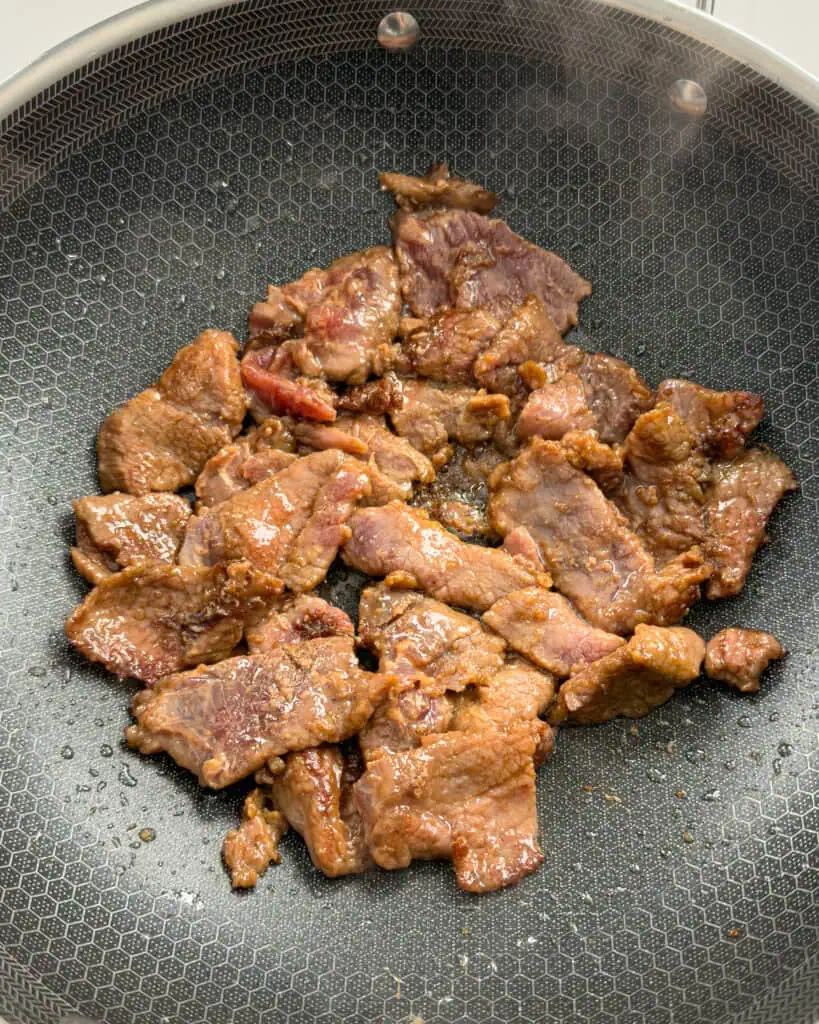
2. Cook the Ramen Noodles
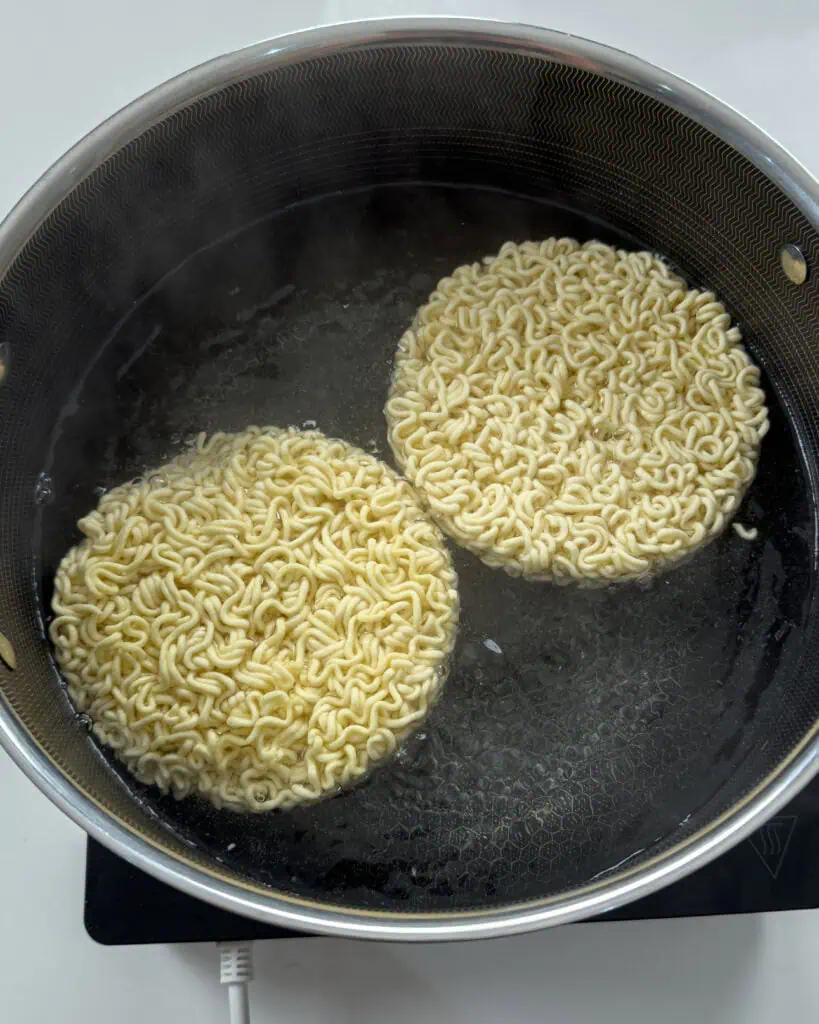
- Boil noodles according to package instructions without seasoning packets.
- Drain and rinse under cold water to stop cooking. Set aside.
3. Prepare the Sauce
- In a small bowl, combine soy sauce, water, brown sugar, oyster sauce, Shaoxing wine. Stir until sugar dissolves.
- Mix cornstarch slurry separately (1–2 teaspoon cornstarch + 2–3 teaspoon water). Set aside.
4. Stir-Fry the Vegetables
- Heat 2 tablespoon vegetable oil in a wok or large skillet over high heat.
- Add dried chilies and stir-fry for 10–15 seconds until fragrant.
- Add garlic, ginger, onion, and leek. Stir-fry 1–2 minutes until aromatic and slightly softened.
5. Cook the Beef
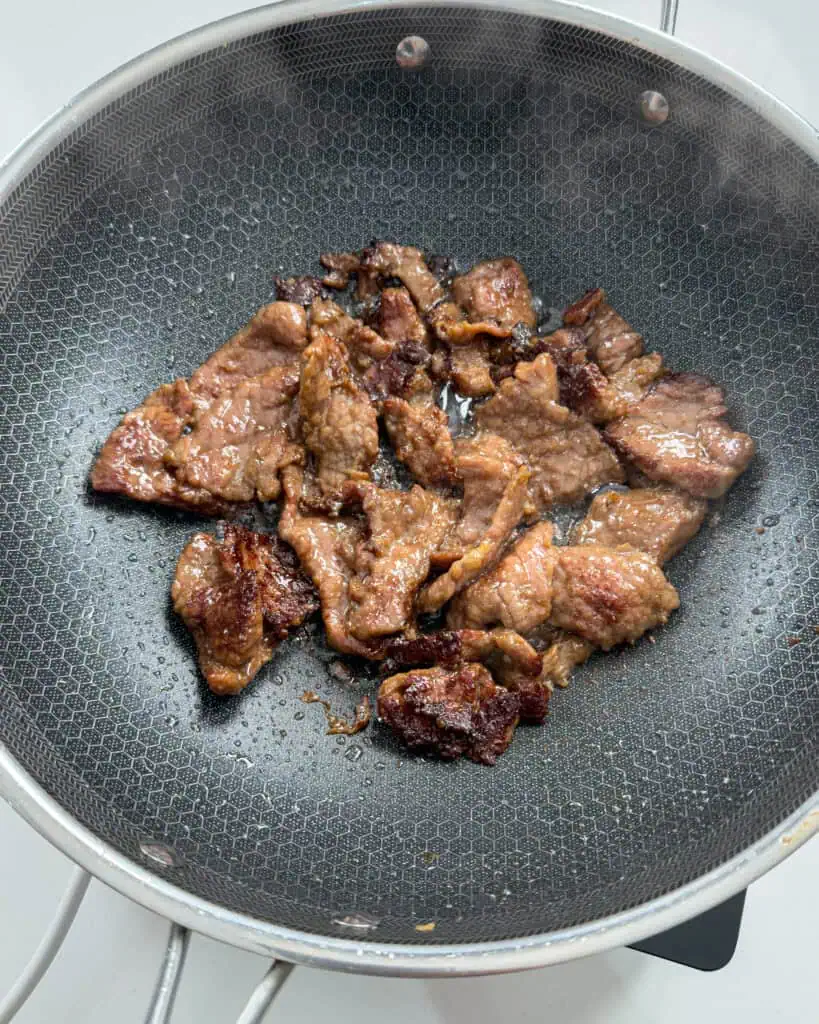
- In the same pan, push vegetables to the side. Add the velveted beef in a single layer.
- Stir-fry 2–3 minutes until beef is just cooked through (avoid overcooking to keep it tender).
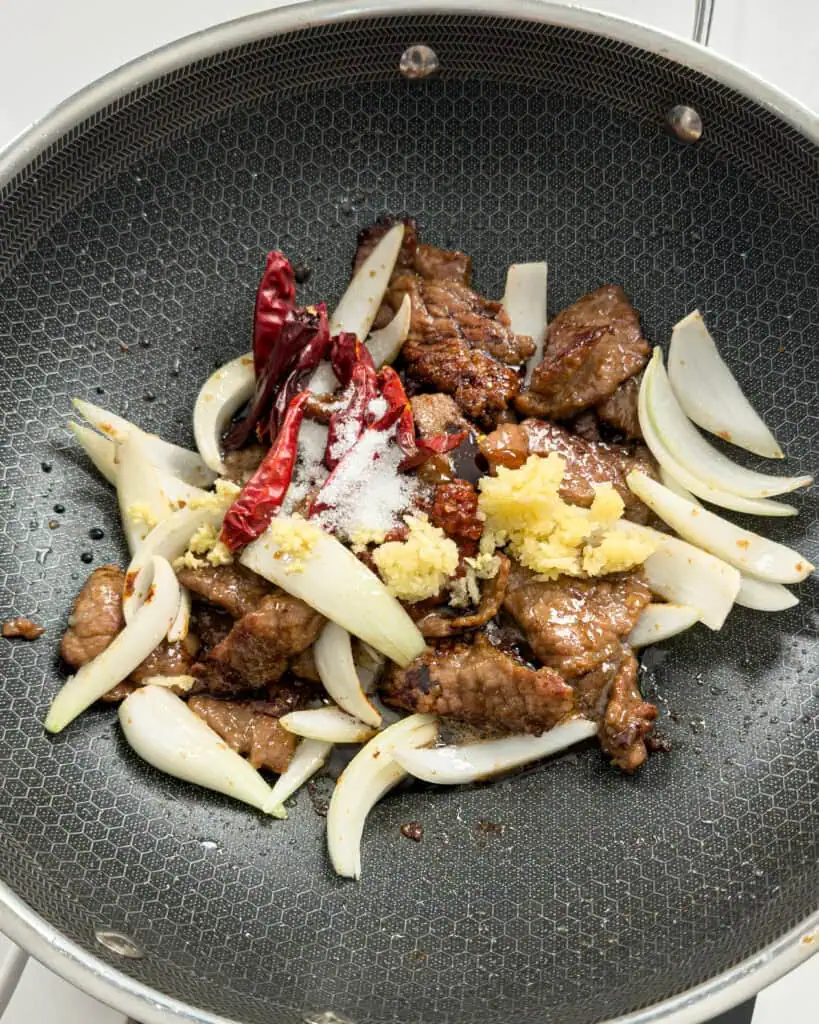
6. Combine Sauce and Noodles
- Pour the prepared sauce over the beef and vegetables. Bring to a simmer.
- Add the cornstarch slurry gradually, stirring constantly until the sauce thickens and coats the beef evenly.
- Add the cooked ramen noodles and toss thoroughly to coat in sauce.
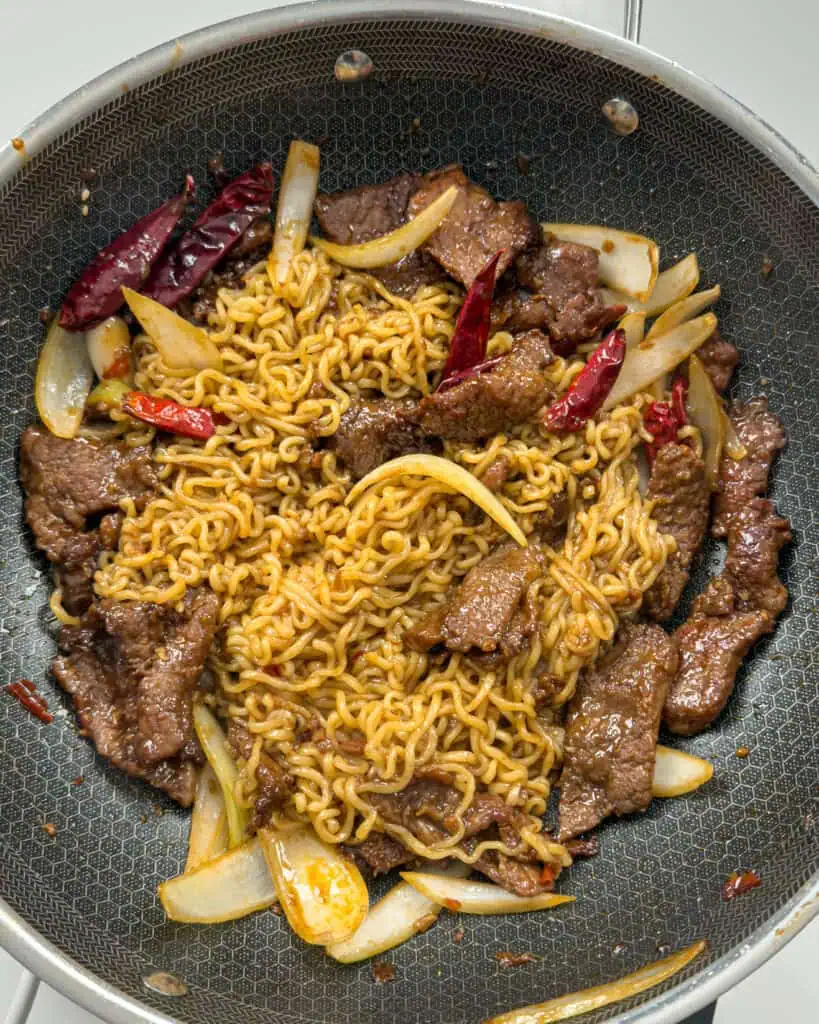
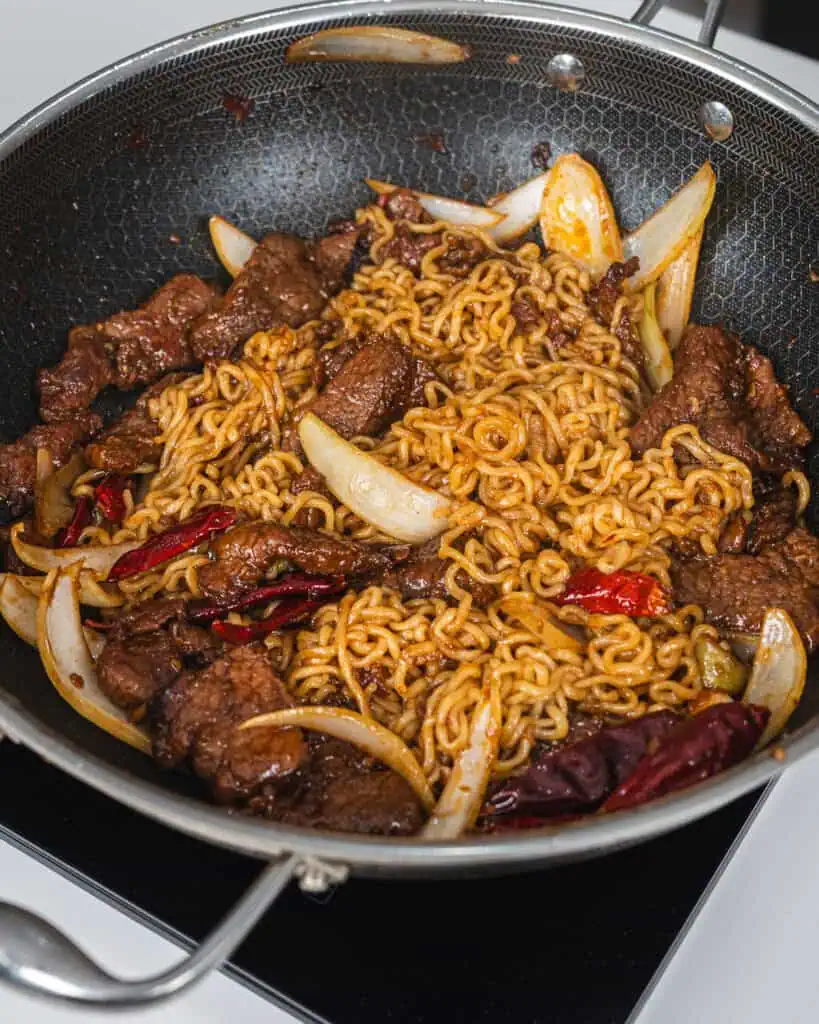
7. Finish and Serve
- Drizzle sesame oil over the top.
- Garnish with chopped green onions, toasted sesame seeds, or fresh chili slices if desired.
- Serve hot.

Expert Tips for Mongolian Beef Noodles
Best Cut of Beef for Mongolian Beef Noodles
Flank steak is your best friend here. It’s lean, flavorful, and cooks lightning-fast, which is exactly what this beef noodle dish needs. Sirloin also works beautifully if that’s what you’ve got in the fridge.
What really matters is keeping the beef tender. Thin slices plus high heat mean juicy beef noodles with tender beef instead of chewy disappointment. You’re aiming for restaurant-style magic, and this cut gets you there every time.
How to Slice Beef for Tender Mongolian Beef Noodles
Always, always slice against the grain. Those long muscle fibers? Cutting across them shortens each bite, making the beef feel softer and easier to chew.
If the beef feels slippery, pop it in the freezer for 15 minutes first. Slightly firm meat is easier to slice thin, giving you classic Mongolian beef noodles with that silky texture we all crave.
Noodle Choices That Work Best
Ramen noodles are quick, affordable, and perfect for soaking up sticky Mongolian beef noodle sauce. Just ditch the seasoning packets and let the homemade sauce do the heavy lifting.
Lo mein noodles bring chewiness, while rice noodles keep things light. No matter what you choose, the goal is balance—noodles that carry sauce without overpowering the beef.
How to Get the Sauce Thick and Glossy
That shiny, clingy sauce isn’t an accident, fam. Cornstarch is the secret weapon that turns a thin liquid into a glossy Mongolian beef noodle gravy.
Cook the sauce just until it thickens. Too long, and it turns gummy. Too short, and it slides right off the noodles. When done right, the sauce coats every strand like it was meant to be there.
Balancing Sweet and Savory Flavors
Mongolian beef noodles should taste rich and comforting, not sugary or salty. Start with the recipe amounts, then taste before serving.
Need more depth? Add a splash of soy sauce. Want more warmth? A pinch of sugar smooths it out. This dish is forgiving, so trust your instincts—you’ve got this.

Serving Suggestions and Storage
This is where Mongolian Beef Noodles really shine, fam. Serving them right and storing them smart keeps every bite cozy, saucy, and just as comforting as the first forkful.
Best Ways to Serve Mongolian Beef Noodles
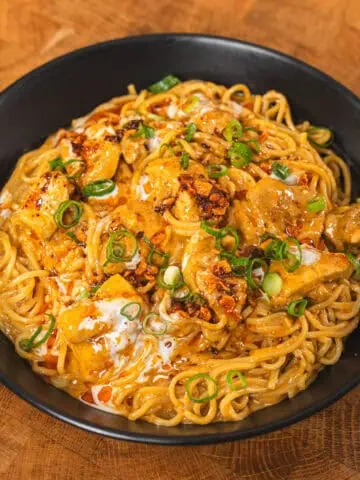
Serve these noodles piping hot, straight from the pan, while the sauce is still glossy and clinging to every strand. That fresh-off-the-wok moment is pure magic and gives you that beef noodles Asian takeaway style vibe at home.
Finish with green onions or toasted sesame seeds for freshness and crunch. That little pop of color and texture makes your Mongolian beef noodle bowl feel complete and totally Instagram-worthy.
Side Dishes That Pair Well
Mongolian beef noodles are rich and bold, so lighter sides work best. Steamed broccoli or simple stir-fried greens soak up extra sauce and keep the meal balanced.
A crisp cucumber salad or lightly dressed slaw adds freshness that cuts through the sticky beef noodle sauce. It’s all about contrast, and this combo hits just right.
If you’re craving a classic stir-fried noodle vibe with bold peppery heat, this Black Pepper Beef Chow Mein brings serious takeout-at-home energy.
How to Store Leftover Mongolian Beef Noodles
Let leftovers cool completely before storing. Transfer them into an airtight container to keep moisture locked in and prevent the noodles from drying out.
Stored properly, Mongolian beef noodles stay good in the fridge for up to three days. The flavors actually deepen overnight, making tomorrow’s lunch something to look forward to.
How to Reheat Without Drying the Noodles
Reheat gently, fam. A splash of water or broth brings the sauce back to life and keeps the noodles tender.
Warm them on the stove over low heat or in the microwave in short bursts, stirring in between. Slow and steady wins here, and the noodles come out just as comforting as day one.
Variations of Mongolian Beef Noodles
One of the best things about Mongolian Beef Noodles is how flexible they are. You can tweak, swap, and play around while still keeping that sweet, savory comfort food vibe. Trust me, fam—these variations all hit differently, and in the best way.
Ground Beef Mongolian Noodles
If you want a faster, budget-friendly option, ground beef is the move. It cooks quickly and soaks up the Mongolian beef sauce like a sponge, giving you bold flavor in every bite.
This version is perfect for busy nights when you want homemade Mongolian beef noodles without slicing steak. Same cozy vibes, less prep, zero stress.
Mongolian Beef Ramen Noodles
Ramen noodles turn this dish into an ultra-convenient pantry win. They cook fast and grab onto that sticky beef noodle sauce, making every forkful rich and satisfying.
This is the go-to when you want a quick Mongolian beef ramen bowl that feels indulgent but stays easy to follow. Weeknight dinners don’t get better than this.
Want a full noodle-shop experience in one bowl? This saucy, slurpable Mongolian Beef Ramen takes comfort to the next level.
Spicy Mongolian Beef Noodles
Craving heat? Add chili flakes, extra chili oil, or more chili bean paste to the sauce. The spice cuts through the sweet soy glaze and keeps things exciting.
You control the fire level here, fam. Start small, taste, and adjust until your spicy Mongolian beef noodles are just right for you.
Vegetable-Loaded Mongolian Noodles
Want to sneak in more veggies? Bell peppers, carrots, snap peas, and broccoli add crunch, color, and freshness to the dish.
These vegetables balance the rich sauce and turn Mongolian beef noodles into a more complete, nourishing meal without losing any of that comfort food magic.
Common Mistakes to Avoid
Even foolproof recipes have a few sneaky traps, fam. Avoid these common slip-ups and your Mongolian Beef Noodles will come out tender, glossy, and packed with that sweet soy beef noodles flavor every single time.
Overcooking the Beef
This is the fastest way to turn tender beef into chewy disappointment. Beef cooks quickly, especially when sliced thin, so high heat and short cooking time are key.
Once the beef loses its pink color, it’s done. Pull it out, set it aside, and let the sauce do the rest of the work later. Quick cooking equals juicy, beef noodles with tender beef.
Using Too Much Sauce
More sauce doesn’t always mean more flavor. If you drown the noodles, they turn soggy and lose that perfect chewy texture.
The goal is coating, not swimming. Sticky Mongolian beef noodle sauce should cling lovingly to the noodles, giving you flavor in every bite without turning the dish into soup.
Skipping the Cornstarch Slurry
That glossy, restaurant-style finish doesn’t happen by accident. Cornstarch is what thickens the sauce and helps it grab onto the noodles.
Without it, the Mongolian beef noodle gravy stays thin and slides right off. A quick slurry makes all the difference, trust me.
Not Tasting Before Serving
Always taste before you plate, fam. Soy sauce brands vary, and sweetness levels can change depending on sugar type.
Adjust saltiness, sweetness, or heat at the end so your Mongolian beef noodles hit that perfect sweet-and-savory balance. Your taste buds are the final judge.
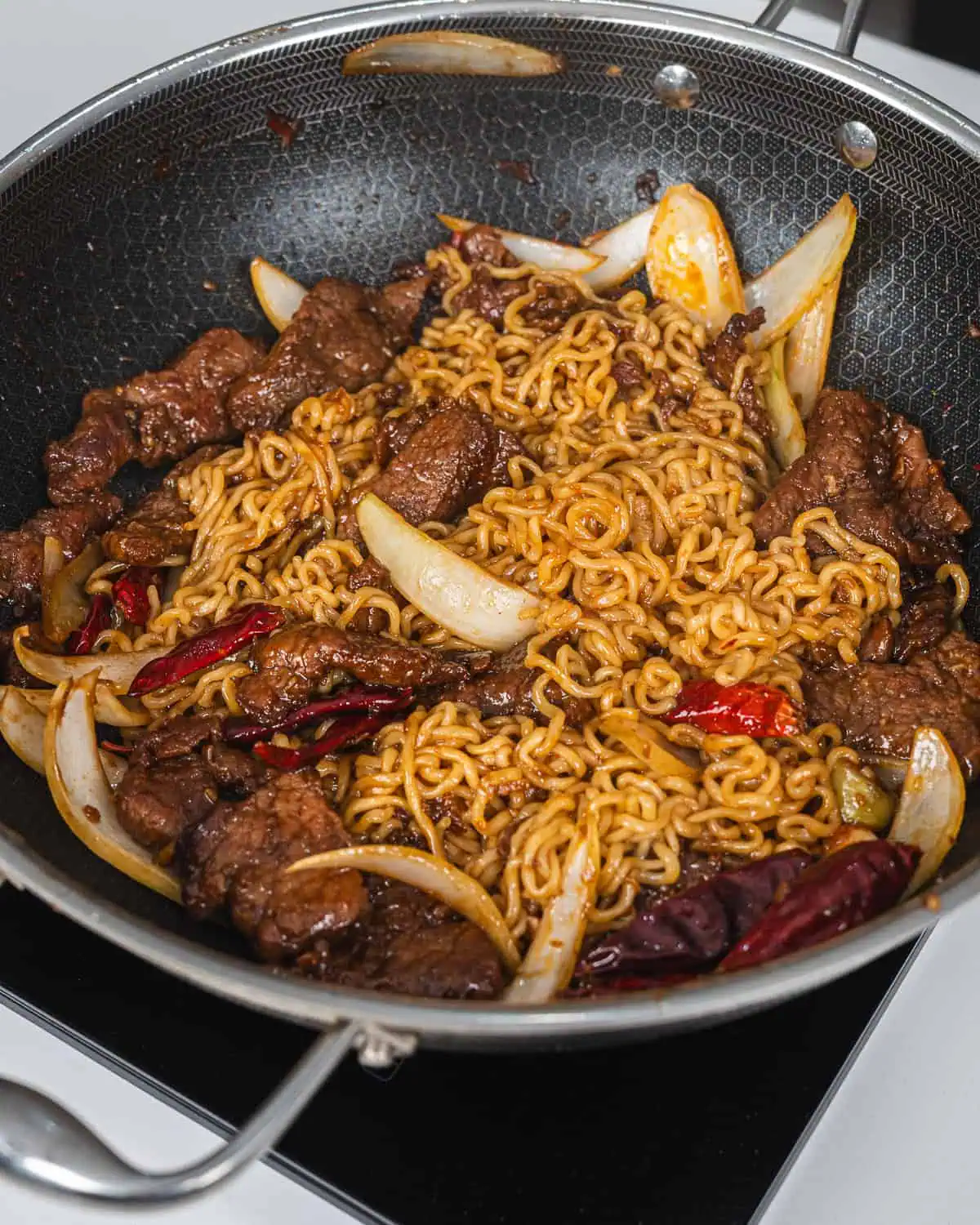
Frequently Asked Questions About Mongolian Beef Noodles
Let’s clear up the last little doubts, fam. These quick answers will help you cook Mongolian Beef Noodles with confidence and zero second-guessing.
What Cut of Beef Is Best for Mongolian Beef Noodles?
Flank steak and sirloin are the top picks. They cook fast, stay juicy, and deliver that classic Mongolian beef flavor without turning tough.
Can I Use a Different Type of Noodle?
Absolutely. Ramen, lo mein, rice noodles, or even spaghetti work well. The key is choosing noodles that hold sauce and don’t fall apart.
Can Mongolian Beef Noodles Be Made Ahead of Time?
Yes, but they shine brightest when fresh. If making ahead, store properly and reheat gently with a splash of water to revive the sauce.
Can I Adjust the Sweetness or Saltiness?
For sure. Reduce sugar for less sweetness or tweak the soy sauce to manage salt. Mongolian beef noodles are flexible—make them taste just right for you.
Let’s Wrap It Up
And that’s it! You've got yourself a delicious Mongolian Beef Noodles ready in under 15 minutes. Trust me, this recipe is going to become one of your go-tos for busy days or when you just want something comforting and tasty.
I can’t wait to see your versions of this dish! If you give it a try, tag me on Instagram (@geniuseatss) and show me how it turned out. I love seeing your creativity in the kitchen—it seriously makes my day. You guys rock!
Happy cooking, and I’ll catch you in the next one!
PrintMongolian Beef Noodles

Savor Mongolian Beef noodles with tender beef, savory-sweet sauce, and slurpable comfort.
- Prep Time: 15 minutes
- Cook Time: 15 minutes
- Total Time: 30 minutes
- Yield: 3 servings 1x
- Category: Noodles
- Method: Easy
- Cuisine: Chinese-American
Ingredients
Velveted Beef:
- 350 g flank steak, thinly sliced against the grain
- ½ tsp baking soda
- 1 ½ tbsp cornstarch
- 1 ½ tbsp water
- 1 ½ tsp soy sauce
- ¾ tsp dark soy sauce
- 1 ½ tsp Shaoxing wine
- 1 ½ tsp sesame oil
- 1 ½ tsp cooking oil
Stir-Fry:
- 3 packs instant ramen noodles (discard seasoning packets)
- 2 tbsp vegetable oil
- 4 cloves garlic, minced
- 1 tbsp fresh ginger, minced
- ½ onion, thinly sliced
- 8 dried chilies (adjust to taste)
Mongolian Beef Sauce:
- 3 tbsp soy sauce
- 2 tsp dark soy sauce
- 1 tbsp oyster sauce
- 1 tbsp chili bean paste
- 2 tsp sugar
- 2 tbsp sesame paste
- 1 tbsp chili oil
- Msg or salt and pepper, to taste
Optional Garnish:
- Chopped green onions
- Toasted sesame seeds
Instructions
- Velvet the Beef
- In a medium bowl, combine baking soda and ½ teaspoon water, mix, and toss with sliced flank steak. Let sit 10–15 minutes.
- Rinse the beef lightly, then pat dry.
- In the same bowl, mix 1 ½ tablespoon cornstarch, 1 ½ tablespoon water, soy sauces, Shaoxing wine, sesame oil, and cooking oil. Toss the beef until evenly coated. Set aside.
- Cook the Ramen Noodles
- Boil noodles according to package instructions without seasoning packets.
- Drain and rinse under cold water to stop cooking. Set aside.
- Prepare the Sauce
- In a small bowl, combine soy sauce, water, brown sugar, oyster sauce, Shaoxing wine. Stir until sugar dissolves.
- Mix cornstarch slurry separately (1–2 teaspoon cornstarch + 2–3 teaspoon water). Set aside.
- Stir-Fry the Vegetables
- Heat 2 tablespoon vegetable oil in a wok or large skillet over high heat.
- Add dried chilies and stir-fry for 10–15 seconds until fragrant.
- Add garlic, ginger, onion, and leek. Stir-fry 1–2 minutes until aromatic and slightly softened.
- Cook the Beef
- In the same pan, push vegetables to the side. Add the velveted beef in a single layer.
- Stir-fry 2–3 minutes until beef is just cooked through (avoid overcooking to keep it tender).
- Combine Sauce and Noodles
- Pour the prepared sauce over the beef and vegetables. Bring to a simmer.
- Add the cornstarch slurry gradually, stirring constantly until the sauce thickens and coats the beef evenly.
- Add the cooked ramen noodles and toss thoroughly to coat in sauce.
- Finish and Serve
- Drizzle sesame oil over the top.
- Garnish with chopped green onions, toasted sesame seeds, or fresh chili slices if desired.
- Serve hot.


Proxies For Xrumer
Magnificent goods from you, man. I've understand your stuff previous to and you are just too wonderful. I actually like what you've acquired here, really like what you're saying and the way in which you say it. You make it entertaining and you still care for to keep it sensible. I cant wait to read much more from you. This is actually a terrific website.
Aleisha
Can I simply just say what a comfort to uncover somebody
that genuinely understands what they are talking about on the
net. You definitely know how to bring a problem
to light and make it important. More people ought to look at this
and understand this side of your story. I was surprised that you're not more popular
since you surely have the gift.