




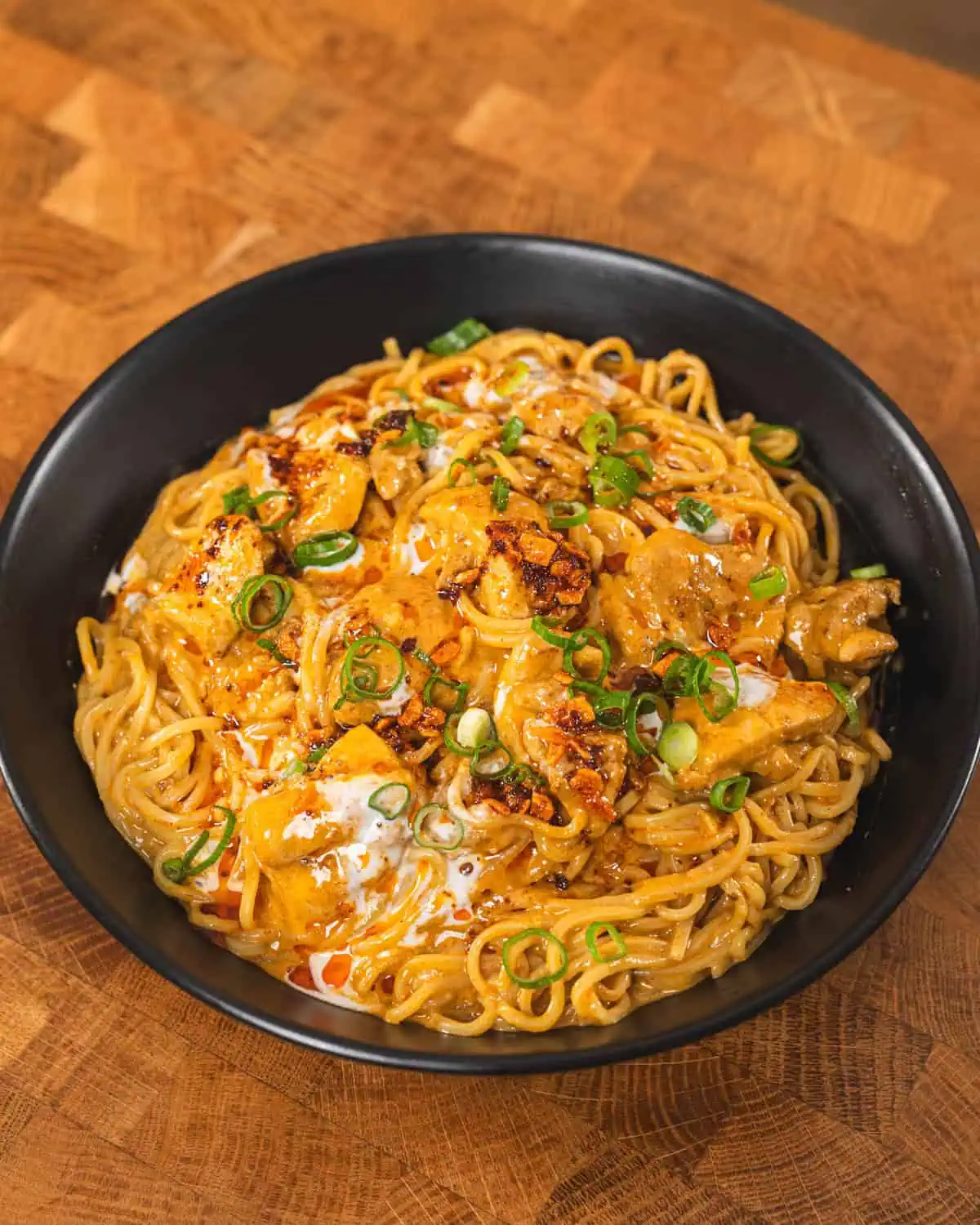
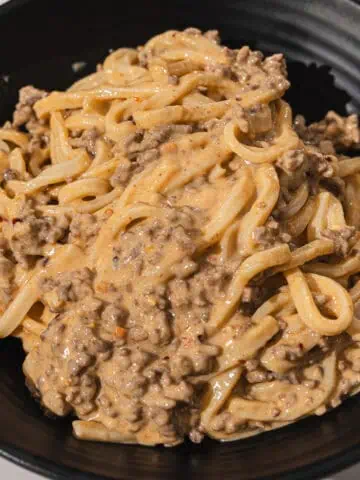
Dive into Thai Red Curry Chicken Ramen, a creamy, spicy bowl packed with bold Thai flavors!
Thai red curry chicken ramen is that cozy, creamy, spicy-sweet bowl you make when your soul says, “Please feed me something bold.” You get juicy chicken, springy ramen noodles, and a coconut red curry broth that hugs every spoonful. Trust me, fam, this one is foolproof, easy to follow, and just right.
What is Thai red curry chicken ramen
Thai red curry chicken ramen is a creamy Thai inspired ramen made with marinated chicken, Thai red curry paste, coconut cream, chicken stock, ramen noodles, and fresh toppings.
It tastes like your favorite Thai curry walked into a ramen shop and said, “Let’s make dinner unforgettable.” You get the richness of coconut milk ramen, the slurp of a comforting ramen bowl, and the bold warmth of a savory spicy broth.
This is not a traditional Thai dish in the strict sense. It is a fusion noodle soup bowl that brings together Thai red curry broth and ramen noodles for a homemade Thai ramen moment that feels rich, cozy, and wildly satisfying.
Where is Thai red curry chicken ramen from: Thailand-inspired fusion
Thai red curry chicken ramen is best described as a Thai inspired ramen dish.
The flavor comes from Thailand’s red curry tradition, where curry paste, coconut milk, aromatics, herbs, and a salty-sweet balance create that big, fragrant, “oh wow” taste. The ramen side of the bowl comes from Japanese-style noodle soup, while many ramen noodles are Chinese wheat noodles.
So, where is it from? It lives happily in the world of Asian fusion home cooking.
Think of it as a Thai curry noodle soup with ramen energy. It is bold, creamy, spicy, fresh, and made for weeknight ramen dinner cravings.
How to make it
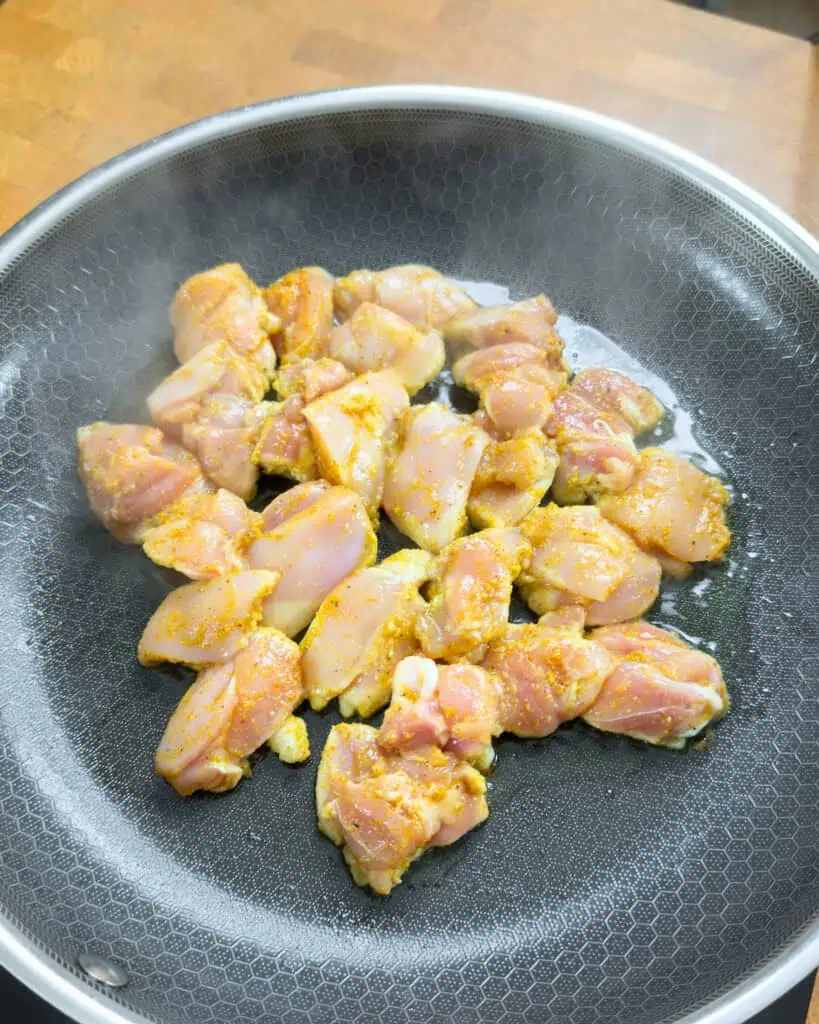
To make this bowl, you marinate boneless chicken thigh with curry powder, garlic powder, MSG, chicken powder, pepper, and oil.
Then you cook shallot, garlic, Thai red curry paste, and paprika until the kitchen smells like something magical is about to happen. Add coconut cream and chicken stock, simmer the chicken until tender, cook the ramen noodles near the end, and finish with spring onions and chili oil.
That’s it, fam. A creamy Thai ramen bowl with wok-kissed flavor, soft noodles, juicy chicken, and a spicy coconut broth that tastes like you worked way harder than you did.
Ingredients
Marinate Chicken
- Boneless chicken thigh — Juicy, tender, and forgiving, chicken thighs ramen style give the bowl deep flavor without drying out.
- Curry powder — Adds warm, earthy spice that supports the Thai red curry paste without stealing the spotlight.
- Garlic powder — Brings a mellow garlic base that clings beautifully to the chicken.
- MSG — Adds savory depth and makes the chicken taste extra satisfying, like restaurant-style chicken ramen soup.
- Chicken powder — Boosts the chicken flavor and gives the broth a richer backbone.
- Pepper — Adds gentle heat and a little bite to the marinated chicken.
- Oil — Helps the spices coat the chicken and keeps the pieces tender while cooking.
Sauce
- Oil — Helps sauté the aromatics and bloom the curry paste for a deeper Thai red curry broth.
- Shallot — Adds sweet, delicate onion flavor that melts into the creamy ramen broth.
- Garlic — Gives the broth that punchy, fragrant base every good ginger garlic broth needs.
- Thai red curry paste — The heart of the recipe, bringing chili, herbs, spices, and big curry flavor.
- Paprika — Adds warm color, mild smokiness, and a little extra red glow to the coconut red curry broth.
- Coconut cream — Makes the broth rich, silky, and lush; hello, creamy Thai ramen dreams.
- Chicken stock — Loosens the coconut cream and creates a savory chicken broth ramen base.
- Salt — Sharpens every flavor so the final bowl tastes balanced and just right.
Garnish
- Spring onions — Add freshness, crunch, and a bright green finish.
- Chili oil — Adds glossy heat and that spicy chicken ramen kick right at the end.
Steps
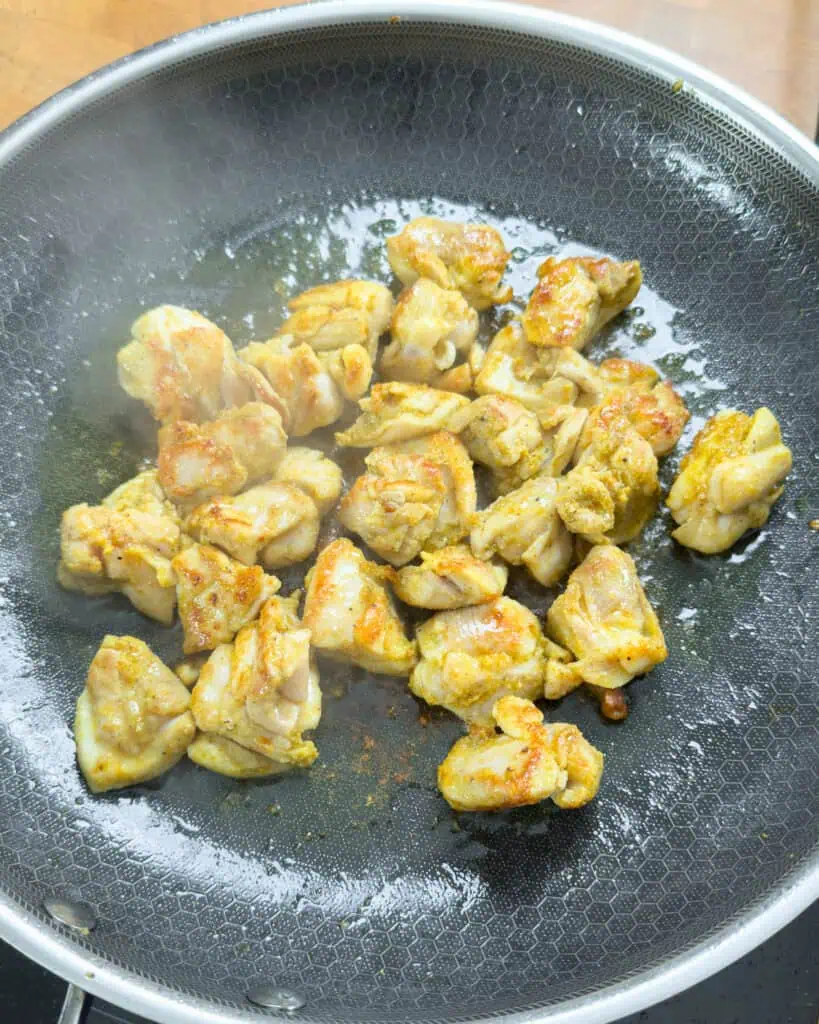
- Cook chicken in a hot pan until browned and cooked through. Remove and set aside.
- In the same pan, sauté shallot for 2 minutes. Add garlic and cook until fragrant.
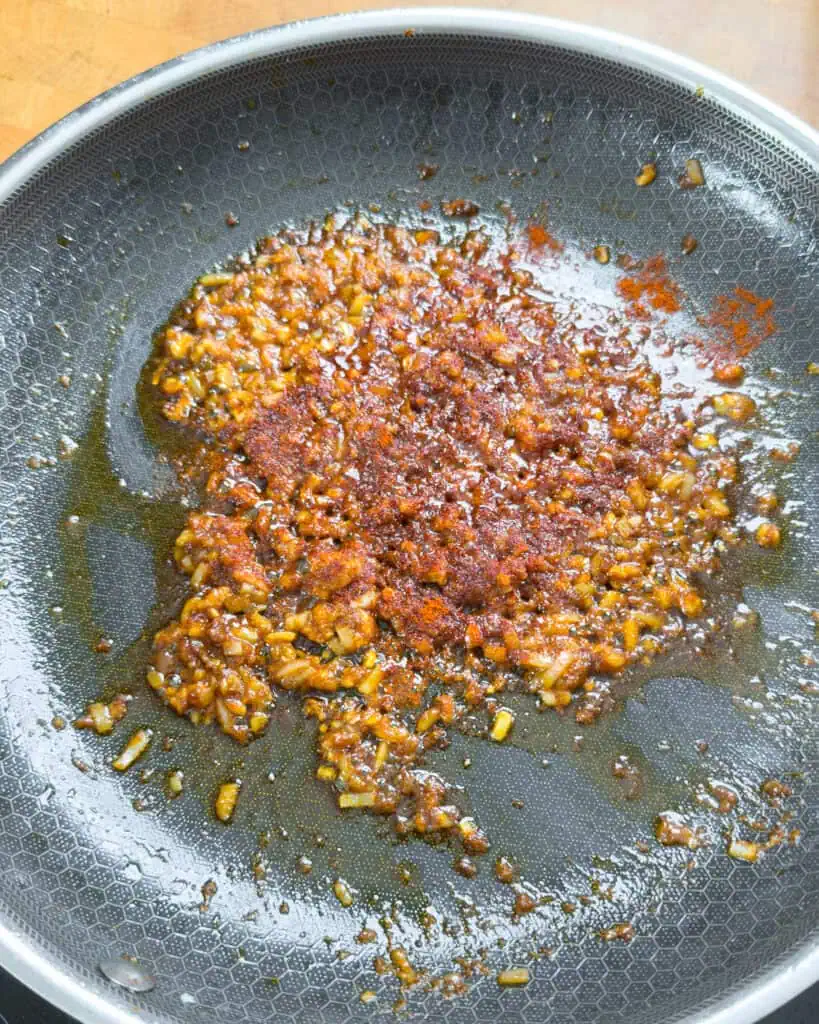
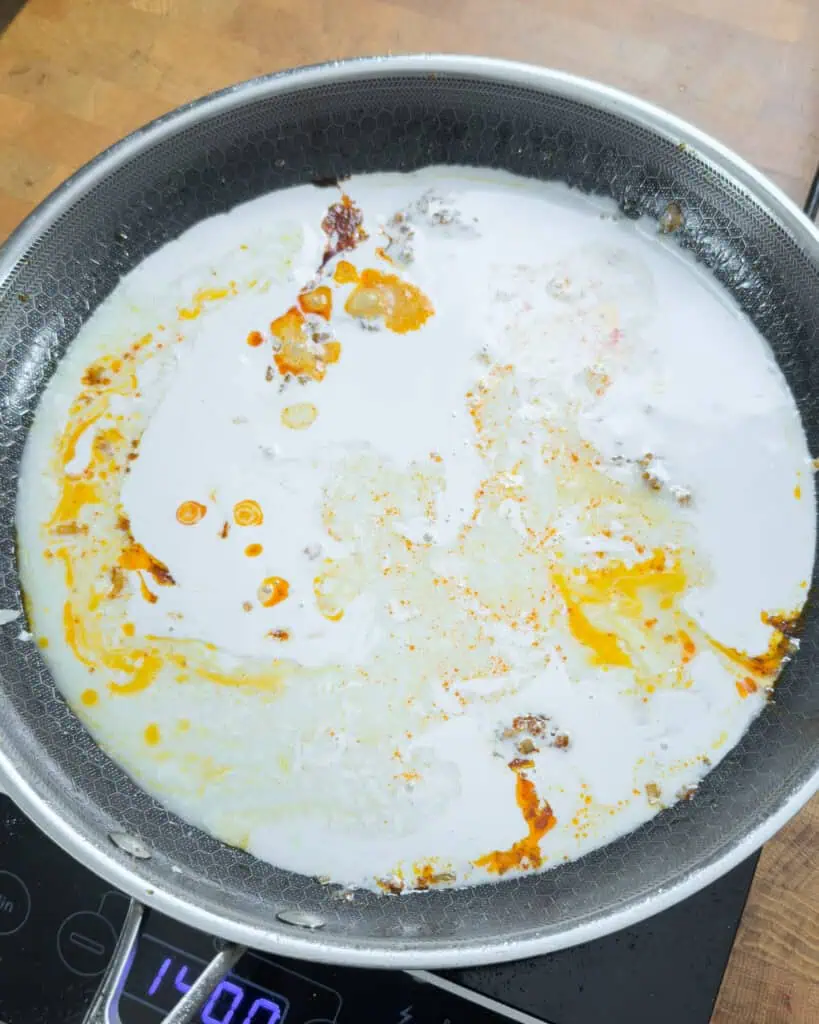
- Add curry paste and paprika. Cook for 1–2 minutes.
- Pour in coconut cream and chicken stock. Simmer for 3–5 minutes until slightly thickened. Season with salt.
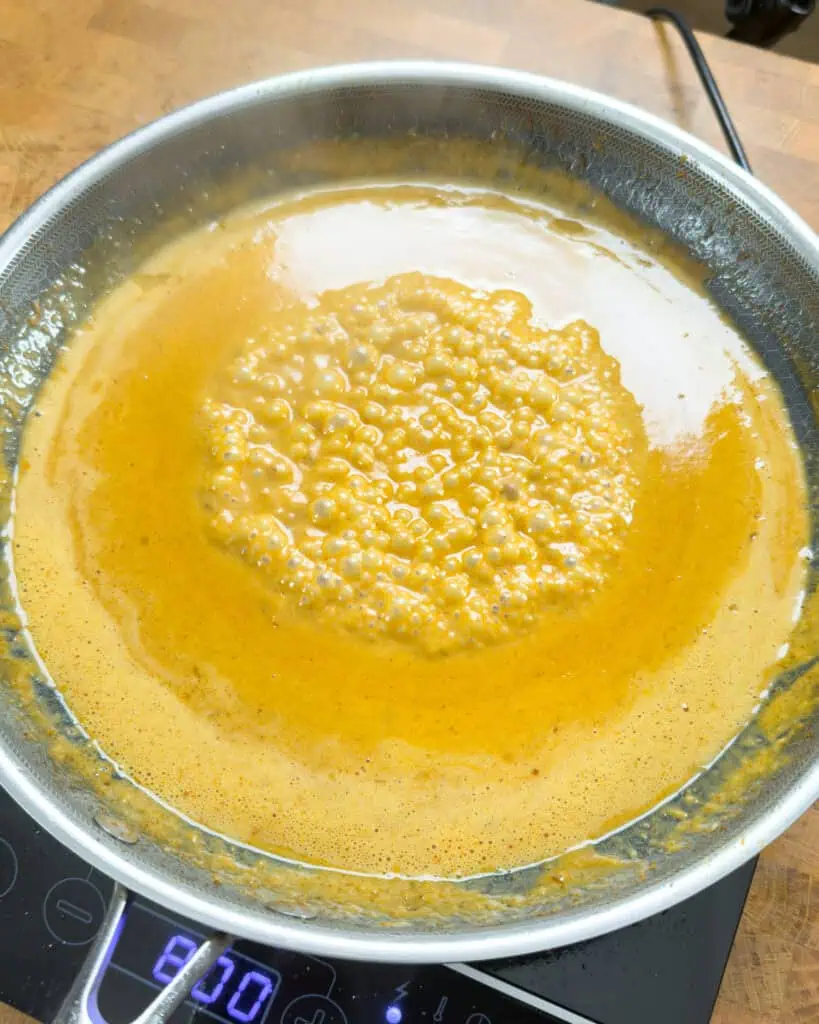
- Soak frozen ramen noodles in hot water for 20 seconds, then strain.
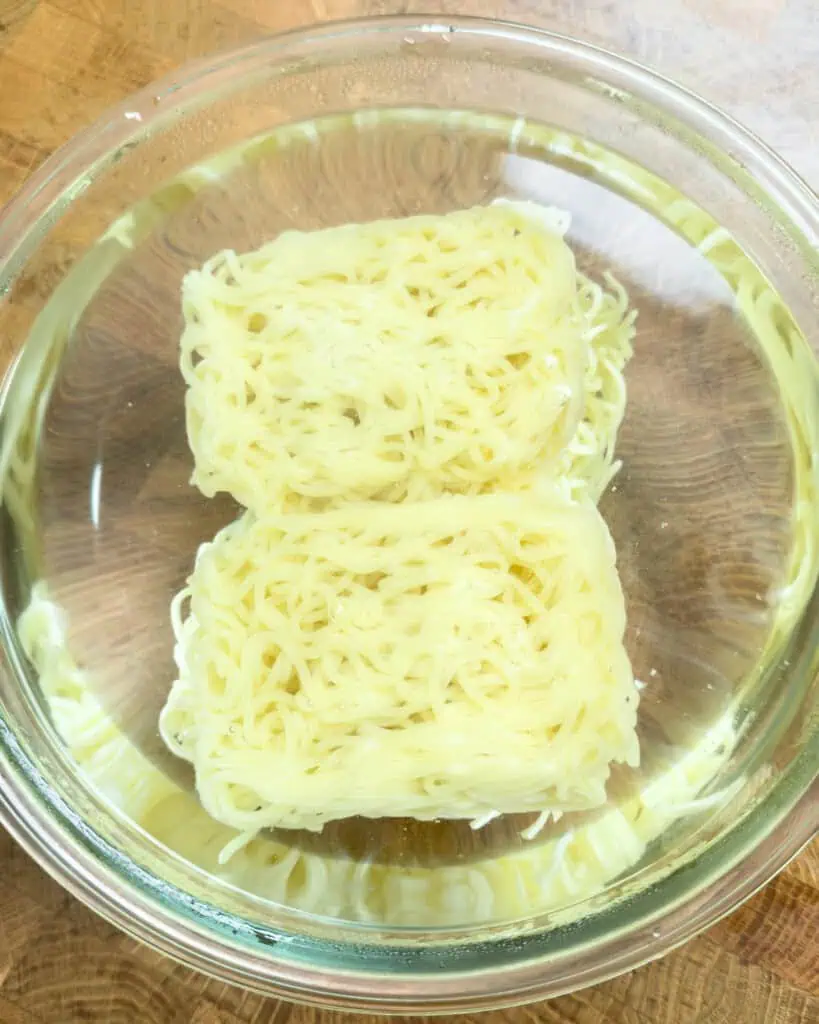
- Add chicken and noodles back into the sauce. Toss for 1–2 minutes until coated.
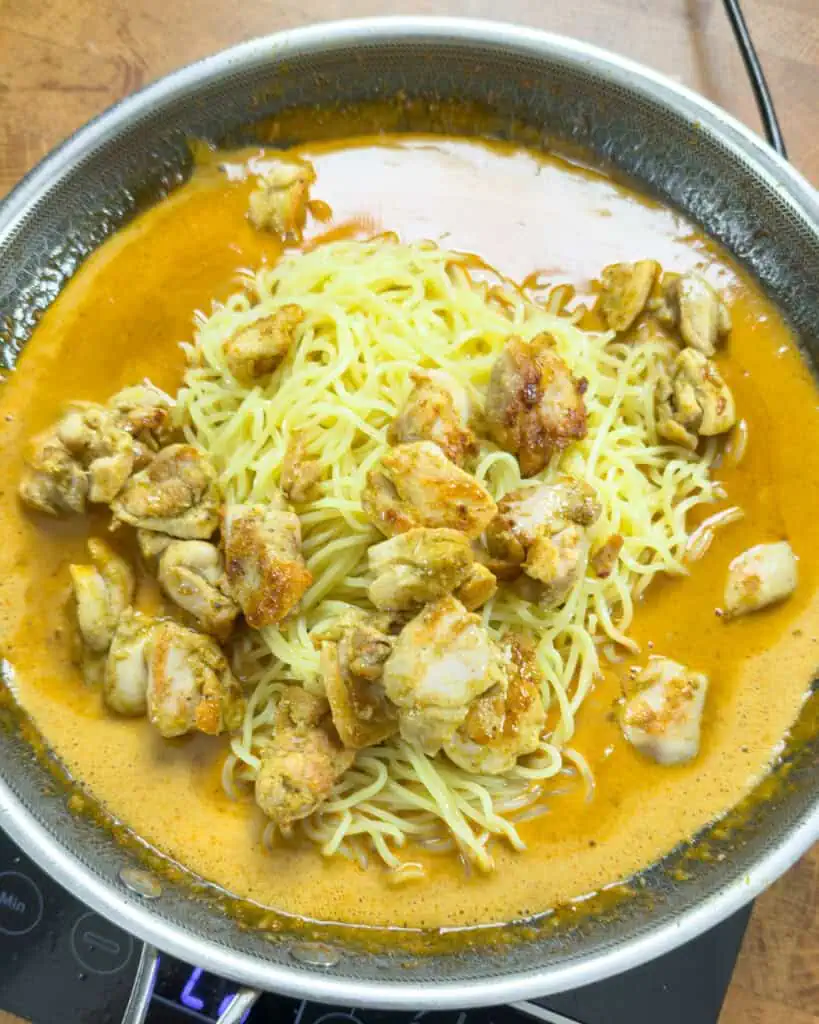
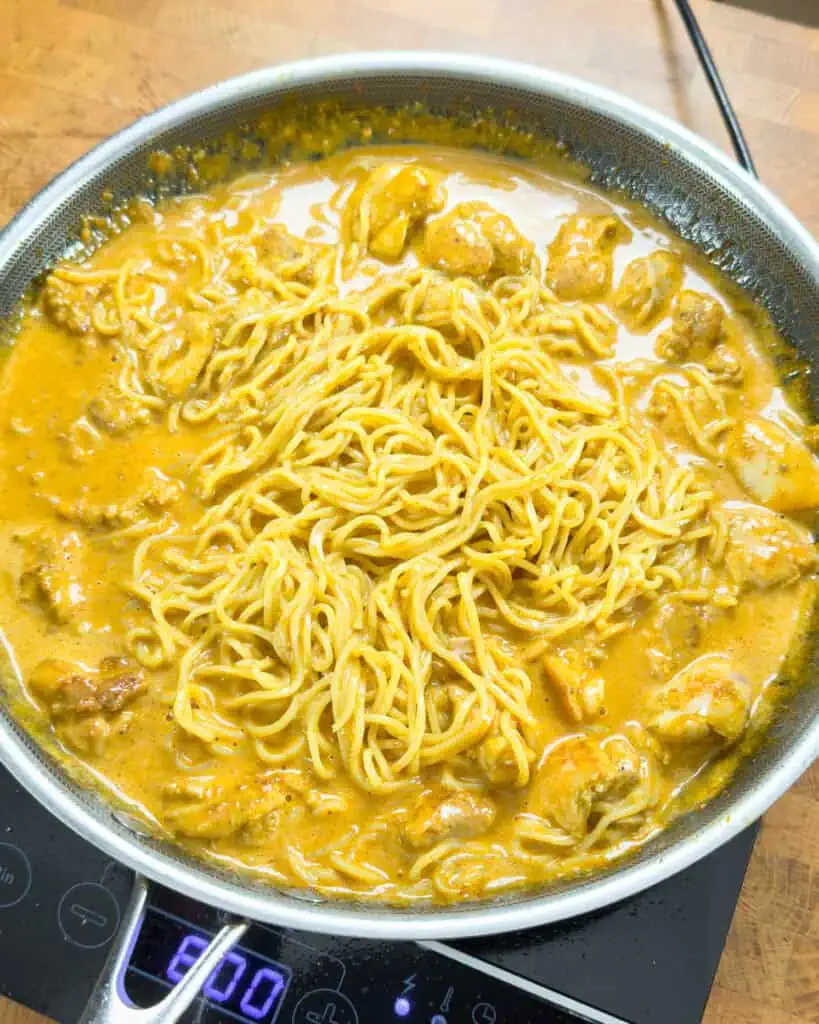
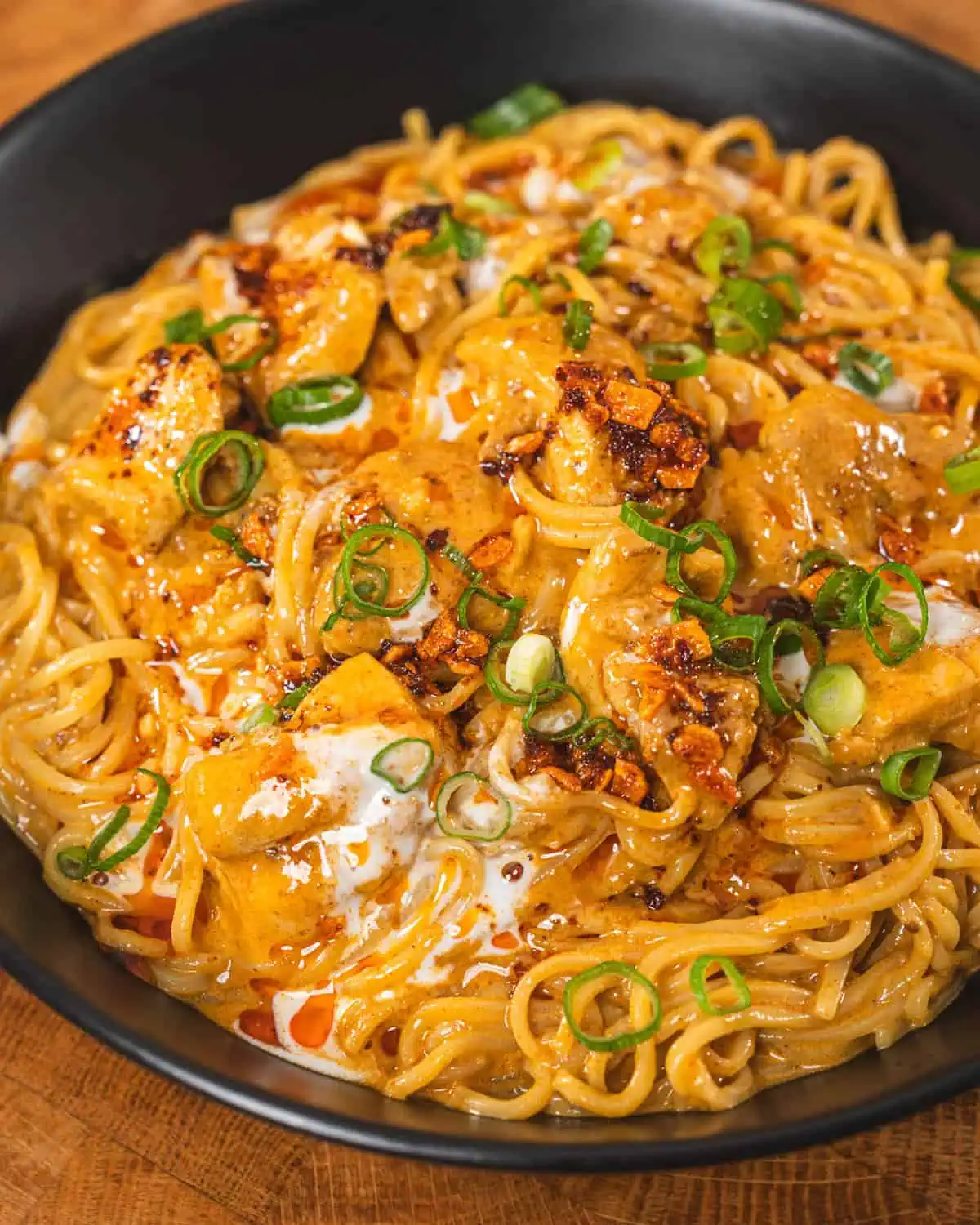
- Garnish with spring onions and chili oil.
Helpful Tips for Thai Red Curry Chicken Ramen
Use full fat coconut milk for a creamy broth
Full fat coconut milk gives this soup a rich and smooth taste. It turns the broth silky, cozy, and spoon-coating without making it feel too heavy.
Light coconut milk can work, but the broth will be thinner. It will still taste good, but it may not have that creamy ramen broth feeling that makes the bowl so comforting.
For an even richer bowl, use coconut cream. Coconut cream makes the coconut curry ramen taste extra luxurious, like a warm blanket in noodle form.
Cook the red curry paste before adding the broth
Please don’t skip this step, fam. Cooking Thai red curry paste with garlic, shallot, onion, or fresh ginger wakes up the flavor and makes the broth taste deeper.
When the paste hits the hot oil, it blooms. That means the spices open up, the aromatics turn fragrant, and your kitchen starts smelling like dinner is about to slap in the best way.
This is how you turn a simple red curry noodle soup into something layered, bold, and restaurant-level. Trust me, one minute of sizzling paste makes a huge difference.
Slice the chicken thin so it cooks fast
Thinly sliced chicken cooks quickly and stays tender. That is the secret to quick Thai ramen that still tastes like you cared for it.
Chicken breast or chicken thighs both work. Boneless chicken breast is lean and fast, while chicken thighs are juicier and more flavorful.
For the best Thai coconut chicken ramen, slice against the grain and keep the pieces small. Small pieces soak up the broth better and make every bite feel balanced.
Add noodles near the end
Ramen noodles cook fast. Blink twice and boom, they are done.
Add them near the end so they stay springy instead of turning soft or mushy. Nobody wants sad noodles floating around like they gave up on life.
You can also cook the ramen noodles separately for better texture. This is especially smart if you are meal prepping or storing leftovers.
Balance the broth before serving
Thai red curry chicken ramen should taste creamy, salty, spicy, sweet, and fresh. If one flavor is too loud, just gently adjust it.
Add lime juice for brightness, fish sauce or soy sauce for saltiness, sugar for sweetness, or more curry paste for heat. This is your bowl, your rules.
The goal is balance. You want the spicy coconut broth to feel rich but not heavy, bold but not harsh, and fresh enough to make you go back for another spoonful.
Finish with fresh toppings
Fresh toppings make the bowl pop. They add crunch, color, aroma, and that final little “ta-da” moment.
Try cilantro, Thai basil, green onions, lime wedges, chopped peanuts, sesame oil, sesame seeds, or a soft boiled egg. A soft boiled egg ramen topping is especially gorgeous when the yolk melts into the broth.
Toppings turn homemade Thai ramen from good to “wait, did I just make this?” good. Little things, big magic.
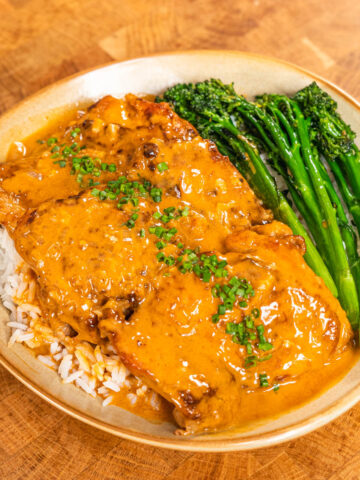
Craving something creamy and curry-forward without the noodles? This cozy Creamy Curry Chicken brings the same rich comfort in a simpler weeknight-friendly form.
Serving Suggestions and Storage
Best ways to serve Thai Red Curry Chicken Ramen
Serve this bowl hot in deep bowls. Deep bowls keep everything warm and give the noodles room to swirl around in that creamy red curry chicken broth.
Add the noodles first, then pour the broth and chicken over the top. This keeps the noodle soup bowl neat, pretty, and easy to garnish.
Finish with fresh herbs, lime, spring onions, and crunchy toppings. Then drizzle chili oil over the top like you mean it.
What to serve with Thai Red Curry Chicken Ramen
Keep the sides light because this bowl is already rich and filling. A fresh, crisp side helps balance the creamy coconut chicken noodle soup.
Serve it with cucumber salad, Thai basil, spring rolls, steamed edamame, simple stir fried vegetables, or fresh lime wedges. These sides bring crunch, freshness, and a little cooling contrast.
You can also serve it alone as a weeknight ramen dinner. Honestly, it has chicken, noodles, broth, aromatics, and toppings, so it already shows up as a full meal.
How to store leftovers
Store the broth and noodles separately. This is the golden rule, fam.
Noodles soak up broth as they sit. If you store them together, the soup becomes thick and the noodles turn soft.
Keep the chicken, vegetable, and curry broth in an airtight container in the fridge for up to 3 days. Store cooked ramen noodles in a separate container.
How to reheat leftovers
Warm the broth on the stove over medium heat. Let it come back gently so the coconut milk stays smooth.
Add the noodles only at the end. They just need enough time to warm through.
If the soup becomes too thick, add a splash of chicken stock, water, or coconut milk. Stir, taste, and adjust until the broth feels just right again.
Can you freeze Thai Red Curry Chicken Ramen
You can freeze the broth, but not the cooked ramen noodles. Cooked noodles can become too soft after freezing and thawing.
For best results, freeze only the chicken, vegetable, and curry broth. Let it cool completely, then store it in freezer-safe containers.
When ready to eat, thaw the broth, warm it gently, and cook fresh noodles. That way your Thai red curry ramen still tastes cozy and fresh.
If you love creamy curry ramen with a spicy kick, this rich Chili Oil Red Curry Wonton Ramen takes the cozy noodle-shop vibes even further.
Variations
Thai red curry chicken ramen with vegetables
Add bok choy, spinach, mushrooms, bell peppers, cabbage, carrots, snap peas, corn, or broccoli. This is a great way to make the bowl more colorful and nourishing.
Quick cooking vegetables should be added near the end. Spinach ramen, bok choy ramen, and bell pepper ramen all cook fast and stay brighter when added late.
Heartier vegetables like carrots, cabbage, and broccoli can go in earlier. Give them a few extra minutes so they soften without turning dull.
Spicy Thai red curry chicken ramen
For spicy chicken ramen, add extra red curry paste, chili oil, fresh red chilies, or sriracha. Start small because Thai red curry paste can be bold.
Taste as you go. You can always add more heat, but it is harder to calm down a broth that has gone full dragon mode.
A little chili oil on top gives the bowl shine, heat, and drama. Gorgeous, spicy, and dangerously slurpable.
Peanut Thai red curry chicken ramen
Add peanut butter for a creamy, nutty broth. It melts into the coconut milk ramen and gives the bowl a deeper, rounder flavor.
This peanut butter ramen style is great if you love sweet and spicy ramen. It makes the broth feel richer and slightly thicker.
Sesame paste, tahini, or almond butter can also work. Use a small spoonful first, then adjust after tasting.
Thai red curry ramen with chicken thighs
Use boneless skinless chicken thighs for a juicier bowl. Chicken thighs stay tender even if you simmer them a little longer.
They also add more flavor to the broth. That makes red curry chicken ramen taste extra savory and comforting.
Cut the thighs into bite-sized pieces or thin slices. Smaller pieces cook faster and soak up the coconut red curry broth beautifully.
Thai red curry ramen without chicken
For a no-chicken version, use tofu, shrimp, mushrooms, or extra vegetables. Mushroom ramen with shiitake mushroom ramen or cremini mushroom ramen flavors tastes earthy and deeply satisfying.
Use vegetable broth instead of chicken stock for a meatless version. Coconut cream and Thai red curry paste will still make the broth rich.
Tofu works especially well because it soaks up flavor like a little sponge. Press it first for better texture.
Thai red curry ramen with green curry paste
Green curry paste can replace red curry paste. The soup will taste different, but still creamy, spicy, and flavorful.
Green curry paste usually tastes brighter and more herbal. It can bring a fresh, lively flavor to the same ramen base.
Use the same amount to start, then taste and adjust. Different curry paste brands vary in salt, spice, and intensity.
Gluten free Thai red curry chicken ramen
Use gluten free ramen noodles or rice noodles. Rice noodles turn this into a softer Thai curry noodle soup style bowl.
Use tamari instead of soy sauce. It gives you that salty, savory taste without regular wheat-based soy sauce.
Check the curry paste and broth labels too. Some brands sneak in ingredients you may not expect, so a quick label check keeps the recipe foolproof.
Common Mistakes to Avoid
Adding noodles too early
Ramen noodles cook fast. If you add them too early, they can become mushy before the chicken ramen soup is ready.
Cook them last or store them apart. This keeps the texture springy and fresh.
For leftovers, separate noodles are your best friend. Future you will be so grateful.
Using too much curry paste at once
Red curry paste can be strong and spicy. Some brands are gentle, while others walk in wearing boxing gloves.
Start with less, then add more after tasting. This gives you control over the heat.
Remember, you can always add more curry paste. You cannot easily take it back once the broth is too spicy.
Forgetting lime juice at the end
Lime juice brightens the creamy coconut broth. It cuts through the richness and makes the whole bowl taste alive.
Without lime juice, the soup may taste heavy. Still good, but missing that final sparkle.
Add it at the end, not too early. Fresh lime juice is like switching on the lights.
Boiling coconut milk too hard
Very high heat can make coconut milk look split or grainy. The taste may still be okay, but the texture will not be as smooth.
Once the broth comes together, use a gentle simmer. Let it bubble softly, not angrily.
Think cozy spa bath, not volcano. That gentle heat keeps your creamy Thai ramen silky.
Not tasting the broth before serving
Every curry paste, broth, and fish sauce tastes different. That means your broth needs a final check.
Taste before serving and adjust with salt, lime, sugar, soy sauce, fish sauce, or more curry paste. This is how you land the flavor.
A good Thai red curry broth should feel balanced. Creamy, salty, spicy, a little sweet, and fresh at the end.
Storing noodles inside the broth
Noodles keep soaking up liquid in the fridge. That makes the soup thick and the noodles soft.
Store broth and noodles separately for the best leftovers. It is a tiny step with a huge payoff.
When reheating, warm the broth first. Add noodles at the end so they stay bouncy.
Overcooking the chicken
Thin chicken cooks fast. If you cook it too long, it can become dry.
Chicken thighs are more forgiving, but even they deserve a little care. Cook only until the chicken is done and tender.
For chicken breast, slice it thin and keep an eye on it. Lean meat can go from juicy to “oops” quickly.
Frequently asked questions
What is Thai red curry chicken ramen
Thai red curry chicken ramen is a creamy noodle soup made with Thai red curry paste, chicken, coconut milk, broth, ramen noodles, vegetables, and fresh toppings.
It is rich, cozy, spicy, and deeply comforting. Think Thai curry noodle soup meets ramen night.
Is Thai red curry chicken ramen spicy
It can be mild, medium, or spicy. The heat depends on the curry paste and how much you use.
Start with a smaller amount if you are cooking for kids or spice-sensitive eaters. Add chili oil later for anyone who wants extra fire.
Can I make Thai red curry chicken ramen without coconut milk
Coconut milk gives the soup its creamy texture. It is what makes the broth smooth, rich, and comforting.
You can use broth only, but the soup will be lighter and less rich. It will taste more like a red curry chicken ramen broth than a creamy coconut curry ramen.
Can I use instant ramen noodles
Yes, you can use instant ramen noodles. Just discard the seasoning packet.
Use only the noodles so the red curry broth stays fresh and balanced. The packet can make the soup too salty or muddy-tasting.
Can I cook the noodles separately
Yes, and honestly, it is a smart move. Cooking noodles separately gives you better control over texture.
This is best if you plan to store leftovers or want firmer noodles. Add cooked noodles to each bowl right before serving.
What chicken is best for Thai red curry chicken ramen
Chicken thighs are juicy and flavorful. They stay tender and make the broth taste richer.
Chicken breast is lean and cooks quickly when sliced thin. Both are great, so use what you have.
Can I make this recipe ahead of time
Yes, but make only the broth ahead. Cook the noodles fresh before serving.
The broth can sit in the fridge and develop even more flavor. The noodles, however, are best fresh and springy.
How do I make the broth thicker
Add coconut cream, peanut butter, or a little less broth. Let it simmer gently until it tastes rich.
Do not boil it too hard. A soft simmer gives you a smoother, creamier ramen broth.
How do I make the broth lighter
Use more broth and less coconut milk. This makes the bowl lighter while keeping the curry flavor.
You can also add extra vegetables for a fresher bowl. Spinach, bok choy, mushrooms, and bell pepper are all lovely here.
Can I use green curry paste instead of red curry paste
Yes, green curry paste works. The soup will taste different, but it will still be creamy, spicy, and flavorful.
Green curry paste tastes brighter and more herbal. Red curry paste tastes warmer and deeper.
What toppings are best
Lime, cilantro, Thai basil, green onions, chopped peanuts, sesame seeds, sesame oil, chili oil, and soft boiled egg all work well.
Use what you love. A few fresh toppings can turn a simple comforting ramen bowl into something beautiful.
How long does Thai red curry chicken ramen last
The broth can last up to 3 days in the fridge when stored in an airtight container.
For best texture, keep the noodles separate. Cooked ramen noodles get soft when they sit in broth too long.
RATE MY DISH!
If you enjoy my Thai Red Curry Chicken Ramen make sure to leave a comment and rating down below. I highly appreciate it!
Tag me on Instagram @geniuseatss so I can see your creation! Don't forget to follow me on TikTok, Youtube, Pinterest and Facebook for more recipes and contents!
Thank you so much and enjoy my recipes!
PrintThai Red Curry Chicken Ramen

Dive into Thai Red Curry Chicken Ramen, a creamy, spicy bowl packed with bold Thai flavors!
- Prep Time: 15 minutes
- Cook Time: 20 minutes
- Total Time: 35 minutes
- Yield: 2 Servings 1x
- Category: Chicken
- Method: Easy
- Cuisine: Thai
Ingredients
Marinate Chicken
- 350g boneless chicken thigh, sliced
- 1 tsp curry powder
- 1 tsp garlic powder
- ½ tsp MSG
- 1 tsp chicken powder
- ½ tsp pepper
- 1 tbsp oil
Mix well and marinate for 15 minutes.
Sauce
- 2 tbsp oil
- 1 shallot, diced
- 4 cloves garlic, minced
- 2 tbsp Thai red curry paste
- 1 tsp paprika
- 2 cups coconut cream
- ½ cup chicken stock
- Salt to taste
Garnish
- Spring onions
- Chili oil
Instructions
- Cook chicken in a hot pan until browned and cooked through. Remove and set aside.
- In the same pan, sauté shallot for 2 minutes. Add garlic and cook until fragrant.
- Add curry paste and paprika. Cook for 1–2 minutes.
- Pour in coconut cream and chicken stock. Simmer for 3–5 minutes until slightly thickened. Season with salt.
- Soak frozen ramen noodles in hot water for 20 seconds, then strain.
- Add chicken and noodles back into the sauce. Toss for 1–2 minutes until coated.
- Garnish with spring onions and chili oil.



Leave a Reply