




Cozy up this season with our Korean Army Stew — a sizzling hotpot brimming with bold flavors and hearty ingredients, guaranteed to satisfy your adventurous culinary spirit!
Jump to:
What is Korean Army Stew?
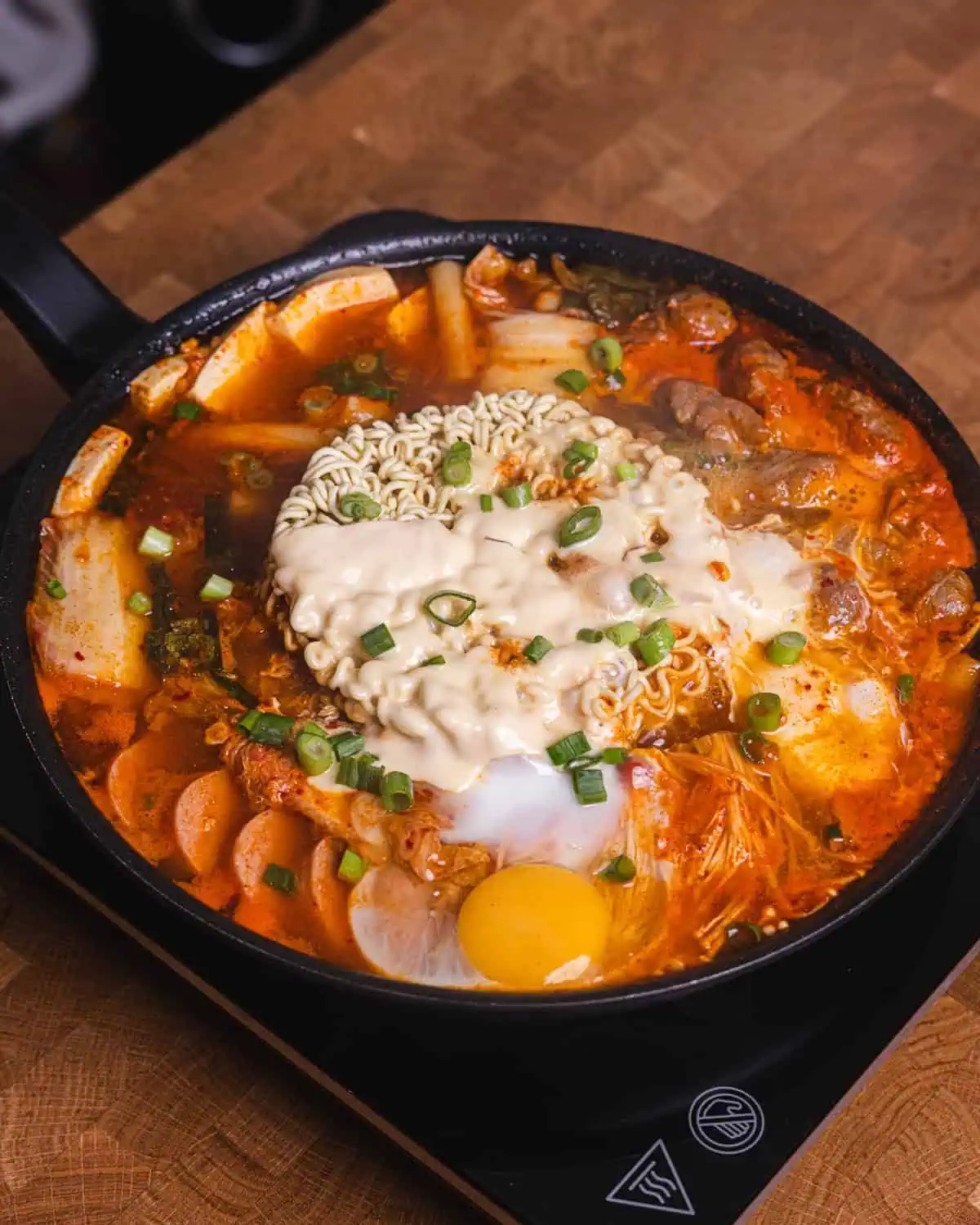
Korean Army Stew, also known as Budae Jjigae, is a unique and hearty dish that combines Korean flavors with American influences. This fusion stew is deeply connected to the history of Korea, particularly to the Korean War era, when food scarcity led people to make creative use of surplus processed foods from U.S. military bases, such as SPAM and hot dogs.
Originating from South Korea, this dish is a symbol of resourcefulness, blending the traditional Korean cooking techniques with ingredients that were available at the time due to military presence. This has allowed it to evolve into a popular comfort food enjoyed in many Korean households and restaurants today.
How to make Korean Army Stew
Making Korean Army Stew involves simmering a mixture of meats like sausages, SPAM, and bacon with kimchi, tofu, and various vegetables in a spicy broth seasoned with ingredients like gochujang (Korean chili paste) and gochugaru (Korean chili flakes). Typically, ingredients are arranged in a pot, topped with the spicy sauce, and cooked until flavorful and comforting. The dish is versatile and allows for many additions based on personal preference, making it a perfect recipe for experimentation and adaptation.
Ingredients
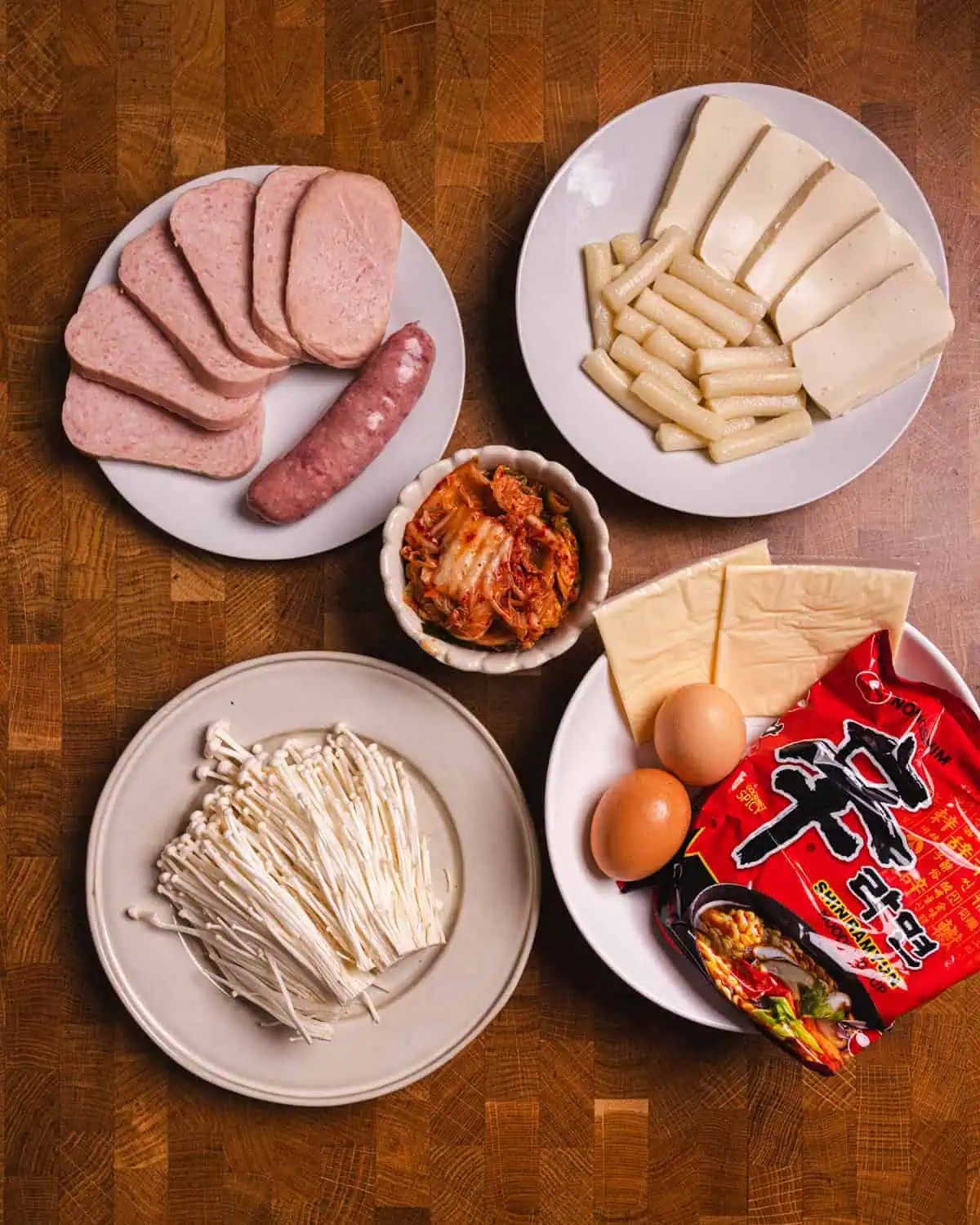
- Sausages: These add a hearty, smoky flavor.
- Spam: Spam brings a rich, salty umami that enhances the overall depth of the dish.
- Tofu: Tofu soaks up the stew's flavors and adds a wonderful texture contrast.
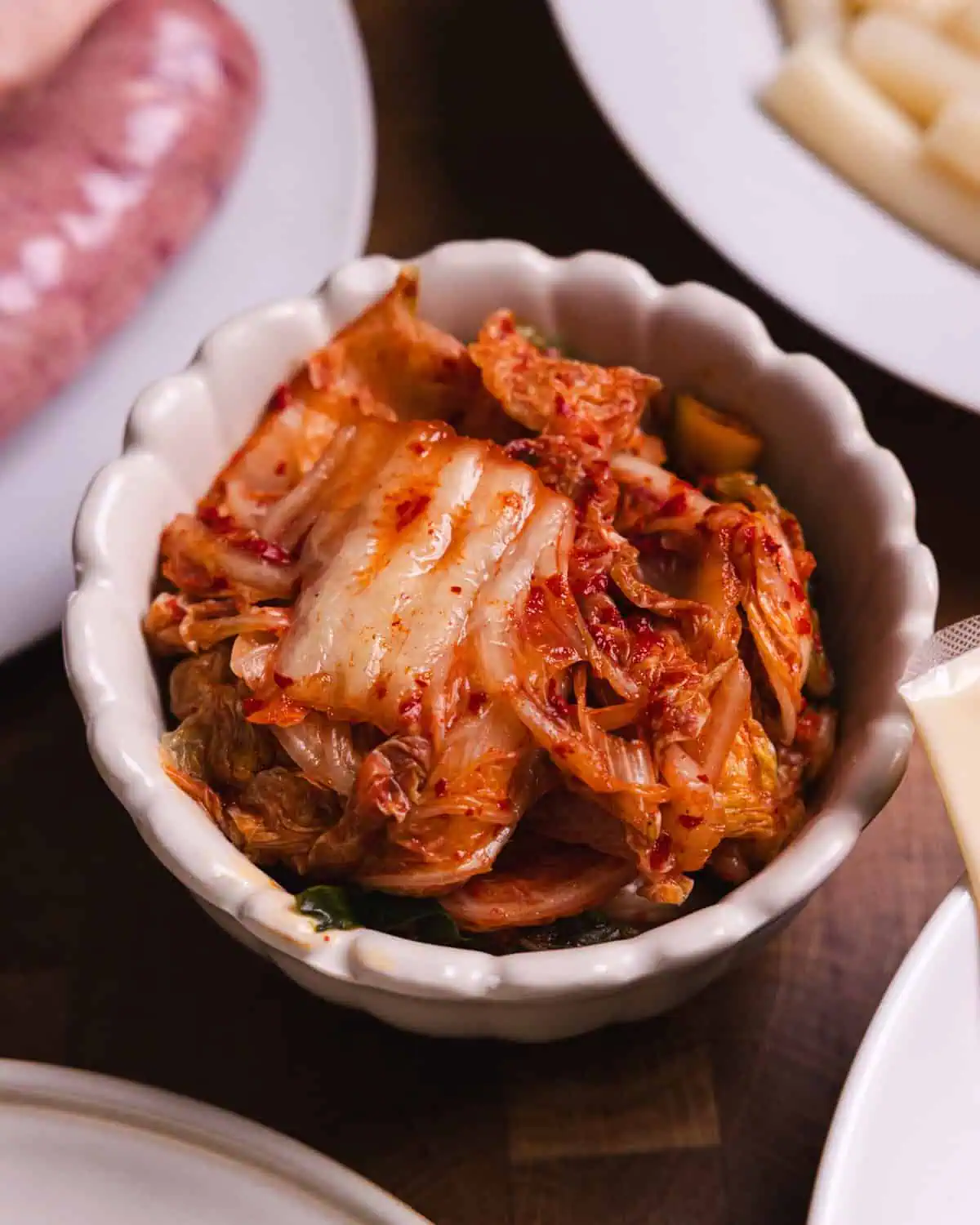
- Kimchi: Kimchi introduces a burst of spiciness and tanginess, as well as a bit of crunch.
- Tteokbokki (rice cakes): These chewy delights are excellent at absorbing the spicy broth.
- Enoki mushrooms: Their mild flavor and delicate texture bring a contrast to the more pronounced flavors of the meats and spices.
- Ramen: Ramen noodles are perfect for slurping up the delicious, spicy broth.
- American cheese: The cheese melts into the broth, creating a creamy, smooth texture that balances the stew's spiciness.
- Scallions: Fresh scallions add a pop of color and a crisp, oniony bite.
- Chicken stock: The stock is the base of the stew, enveloping all the other ingredients in a warm, savory liquid that ties everything together beautifully.
Sauce Components:
- Gochujang and Gochugaru: These provide the iconic Korean heat and sweetness, vital for the stew's signature flavor.
- Light soy sauce and Mirin: These add layers of umami and a slight sweetness.
- Sugar and Cloves of garlic: Sugar balances the heat, while garlic punches up the zestiness.
- Ramen spice: Adds a little extra savory flavor.
Step-by-Step Recipe
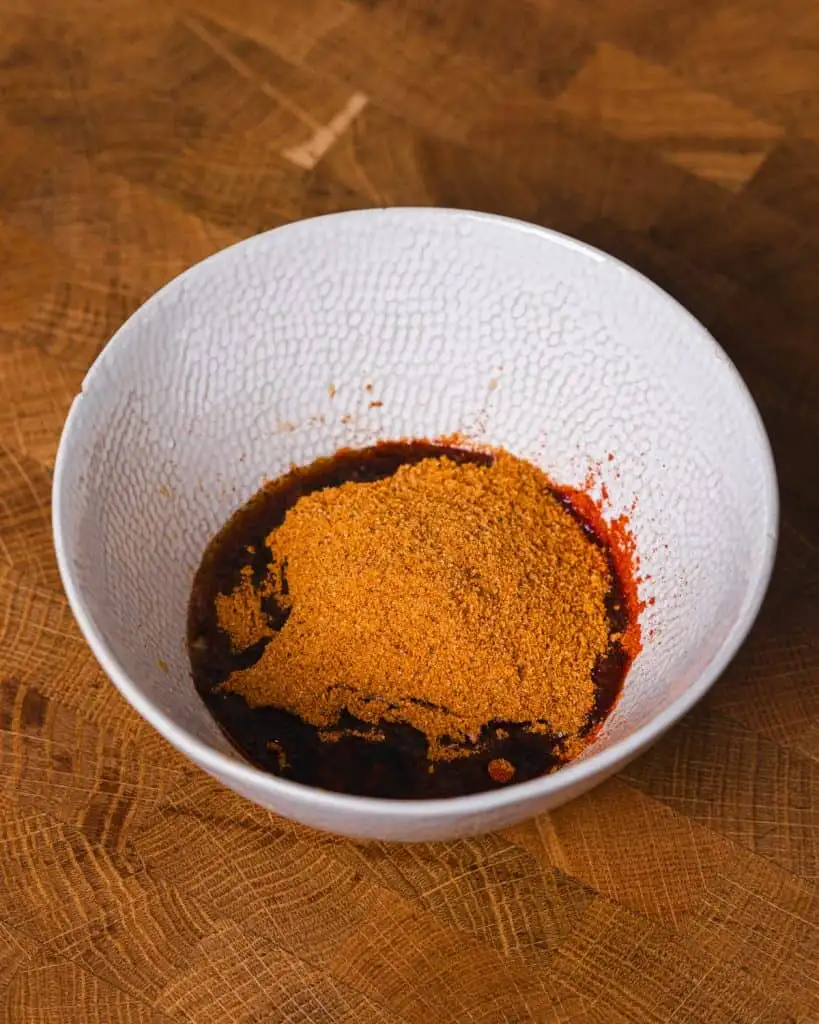
- For the soup based sauce, combine Gochujang, gochugaru, light soy sauce, mirin, sugar, garlic and ramen spice packets in a bowl. Set aside.

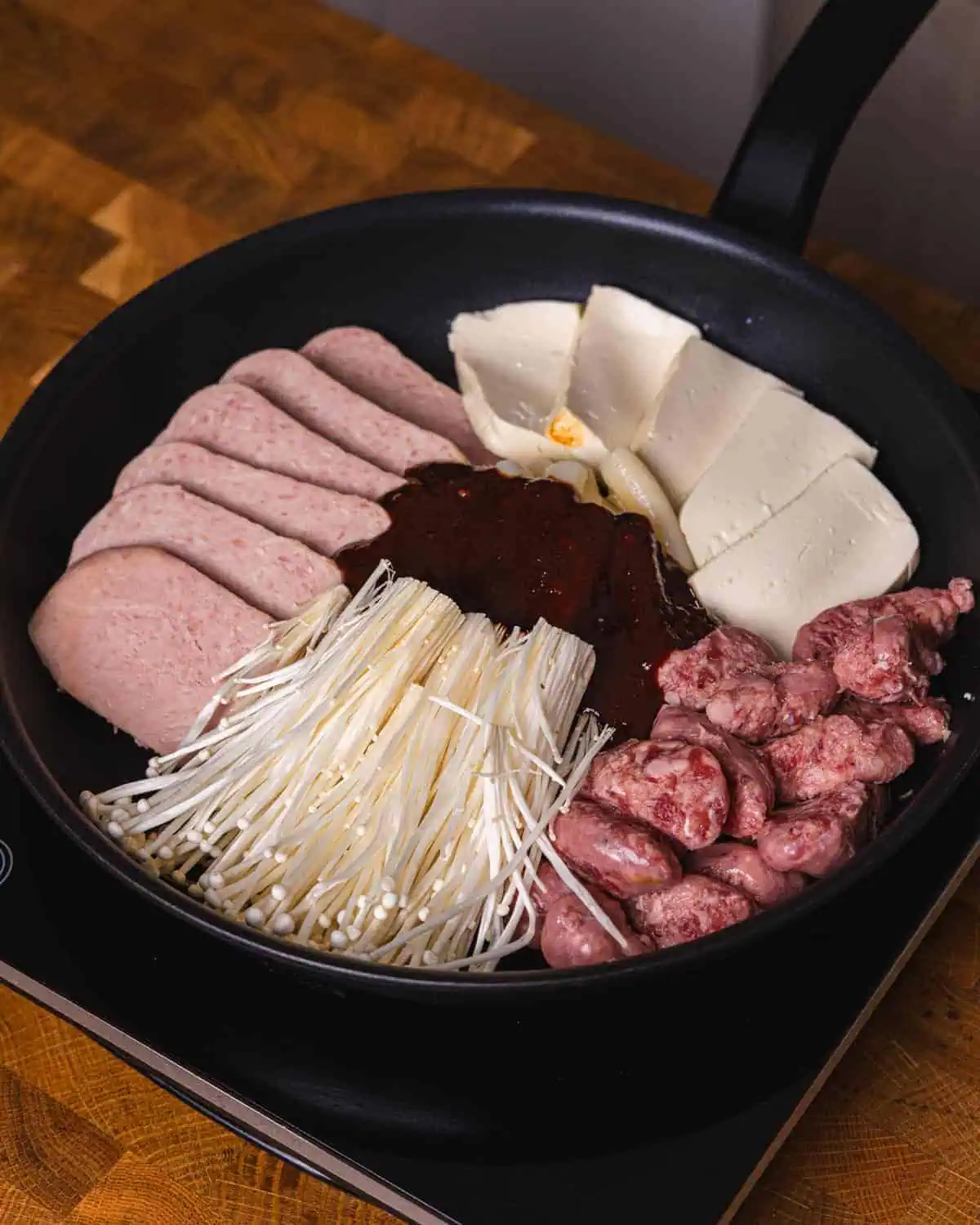
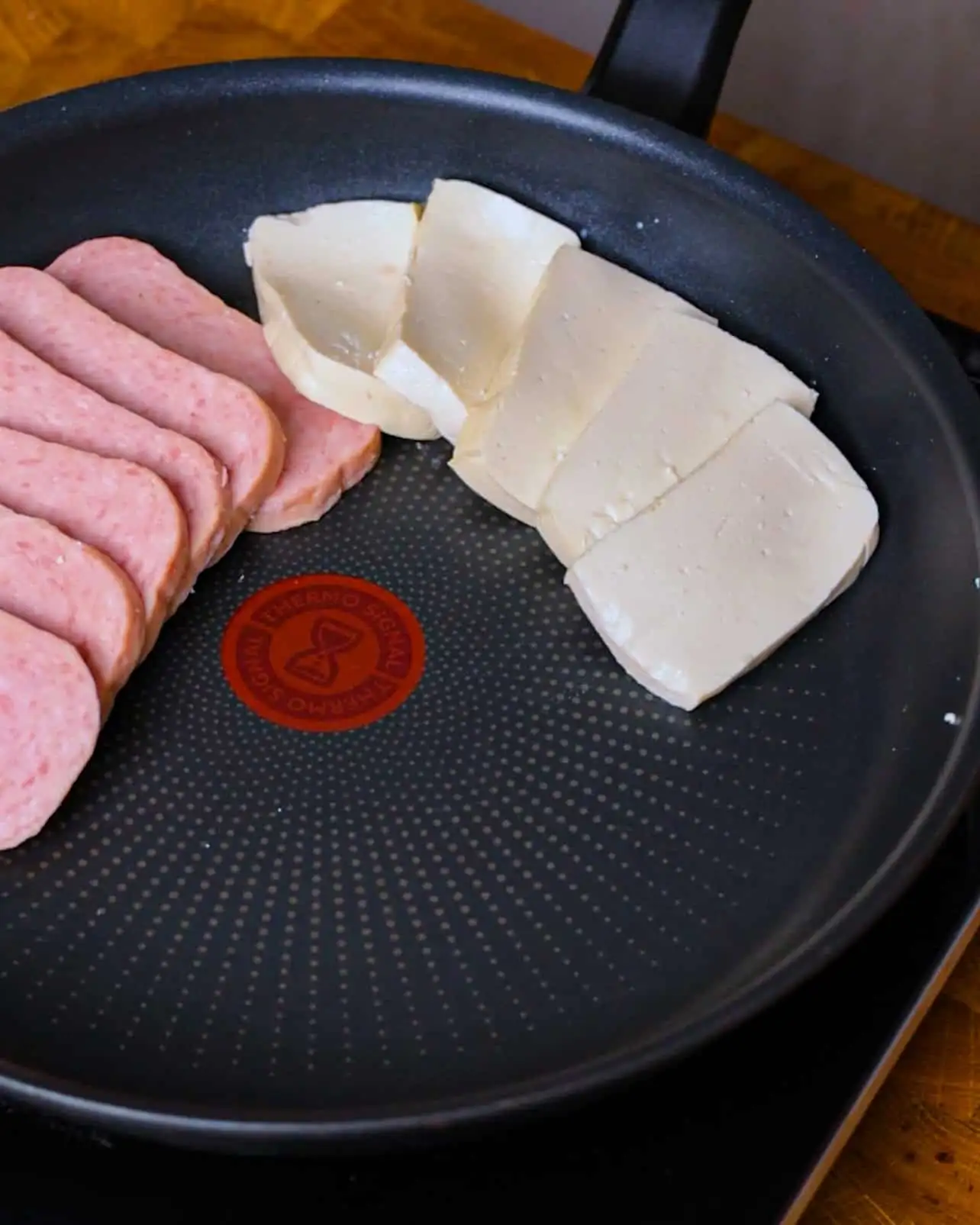
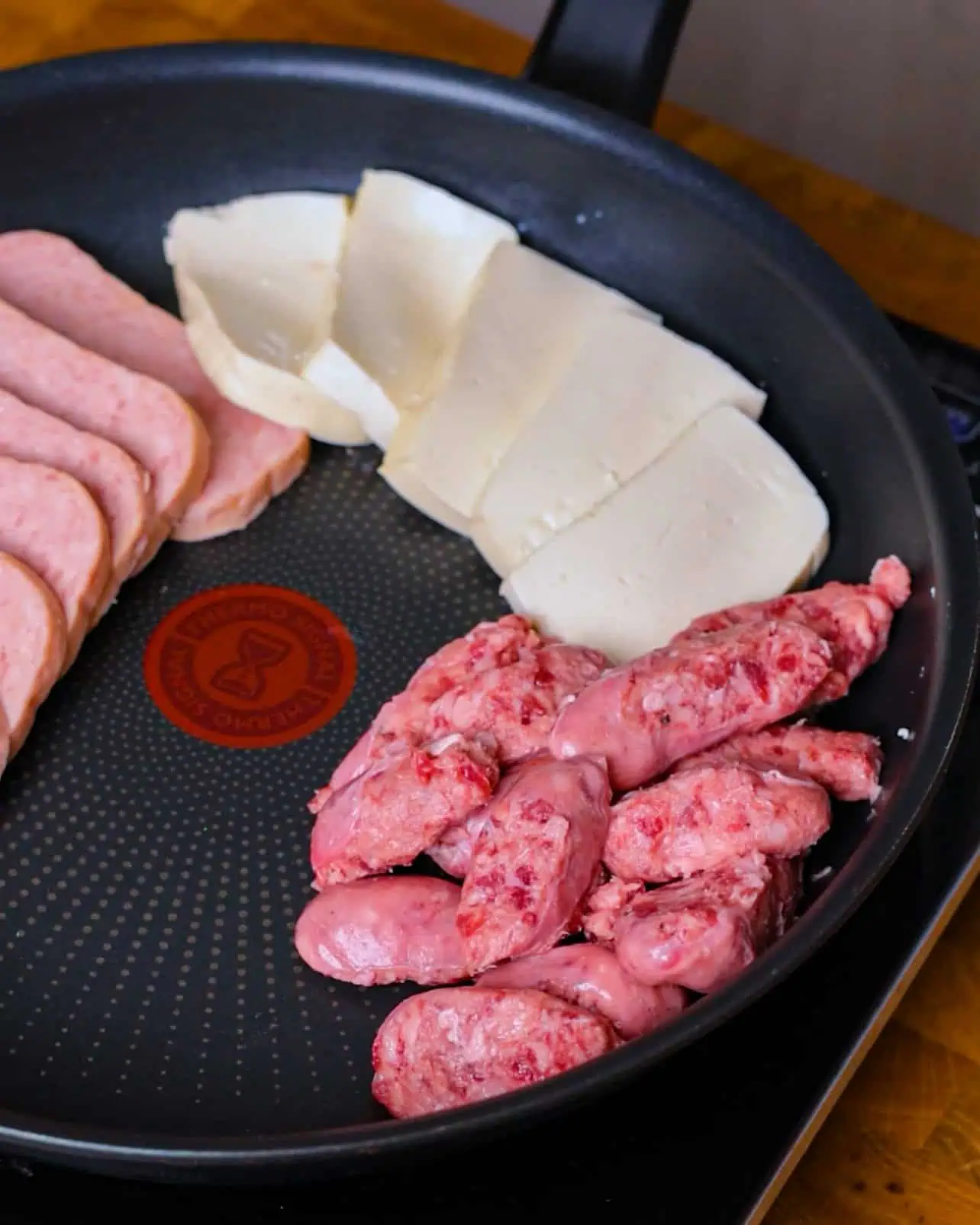
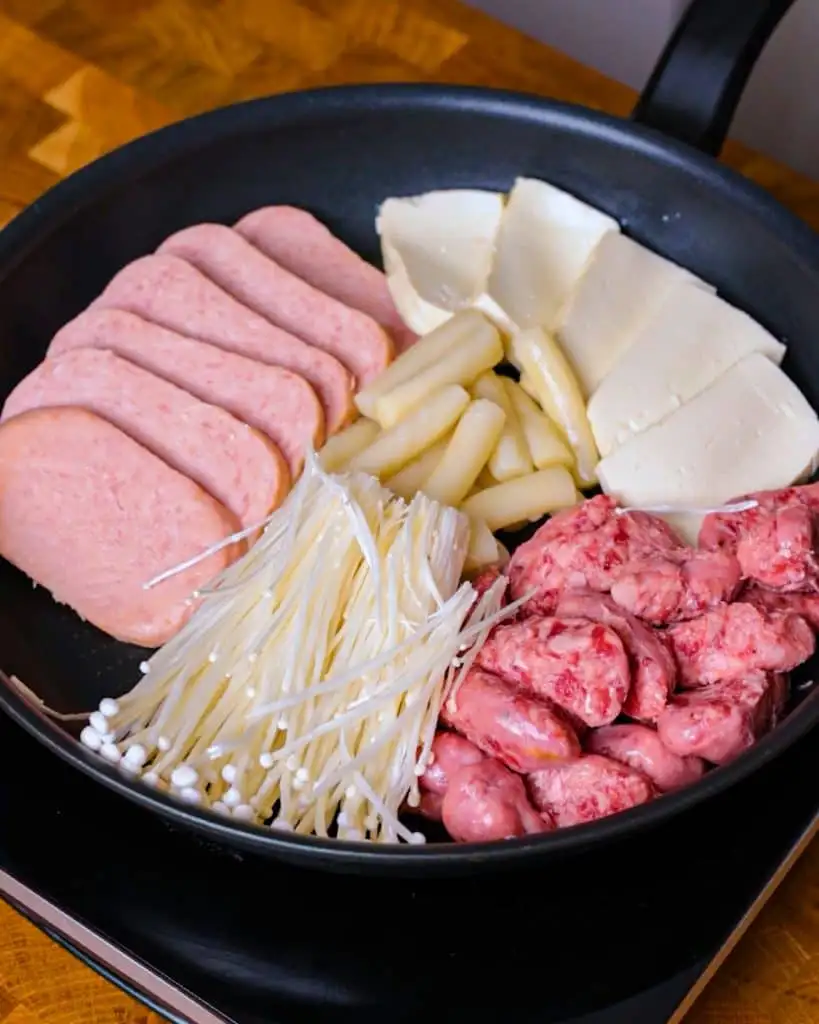
- Add the sausages, spam, tofu, kimchi, tteokbokki, enoki mushroom and the sauce to the pan.
- Then, add the chicken stock and bring it to a boil. Add the ramen followed by American cheese and eggs.
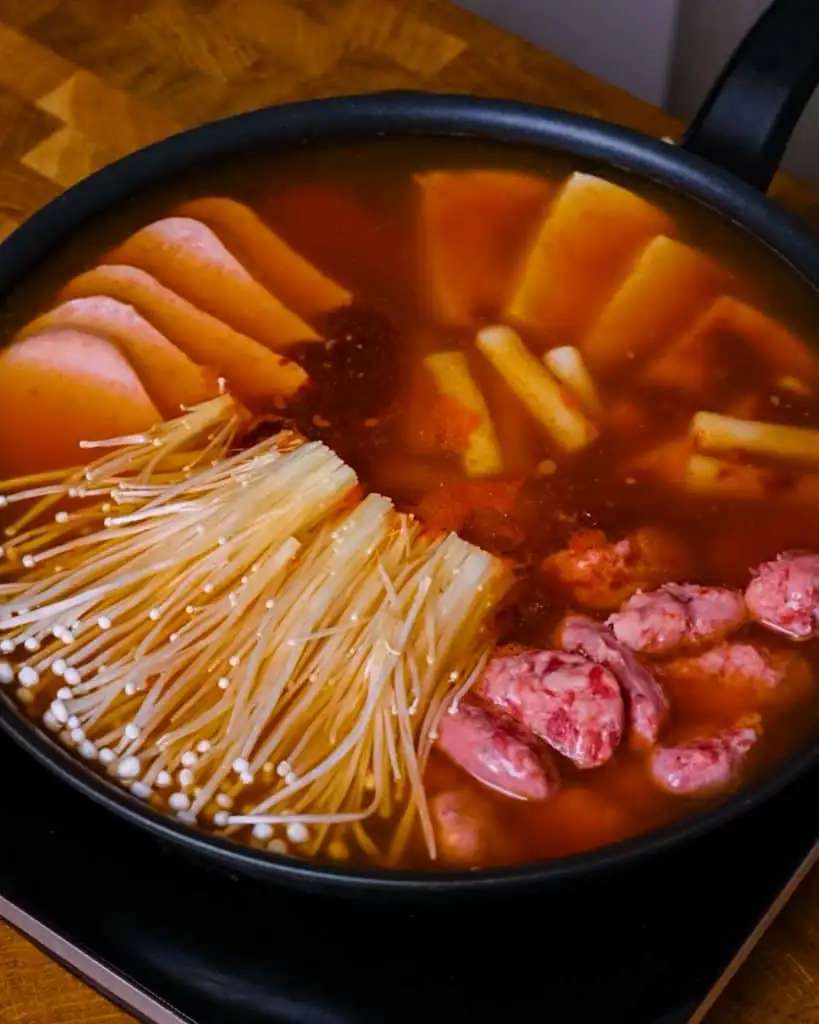
- Let the noodles cook and garnish with green onions. Enjoy with hot steamed rice!
Customization Tips
Korean Army Stew is as versatile as it is delicious! Here are five easy suggestions to personalize your stew and make it just right for your taste buds:
- Veggie Variations: Not a fan of meat or looking for a lighter option? You can replace the sausages and spam with a variety of vegetables like bell peppers, zucchini, and spinach. This not only makes the stew healthier but also adds a fresh, colorful twist to the traditional recipe.
- Cheese Choices: While American cheese is a popular choice for its creamy texture, you can experiment with other types of cheese for different flavors. Try mozzarella for a stretchier texture or a mild cheddar for a sharper taste.
- Spice Levels: Adjust the gochujang and gochugaru according to your spice preference. If you're sensitive to heat, use less, or if you love a fiery dish, add an extra tablespoon of gochugaru to turn up the heat.
- Protein Swap: If you're not into spam or sausages, consider using other proteins like chicken, beef strips, or even seafood. Each type of protein will lend its unique flavor to the stew, making it a new experience every time.
- Broth Bases: The choice of broth can significantly influence the flavor of your stew. While chicken stock is commonly used, you can also try beef broth for a deeper flavor or vegetable broth for a vegetarian version. Some people even like to use bone broth for added nutrition and richness.
Nutritional Information
Korean Army Stew, known for its hearty and satisfying nature, also packs a nutritional punch that can be adjusted based on the ingredients used. Here’s a breakdown of its nutritional aspects:
Protein Content
The stew is typically high in protein, thanks to ingredients like sausages, spam, and tofu. Protein is essential for muscle repair and growth, making this dish a great option after a long day or a workout.
Fat Content
While the stew has moderate fat content, primarily from processed meats like sausages and spam, you can control this by choosing leaner meats or increasing the vegetables. Substituting some of the meat with additional tofu or mushrooms can also help lower the fat content without compromising on the dish's hearty nature.
Carbohydrates
Ingredients like ramen noodles and tteokbokki (rice cakes) contribute carbohydrates, which provide energy. For a lower carb option, you can reduce the noodles or rice cakes, or substitute them with more vegetables like spinach or bok choy.
Vitamins and Minerals
Kimchi, a key ingredient, is not only flavorful but also rich in vitamins A and C, and it has probiotic benefits. Mushrooms and green onions add additional nutrients, making the stew a good source of various vitamins and minerals.
Dietary Fiber
Vegetables and kimchi in the stew contribute dietary fiber, which is beneficial for digestive health. Adding more vegetables can increase the fiber content, which helps in feeling fuller for longer and aids in digestion.
This nutritional overview shows that Korean Army Stew is not only a comforting and tasty dish but can also be a nutritious part of your diet. Adjusting the ingredients allows you to cater to different nutritional needs or preferences, making it a versatile dish suitable for various dietary goals.
Serving Suggestions
Korean Army Stew, also fondly known as Budae Jjigae, is not only a dish full of flavor but also a versatile meal that can be served in various delightful ways. Here are some recommendations on how to enjoy this beloved Korean comfort food:
As a Main Course
Korean Army Stew is typically hearty enough to be enjoyed as a standalone main course. It’s filled with a variety of ingredients that make it both satisfying and filling.
With Rice
Serving the stew with a bowl of steamed rice is a traditional way to enjoy it. The rice is perfect for soaking up the delicious, spicy broth, making every bite a delicious fusion of flavors.
Side Dishes
Accompany your stew with Korean side dishes like kimchi, which adds extra flavor, or a fresh vegetable salad to balance the hearty and spicy nature of the stew.
Korean Pancakes
Pairing Budae Jjigae with Korean pancakes, such as Pajeon (green onion pancake) or Kimchijeon (kimchi pancake), can add a delightful crunch and flavor contrast to your meal.
For Sharing
One of the best ways to enjoy Korean Army Stew is by sharing it! Serve it in a large pot in the middle of the table, allowing everyone to scoop up their favorite ingredients. It’s a great dish for social gatherings, fostering a warm, communal dining experience.
These serving suggestions are designed to enhance your Budae Jjigae experience, making it not just a meal but a memorable dining occasion that brings people together. Whether enjoyed alone or with friends, it's sure to satisfy your taste buds and warm your heart.
Frequently Asked Questions
What is the origin of Budae Jjigae?
Budae Jjigae, also known as Korean Army Stew, was born out of necessity during the Korean War. When food was scarce, people made use of surplus processed foods from U.S. military bases, such as SPAM and hot dogs, combining them with traditional Korean ingredients like kimchi and gochugaru to create this unique and hearty dish.
Can I make Budae Jjigae vegetarian?
Absolutely! To make a vegetarian version of Korean Army Stew, simply omit the meat products and add more vegetables like mushrooms, bok choy, and tofu.
You can also include vegetarian broth instead of chicken or beef stock to keep the flavors rich and satisfying.
What are the best substitutes for gochujang if I can't find it?
If gochujang is not available, you can substitute it with a mixture of red chili pepper flakes mixed with a little soy sauce and sugar to mimic its sweet and spicy flavor.
Another alternative is to use sriracha or any other hot sauce that you prefer, adjusting the quantity to suit your taste.
How long can I store leftover Budae Jjigae?
Leftover Korean Army Stew can be stored in the refrigerator for up to 3-4 days. Make sure it’s in a covered container. Reheat it over the stove or in a microwave, and add a little water or broth if it has thickened too much upon cooling.
Are there any recommended sides to pair with Budae Jjigae?
Yes, Korean Army Stew pairs wonderfully with side dishes like kimchi for added spice, steamed rice to soak up the broth, or Korean pancakes for a delightful textural contrast.
These sides complement the rich and hearty flavors of the stew, making your meal even more enjoyable.
PrintKorean Army Stew

Korean Army Stew, also known as Budae Jjigae, is a unique and hearty dish that combines Korean flavors with American influences.
- Prep Time: 20 minutes
- Cook Time: 10 minutes
- Total Time: 30 Minutes
- Yield: 3 Servings 1x
- Category: Korean
- Method: Easy
- Cuisine: Asian
Ingredients
- 200g of sausages
- 200g of spam
- 200g of firms tofu
- 1 cup of kimchi
- 1 cup of tteokbokki
- 200g of enoki mushroom
- 1 pack of ramen
- 2 slices of American cheese
- A handful of scallion
- 4 cups of chicken stock
- 2 eggs
Sauce:
- 2 tbsp of Gochujang
- 1 tbsp of Gochugaru
- 1 tbsp of light soy sauce
- 2 tbsp of mirin
- ½ tbsp of sugar
- 3 cloves of garlic, grated
- 1 ramen spice packets
Instructions
- For the soup based sauce, combine Gochujang, gochugaru, light soy sauce, mirin, sugar, garlic and ramen spice packets in a bowl. Set aside.
- Add the sausages, spam, tofu, kimchi, tteokbokki, enoki mushroom and the sauce to the pan.
- Then, add the chicken stock and bring it to a boil. Add the ramen followed by American cheese and eggs.
- Let the noodles cook and garnish with green onions. Enjoy with hot steamed rice!



Leave a Reply