




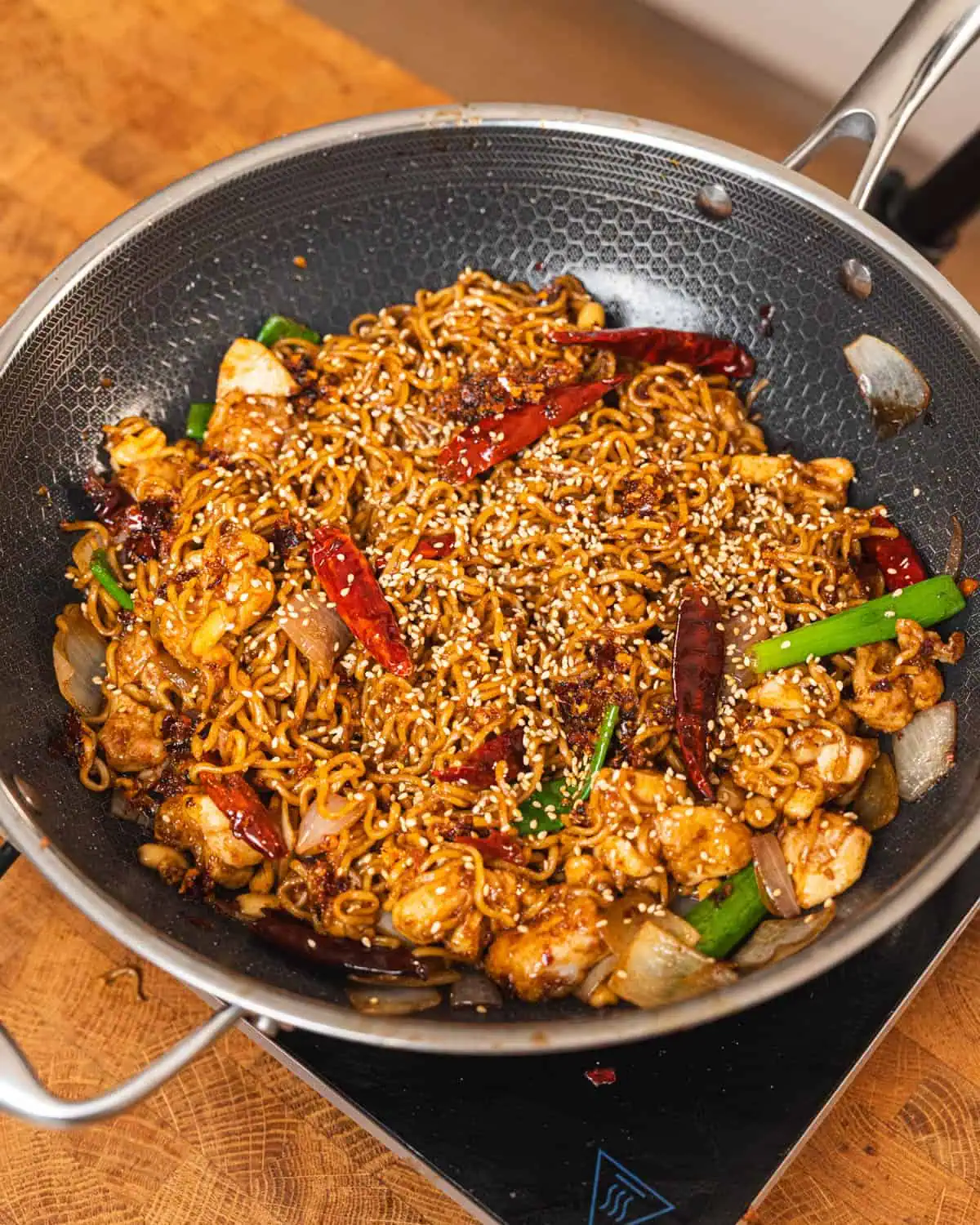
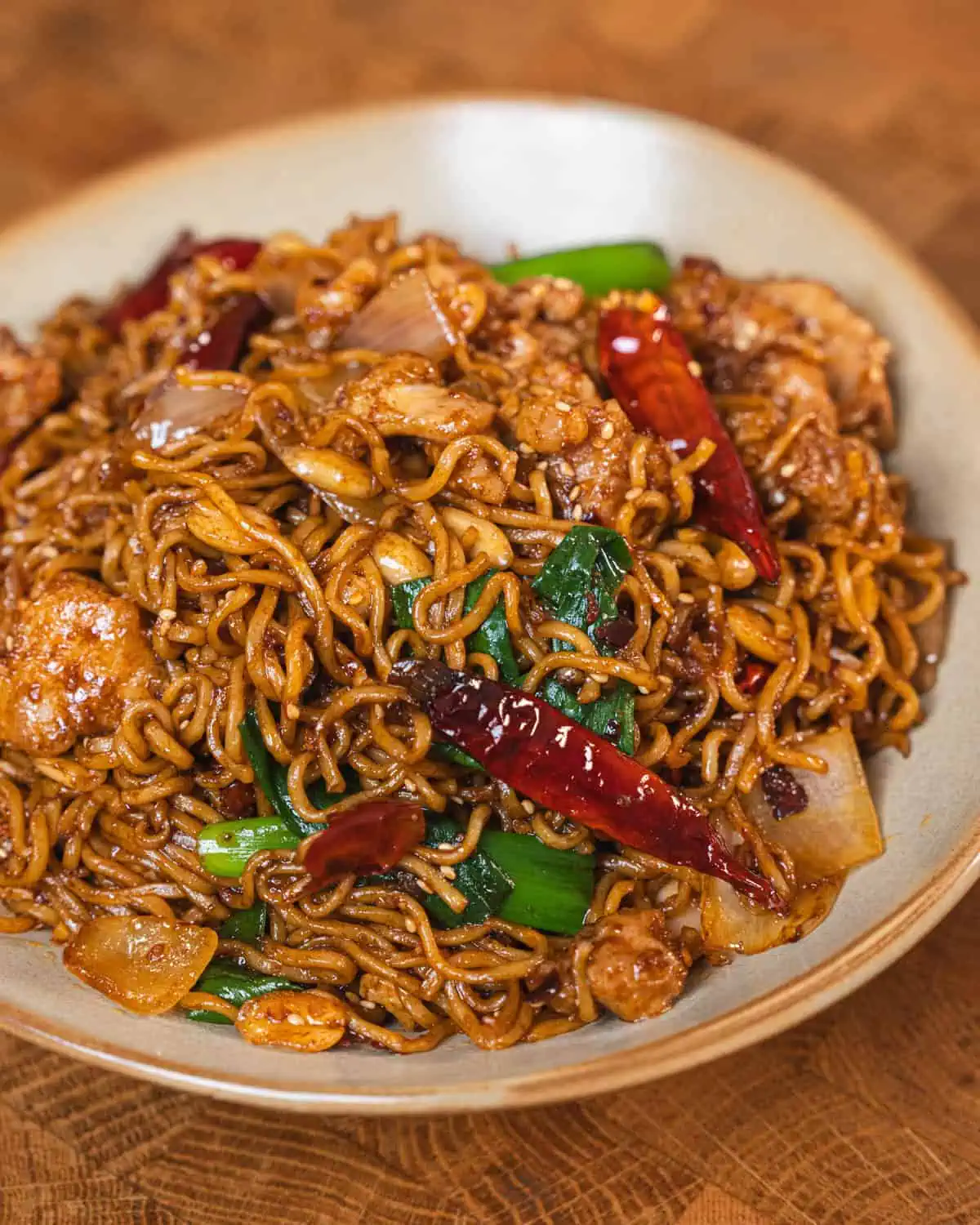
Two takeout classics welded into one wok: numbing dried chillies, roasted peanuts and springy egg noodles, done in 25 minutes.
Kung pao chicken chow mein is the answer to a question nobody at the restaurant will ask for you. You want the sticky sweet heat and the peanut crunch of kung pao, but you also want noodles rather than a side of rice you will not finish. So you put them in the same wok and stop paying for two dishes.
The build is straightforward. Chicken thigh gets a cornstarch marinade so it stays tender, the sauce is mixed in advance in a single bowl, and everything hits the wok in a fast sequence that takes about ten minutes once you start. If you want the original in its classic form, our kung pao chicken covers that. This is the noodle version, and it is the one that actually fills you up.
It sits in the same family as chili oil soy sauce chow mein and beef and broccoli chow mein, so if you have made either of those the rhythm will feel familiar.
Why kung pao and chow mein belong in the same wok
Kung pao sauce is built to cling. It carries dark soy for colour, oyster sauce for body and a tablespoon of sugar that caramelises against a hot wok, which is exactly the texture you want wrapped around noodles rather than pooled under chicken. A thinner, more watery stir fry sauce would just slide off and leave the noodles pale.
The dried chillies do something specific here too. You are not eating them, you are toasting them in oil at the start so their heat and smokiness bleed into the fat, and that fat then coats every strand. Eight whole chillies sounds alarming and is actually mild, because whole pods release far less capsaicin than broken or ground ones do.
Ingredients
For the marinated chicken
- Chicken thighs: 350g, cut into bite sized pieces. Thigh stays juicy at wok heat in a way breast simply does not.
- Cornstarch and water: 2.5 tablespoons and 2 tablespoons, which together form the velveting slurry that keeps the chicken tender.
- Chicken bouillon powder: 1.5 teaspoons, seasoning the meat itself rather than relying on the sauce.
- MSG: 1.5 teaspoons, for the savoury depth takeout has and home cooking usually misses. Leave it out if you prefer.
- Sugar: half a teaspoon, balancing the salt in the bouillon.
- White pepper: a teaspoon, which is floral and warm rather than sharp like black pepper.
- Chinese cooking wine and sesame oil: a teaspoon each, for aroma.
- Cooking oil: a tablespoon, to stop the pieces clumping in the wok.
For the sauce
- Light soy sauce: 1.5 tablespoons, the main salt.
- Dark soy sauce: half a tablespoon, almost entirely for that deep brown colour.
- Oyster sauce: a tablespoon, giving the sauce body so it coats instead of running.
- Chilli oil: 1.5 tablespoons, the second layer of heat alongside the dried chillies.
- Sugar: a tablespoon, which caramelises on contact with the hot wok.
- Sesame oil: half a tablespoon, stirred through for aroma rather than cooking.
- Chinese cooking wine: a tablespoon, lifting the whole thing.
For the stir fry
- Fresh hokkien or egg noodles: 400g. Fresh beats dried here because they are already springy and need only a loosening.
- Dried chillies: eight whole ones, toasted in oil at the start.
- Brown onion: half, cut into bite sized squares. See the recipe note on this one.
- Garlic: four cloves, minced, added after the chillies so it does not burn.
- Ginger: two thin slices, for warmth underneath the heat.
- Scallions: two, cut into 2cm lengths and added right at the end so they stay bright.
- Roasted peanuts: a quarter cup, the texture that makes it kung pao.
- Cooking oil: two tablespoons for the stir fry itself.
Steps
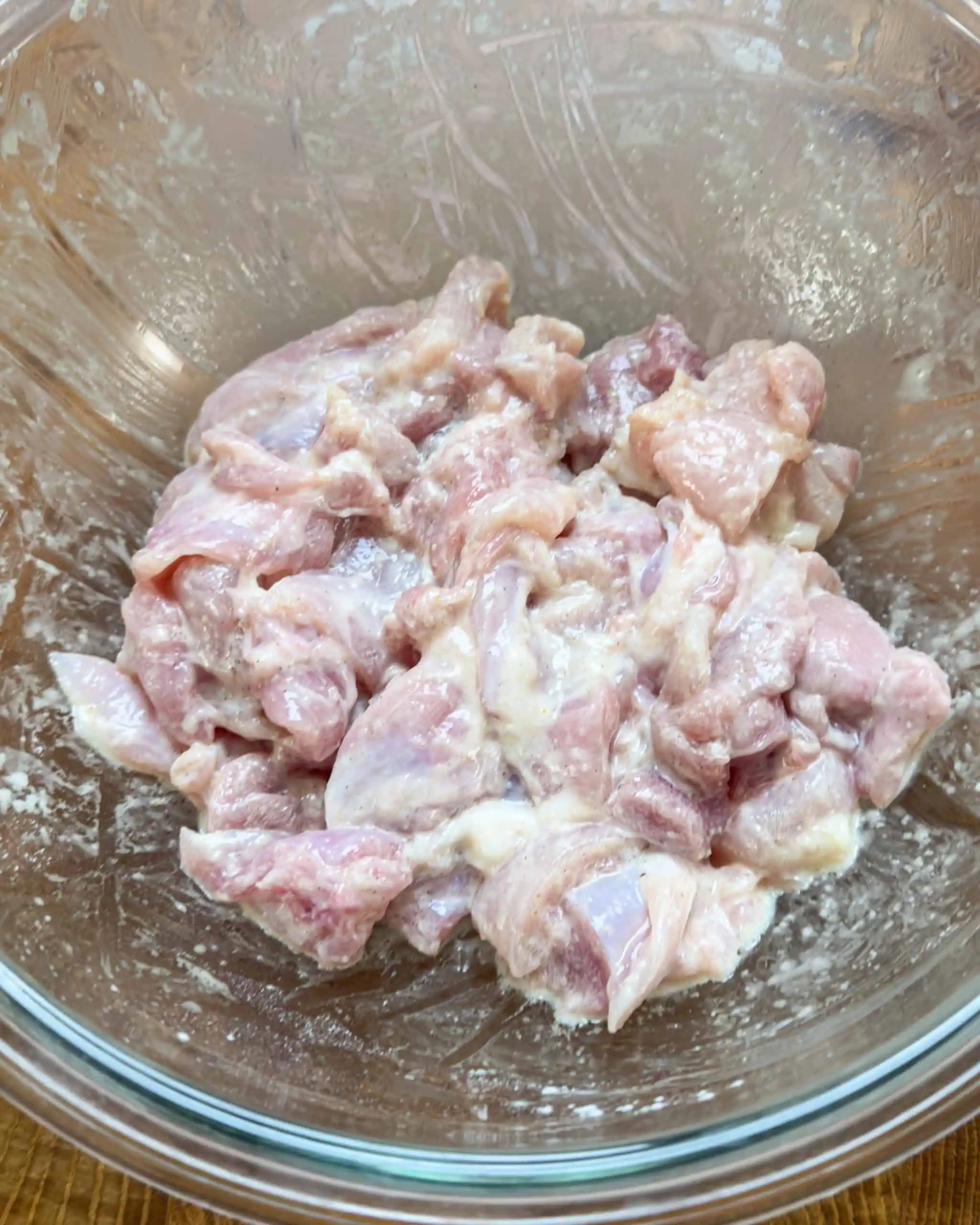
- Marinate the chicken. Cut the thighs into bite sized pieces and toss with every marinade ingredient until the cornstarch slurry coats each piece. Leave it for 10 minutes while you prep everything else.
- Mix the sauce and loosen the noodles. Stir all the sauce ingredients together in a bowl. Loosen the noodles according to the packet and drain them well, because wet noodles will steam rather than fry.
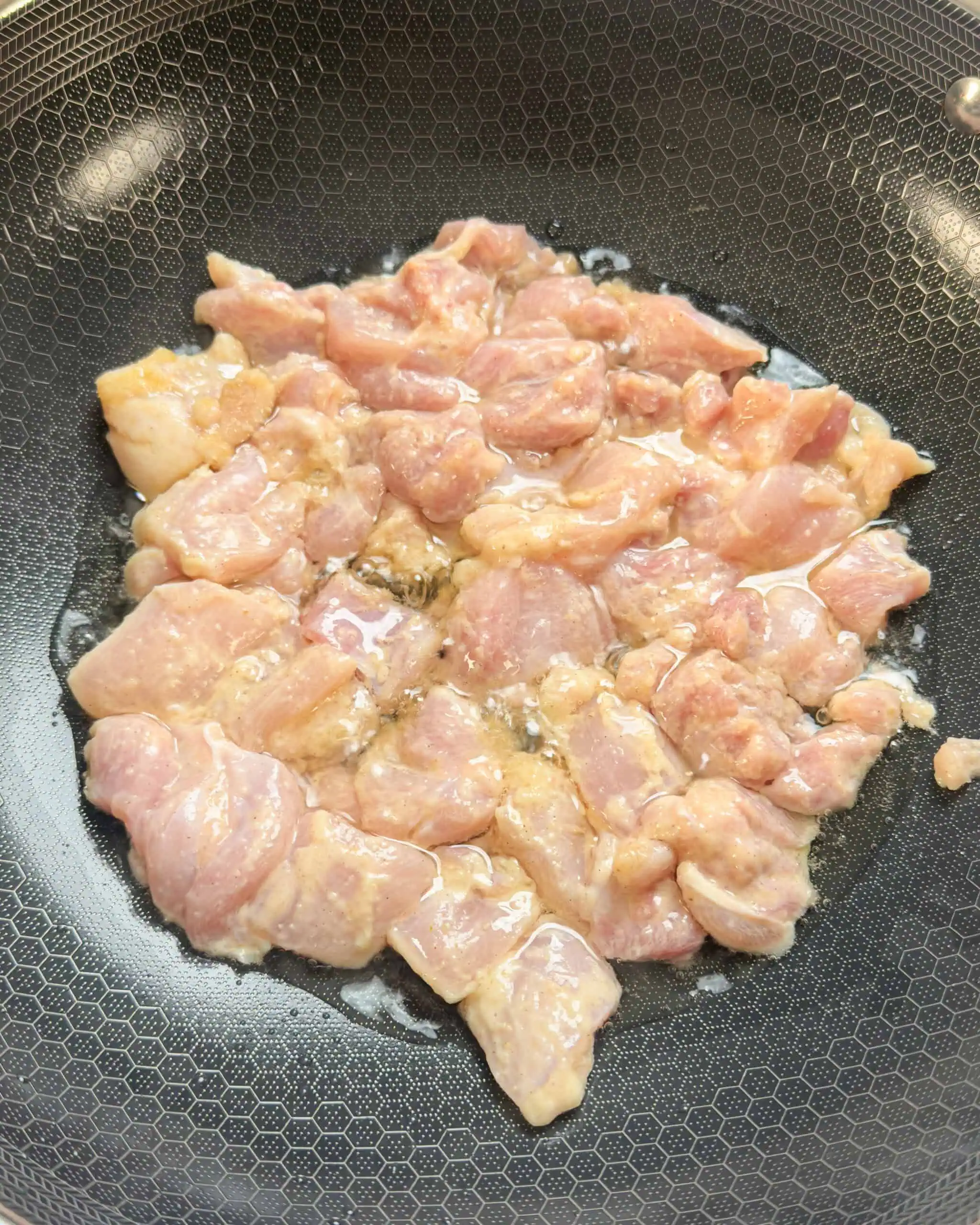
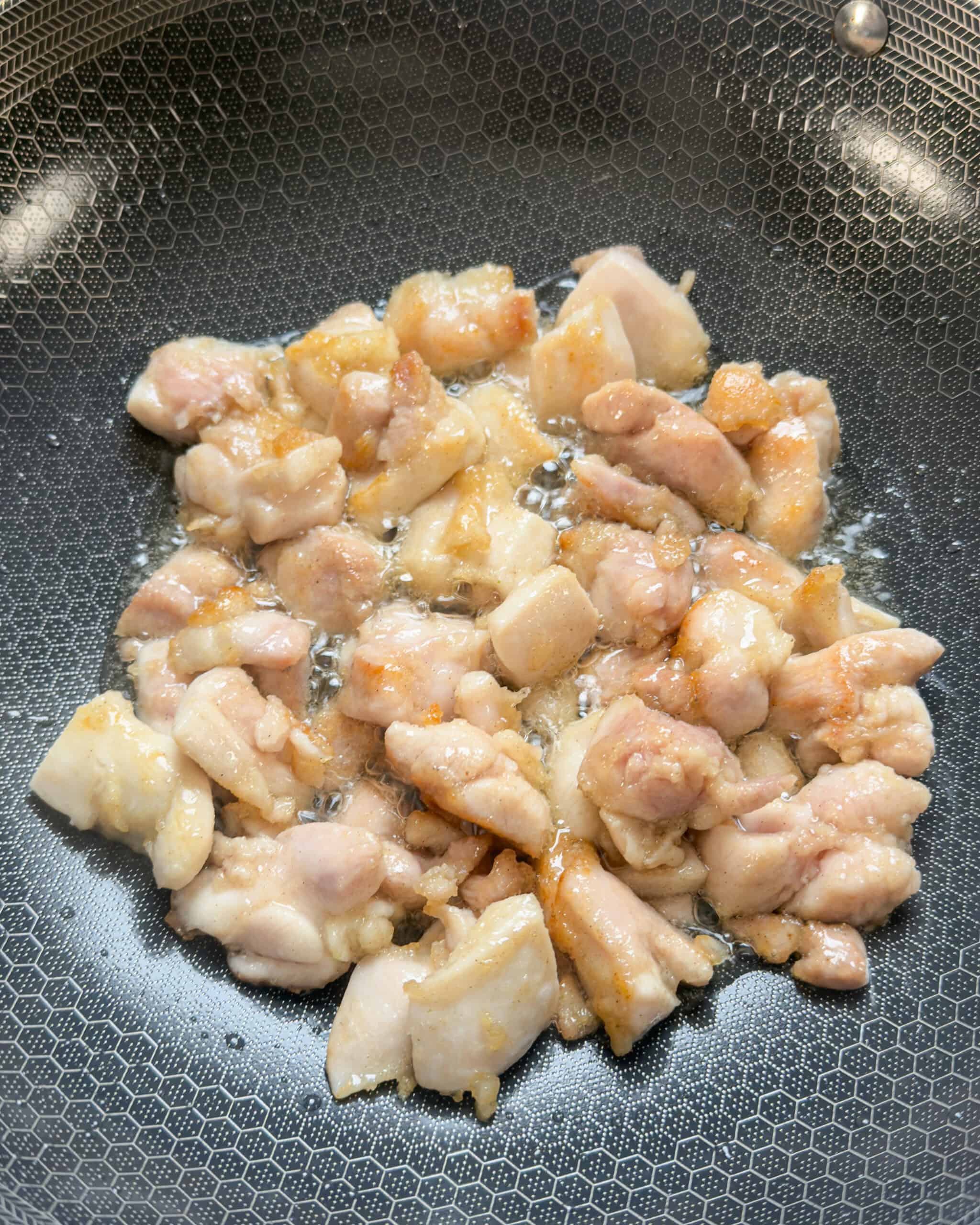
- Get the chicken into a hot wok. Heat one tablespoon of oil over high heat and spread the chicken in a single layer so it sears rather than stews.
- Stir fry until golden. Cook for 4 to 5 minutes until the pieces are browned at the edges and cooked through, then lift them out onto a plate.
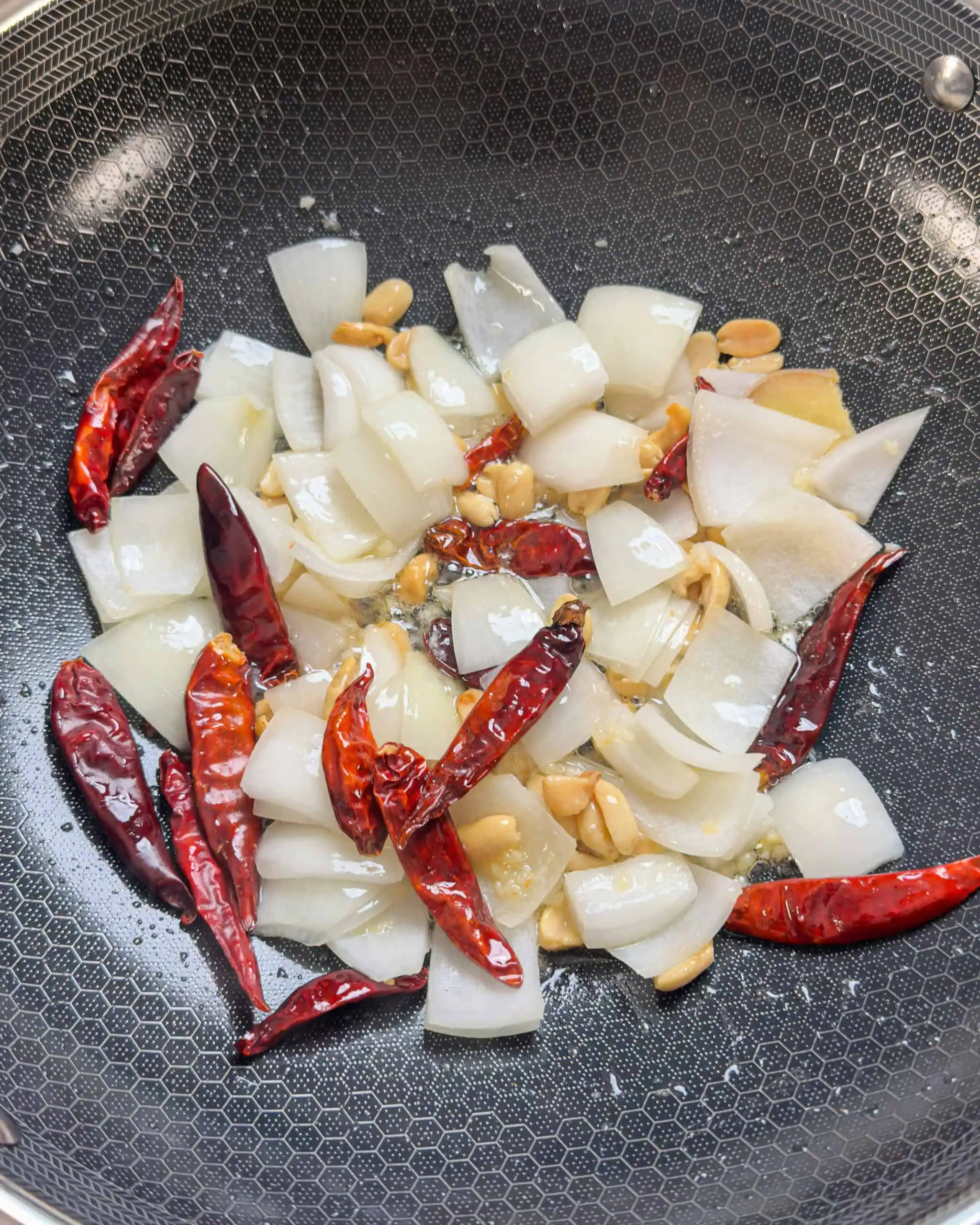
- Toast the aromatics and peanuts. Add the remaining tablespoon of oil, then the onion, dried chillies and ginger, and stir fry for about a minute. Add the garlic and roasted peanuts and toss for another 15 seconds.
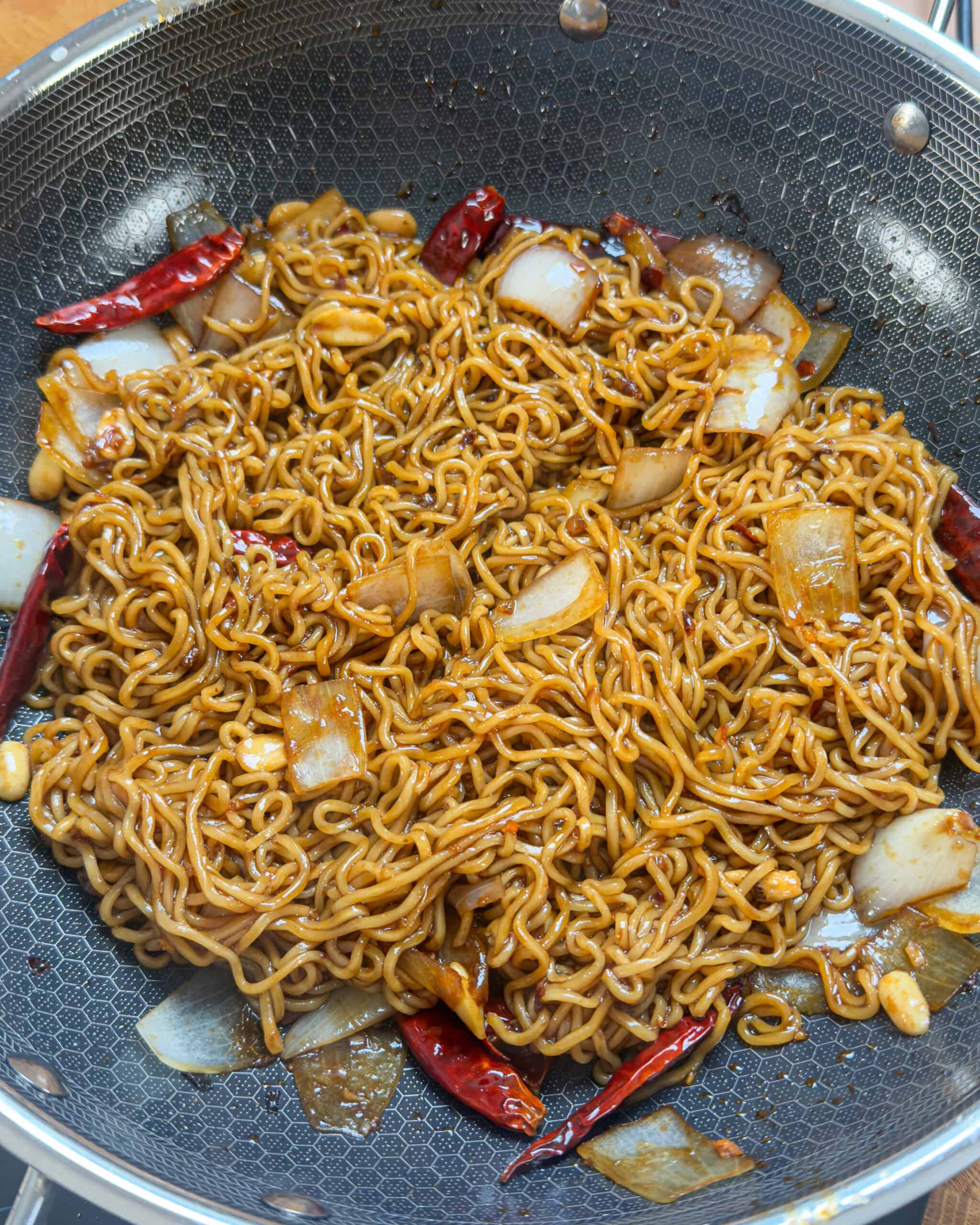
- Add the noodles and sauce. Tip in the drained noodles and the premixed sauce, then toss over high heat for 1 to 2 minutes until every strand has taken on colour.
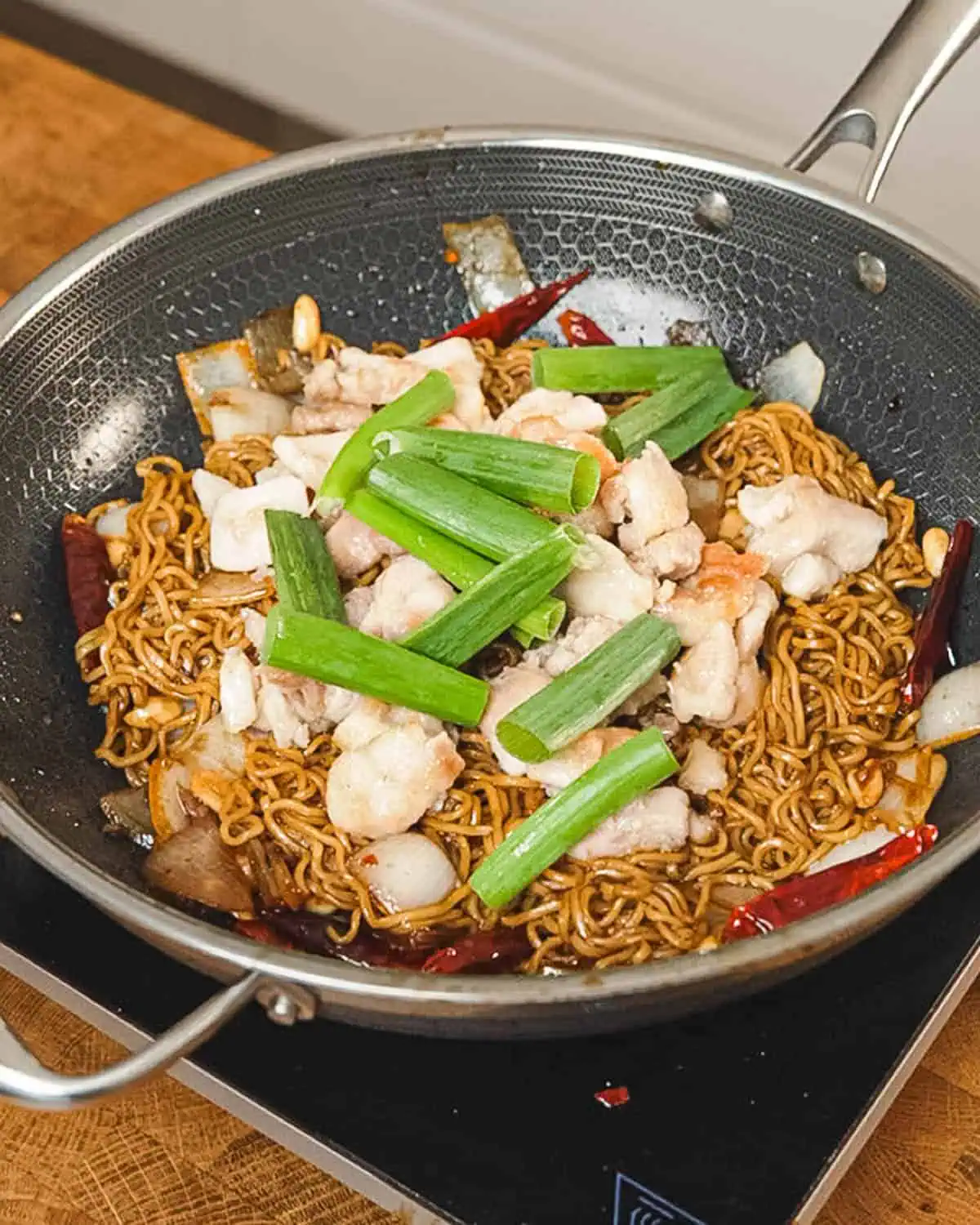
- Return the chicken. Add the cooked chicken back to the wok along with the scallion lengths.
- Toss it all together. Keep everything moving over high heat for a final 30 seconds so the chicken reheats and the scallions soften just slightly.
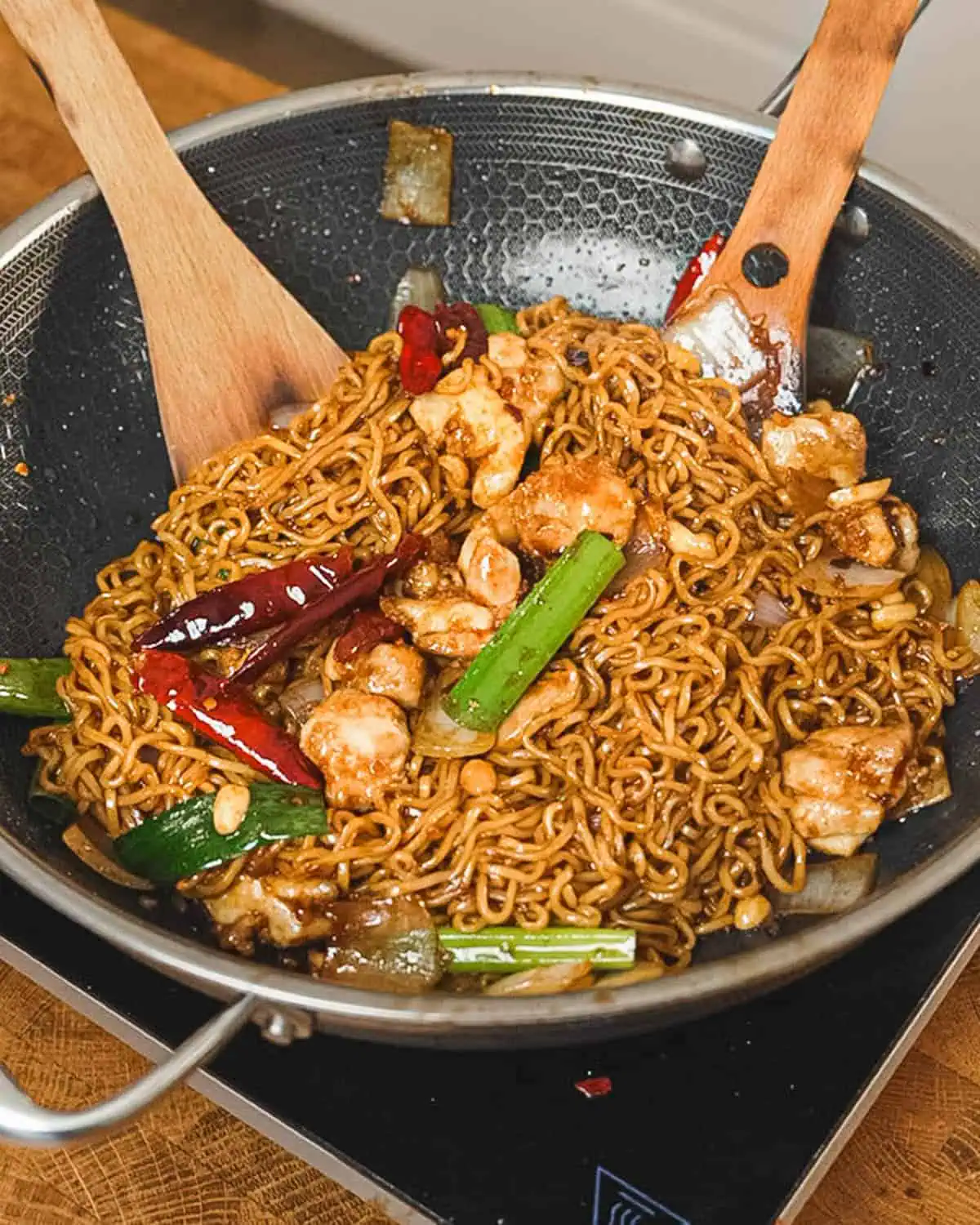
- Serve straight from the wok. Scatter over sesame seeds if you have them and eat it immediately, while the noodles still have their chew.
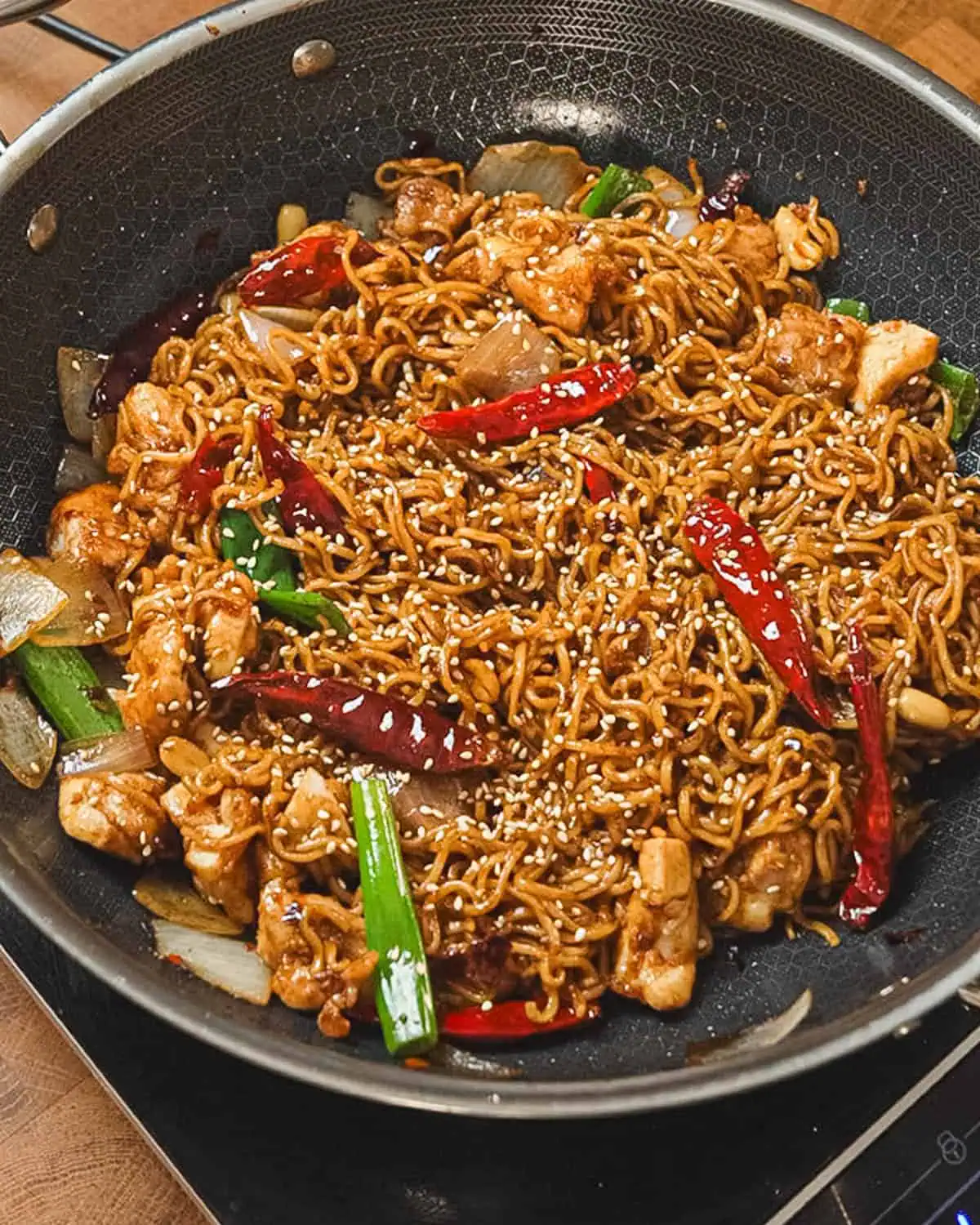
How to get wok hei on a home stove
Cook in batches, not all at once
A domestic burner puts out a fraction of the heat a restaurant wok range does, so the moment you overload it the temperature crashes and your stir fry turns into a braise. That is why the chicken comes out before the noodles go in. Two quick rounds in a hot wok beats one long sad one, and it costs you about 90 extra seconds.
Dry ingredients hit a dry wok
Water is what stops browning. Drain the noodles properly, pat the chicken so it is tacky rather than wet, and let the wok get genuinely hot before the oil goes in. You want to see the oil shimmer and move thinly across the surface before anything else touches it.
Let things sit still for a few seconds
Constant tossing feels like the right instinct and it is mostly wrong. Spread the chicken out and leave it for 30 to 45 seconds so a crust can actually form, then start moving it. The same applies to the noodles at the end. general tso chicken chow mein relies on exactly the same restraint.
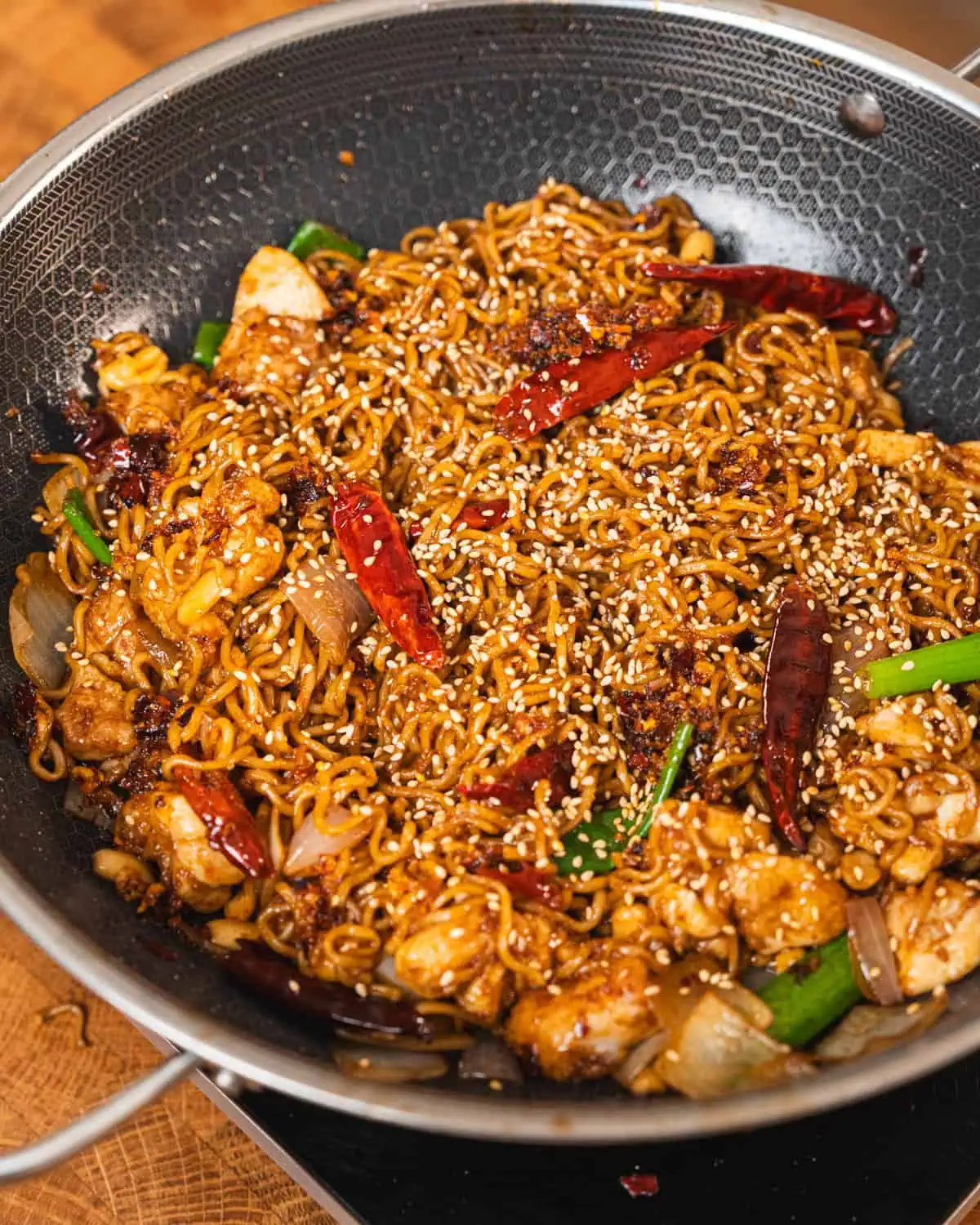
Dialling the chilli heat up or down
Leave the dried chillies whole for mild
Whole dried chillies perfume the oil without flooding it with capsaicin, which is why eight of them produces a dish most people would call gently warm. Keep them intact and push them to the side of the wok if you want even less. They are there to be looked at and smelled more than eaten.
Snip them open for proper heat
Cutting or tearing the pods releases the seeds and the white pith, which is where the real heat lives. Snip two or three of them in half with scissors before they go in and the difference is immediate and substantial. Start with two, because you cannot take it back out.
The chilli oil is the other dial
The 1.5 tablespoons of chilli oil in the sauce contributes a steady background burn that is separate from the dried chillies. Drop it to half a tablespoon and top up with plain sesame oil for a very mild version that still tastes complete. black pepper beef chow mein is the one to make if you want no chilli at all.
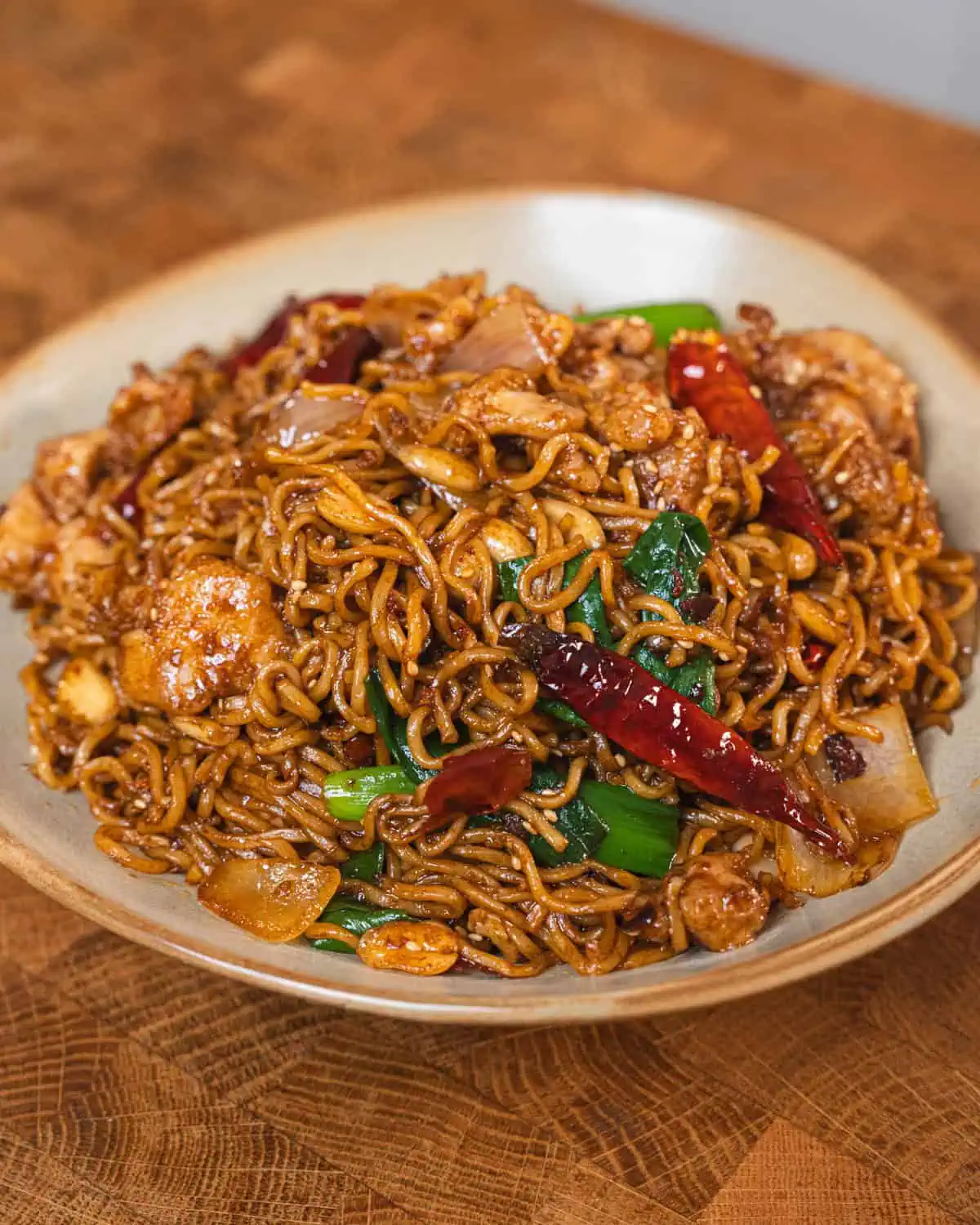
Noodle choices that actually hold up
Fresh hokkien and egg noodles are the top pick
Both are thick enough to survive high heat tossing without shredding, and they arrive already cooked so they only need loosening. Rinse them briefly under warm water to separate the strands, then drain hard. They should feel springy, not slippery, when they go into the wok.
Dried noodles work with one adjustment
Boil them about a minute short of the packet time, because they will keep cooking in the wok with the sauce. Toss the drained noodles with a teaspoon of oil so they do not fuse into a block while you cook the chicken. Dried wheat noodles and even instant ramen cakes both do the job.
What to avoid
Rice noodles are the main trap. They break apart under the vigorous tossing this dish needs and they soak up the sauce rather than being coated by it, so you end up with something closer to a soggy pad thai. If rice noodles are what you have, cantonese chow mein is the better recipe to cook tonight.
Frequently Asked Questions
Can I use chicken breast instead of thigh?
You can, and the cornstarch marinade will protect it more than you would expect. Cut the pieces slightly larger so they have less surface area to dry out, and pull them from the wok at 3 to 4 minutes rather than 5. Breast goes from done to chalky in under a minute at this heat, so stay next to it.
What is the MSG doing, and can I leave it out?
MSG is the savoury hit that makes takeout taste like takeout, and 1.5 teaspoons across 350g of chicken is a normal restaurant ratio. Leaving it out will not ruin the dish, but it will taste noticeably flatter. If you skip it, add an extra half teaspoon of chicken bouillon powder and a splash more oyster sauce to compensate.
Do I have to use Chinese cooking wine?
It adds a fermented depth that is hard to replicate, but dry sherry is a close and widely available substitute in the same quantity. Mirin works at a pinch though it is sweeter, so cut the sugar slightly if you use it. Plain water or chicken broth will do if you cook alcohol free, and the dish will simply be a little less complex.
Why does my sauce end up at the bottom of the wok?
Almost always because the noodles were still wet or the wok was not hot enough to drive the sauce onto them. Drain the noodles thoroughly, get the wok properly hot before the sauce goes in, and keep everything moving so the sugar caramelises onto the strands instead of pooling. A minute of confident high heat tossing fixes most of it.
How do I store and reheat it?
Refrigerate in an airtight container for up to three days. The best reheat is a hot wok or frying pan with a teaspoon of oil for 2 to 3 minutes, which brings back some of the original texture. A microwave works but softens the noodles considerably, so add a splash of water and accept that it will be a gentler version of itself.
Can I add vegetables?
Yes, and it takes the dish further without much effort. Diced capsicum, celery and carrot are all traditional alongside kung pao flavours and go in with the onion at step 5. Add firmer vegetables earlier and leafy ones at the very end, and avoid anything with high water content like mushrooms unless you cook them separately first.
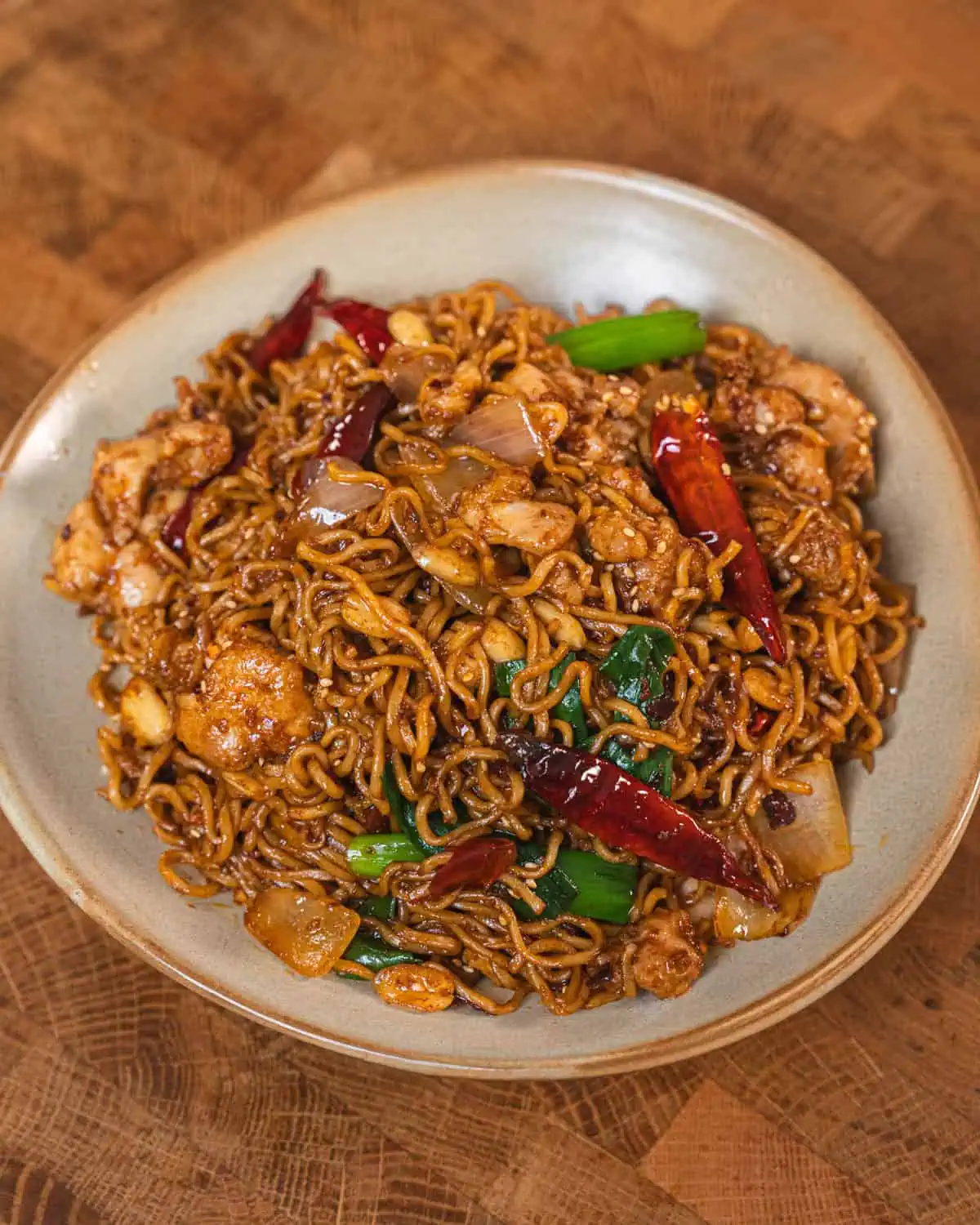
RATE MY DISH! If you make this kung pao chicken chow mein, drop a star rating and tell us how hot you took it in the comments.
PrintKung Pao Chicken Chow Mein

Two takeout classics in one wok. Tender velveted chicken, toasted dried chillies, roasted peanuts and springy egg noodles in a glossy kung pao sauce, ready in 25 minutes.
- Prep Time: 15 minutes
- Cook Time: 10 minutes
- Total Time: 25 minutes
- Yield: 2 to 3 servings 1x
- Category: Dinner
- Method: Stir Fry
- Cuisine: Chinese
Ingredients
Marinated chicken:
- 350g chicken thighs, cut into bite sized pieces
- 1.5 tsp chicken bouillon powder
- ½ tsp sugar
- 1.5 tsp MSG
- 1 tsp white pepper
- 1 tsp Chinese cooking wine
- 1 tsp sesame oil
- 1 tbsp cooking oil
- 2.5 tbsp cornstarch
- 2 tbsp water
Sauce:
- 1.5 tbsp light soy sauce
- ½ tbsp dark soy sauce
- 1 tbsp oyster sauce
- 1.5 tbsp chilli oil
- 1 tbsp sugar
- ½ tbsp sesame oil
- 1 tbsp Chinese cooking wine
Stir fry:
- 400g fresh hokkien or egg noodles
- 2 tbsp oil, for stir frying
- 8 dried chillies
- ½ brown onion, cut into bite sized squares (see notes)
- 2 scallions, cut into 2cm lengths
- 4 cloves garlic, minced
- 2 thin slices ginger
- ¼ cup roasted peanuts
Instructions
- Cut the chicken thighs into bite sized pieces and toss with all the marinade ingredients. Set aside for 10 minutes while you prep the rest.
- Mix the sauce ingredients in a bowl. Loosen the noodles according to the packet directions and drain well.
- Heat 1 tablespoon oil in a wok over high heat. Stir fry the chicken for 4 to 5 minutes until golden and cooked through, then transfer to a plate.
- Add the remaining 1 tablespoon oil to the wok. Stir fry the onion, dried chillies and ginger for about 1 minute. Add the garlic and roasted peanuts and toss for another 15 seconds.
- Add the noodles and sauce and toss over high heat for 1 to 2 minutes until evenly coated.
- Return the chicken to the wok, add the scallions and toss briefly before serving.
Notes
- The original method calls for onion but does not give a quantity. Half a brown onion cut into bite sized squares is what the step photos show, so that is what is written here. Adjust to taste.
- Leave the dried chillies whole for gentle warmth. Snip two or three open with scissors if you want real heat, because the seeds and pith are where it lives.
- Drain the noodles hard. Wet noodles steam instead of frying and the sauce pools at the bottom of the wok rather than coating them.
Nutrition
- Serving Size: 1 bowl
Leave a Reply