
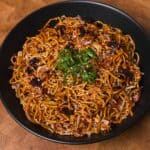

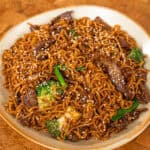
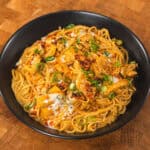

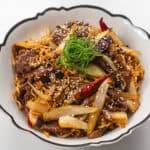
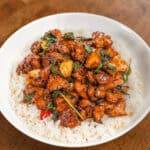
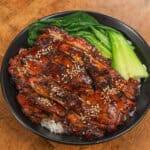


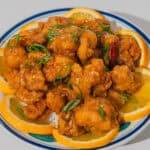




Savor General Tso Chicken Chow Mein, spicy-sweet, saucy noodles packed with crispy chicken bliss.
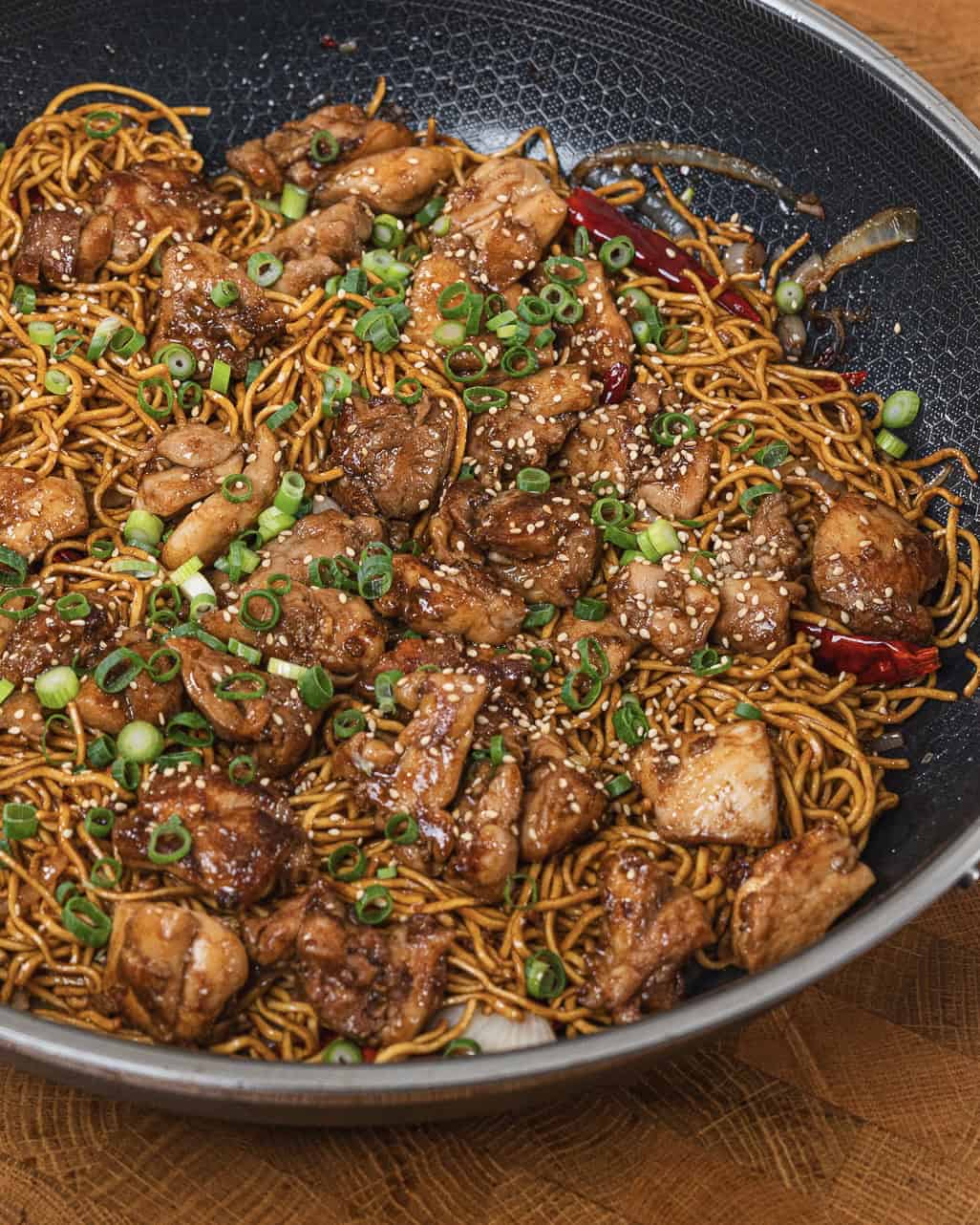
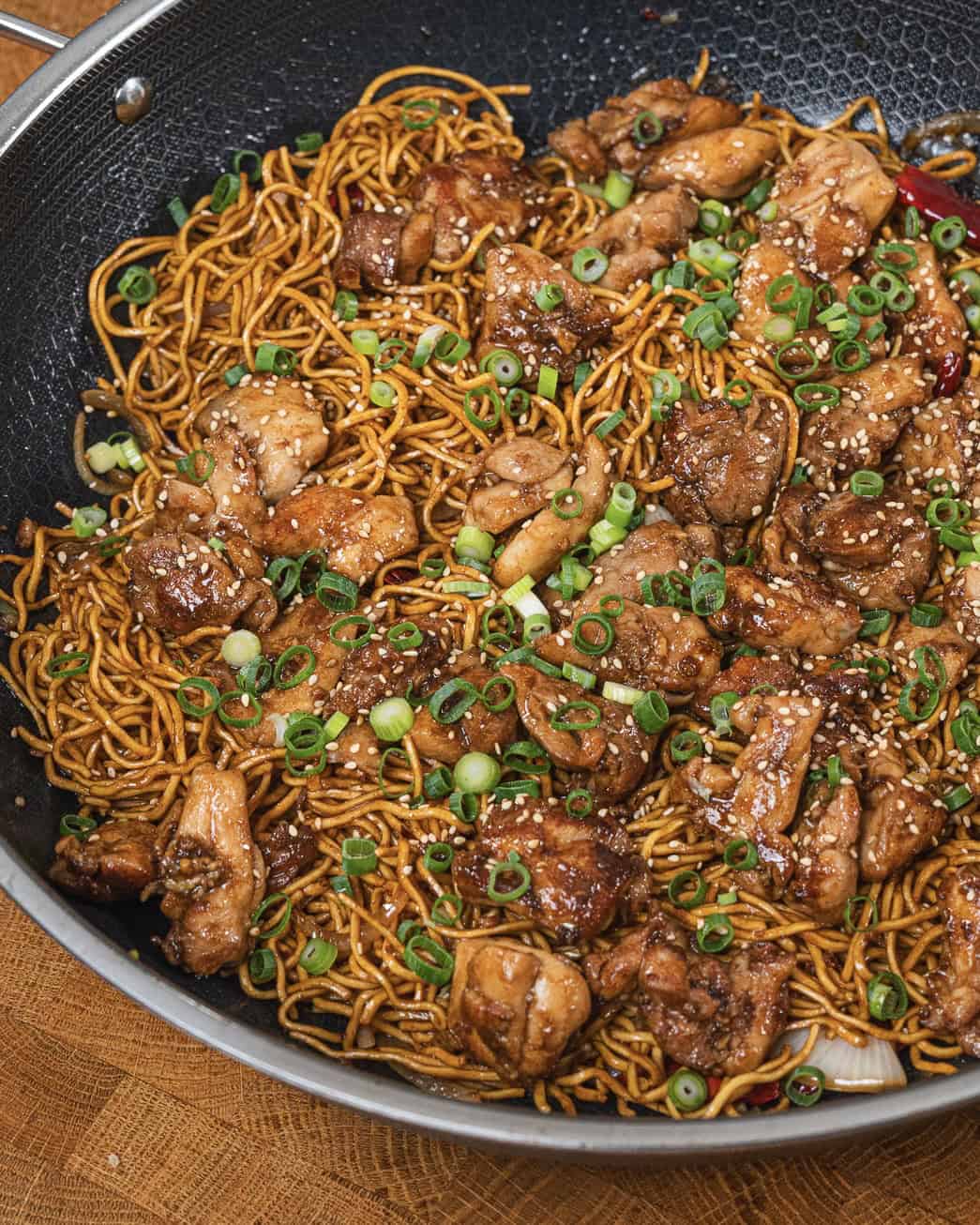
If you’ve ever craved that glossy, sweet-and-spicy takeout magic but wished you could make it at home, this **General Tso-Style Chicken Chow Mein ** is about to rock your wok, fam. Think crispy chicken, saucy chow mein, and that bold umami punch hugging every noodle—comforting, crave-worthy, and totally foolproof.
What is General Tso-Style Chicken Chow Mein
**General Tso-Style Chicken Chow Mein ** is a mash-up of two legends: sweet and spicy chicken coated in a sticky sauce, and classic wok stir fry noodles tossed with aromatics and vegetables.
You get crispy battered chicken glazed in a glossy General Tso sauce, then folded into takeout-style noodles for that saucy chow mein vibe we all secretly adore.
Where is General Tso-Style Chicken Chow Mein from:
This dish draws inspiration from Chinese-American cuisine, particularly Hunan-style flavors popularized in the United States. Chow mein itself has Cantonese roots, while General Tso sauce is a Western-Chinese restaurant icon.
How to Make It
You marinate juicy chicken thigh pieces, crisp them up using a shallow frying or deep frying technique, then toss them with chow mein noodles in a wok stir fry. The sauce thickens into that sticky sauce texture we love, thanks to a cornstarch slurry and sauce reduction over high-heat cooking.
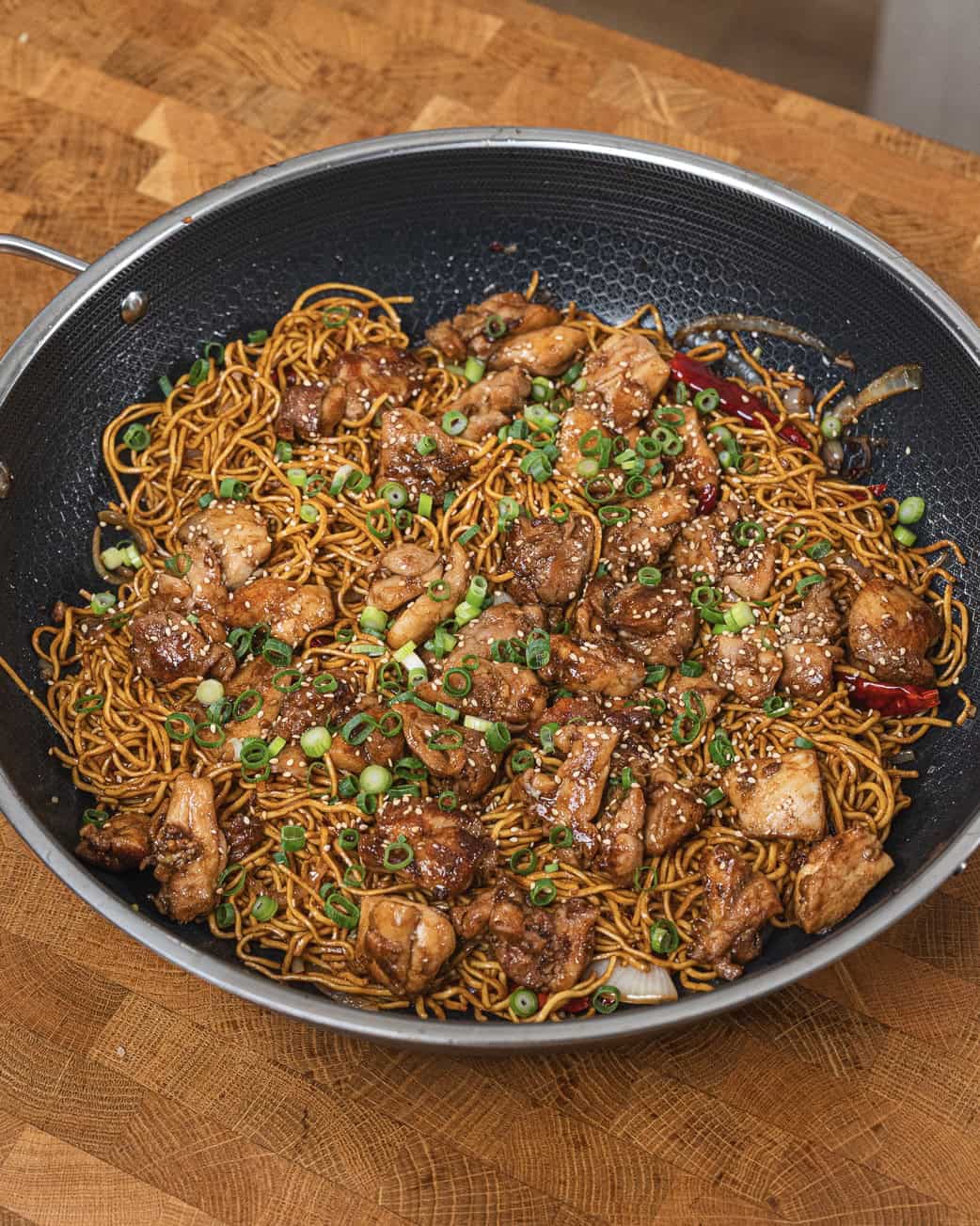
Ingredients
Marinated Chicken
- Boneless, skinless chicken thighs, sliced – Juicy and tender, they stay moist during high-heat cooking.
- Soy sauce – Forms the savory soy sauce base of the marinade.
- Dark soy sauce – Adds rich color and deeper umami sauce notes.
- Chicken powder – Boosts savory broth flavor in the background.
- White pepper – Gentle heat with subtle warmth.
- Garlic, grated – Builds garlic and ginger aromatics (yes, garlic minced magic!).
- Oil – Helps seal moisture and prepare for frying.
Noodles & Stir-Fry
- Chow mein noodles – Classic takeout-style noodles with perfect chew.
- Garlic, minced – Aromatic backbone of every wok stir fry.
- Shallots, diced – Sweet depth and fragrance.
- Onion, sliced – Softens into savory onion slices.
- Dried chilies (adjust heat) – Bring chili flakes heat and drama.
- Green onions (green parts only), cut into pieces – Fresh scallion garnish finish.
- Cooking oil – Essential for high-heat cooking and wok hei flavor.
Sauce
- Water – Loosens and balances the sauce.
- Soy sauce – Deepens the soy sauce base.
- Dark soy sauce – Adds caramel color.
- Hoisin sauce – Sweet-savory umami sauce richness.
- Sugar (to taste) – Creates brown sugar glaze vibes and sugar balance.
- Sesame oil – Signature sesame oil finish.
- Chili oil – Boosts chili flakes heat.
Steps
1. Marinate the Chicken
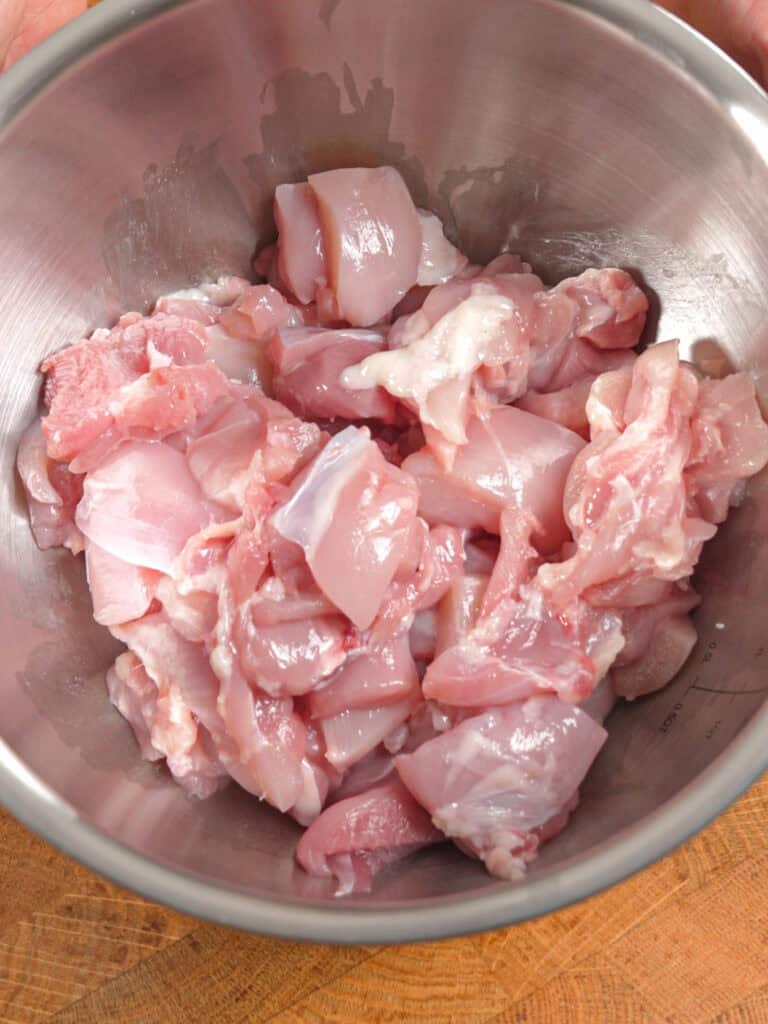
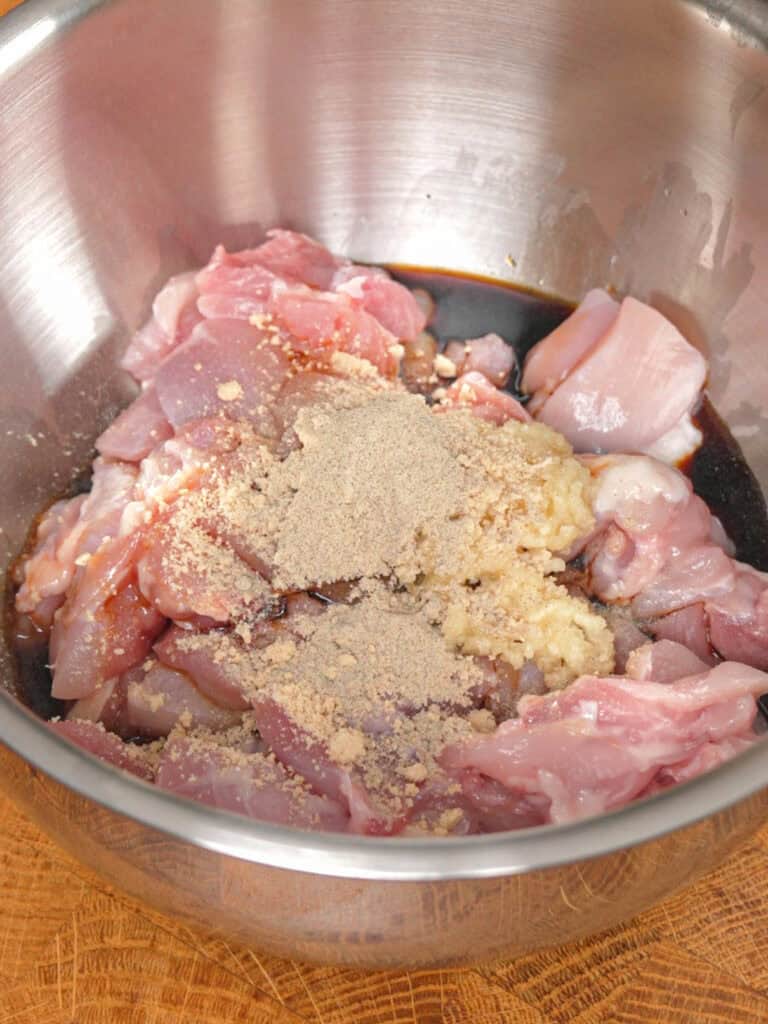
- In a bowl, combine sliced chicken thighs with soy sauce, dark soy sauce, chicken powder, white pepper, grated garlic, and oil.
- Mix well and marinate for 15–20 minutes, or longer for deeper flavour.
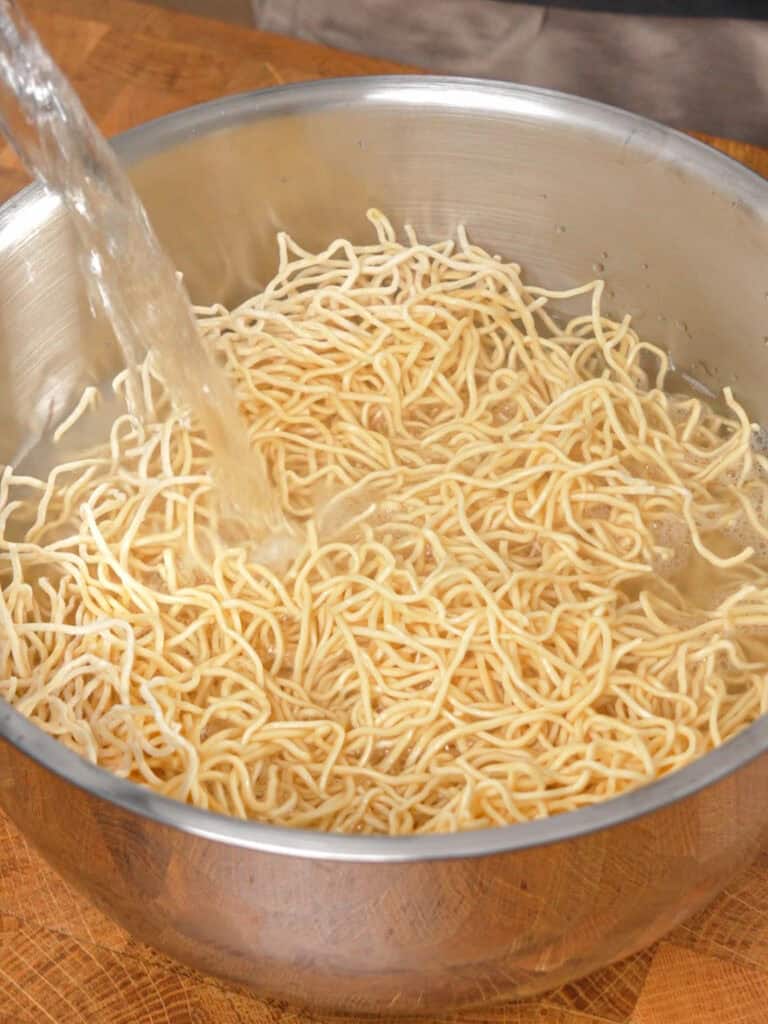
2. Prepare the Noodles
- Cook chow mein noodles according to package instructions.
- Rinse under cold water, drain thoroughly, and set aside.
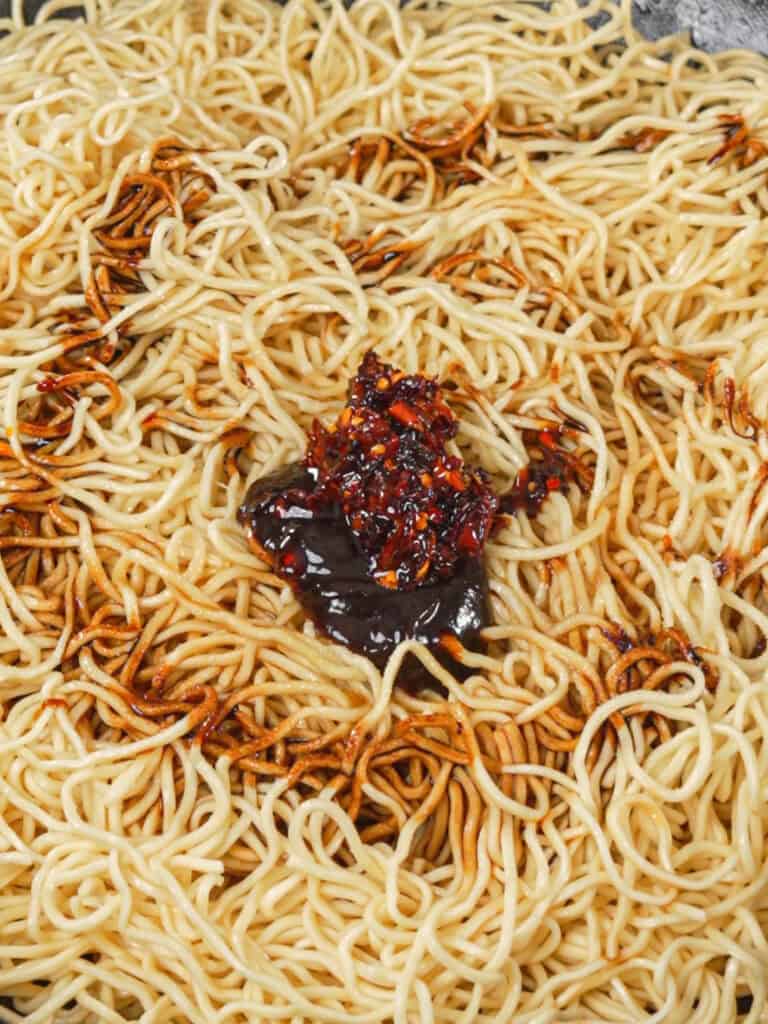
3. Mix the Sauce
- In a small bowl, whisk together water, soy sauce, dark soy sauce, hoisin sauce, rice vinegar, sugar, sesame oil, and chili oil.
- Adjust sweetness or tang to your preference.
4. Cook the Chicken
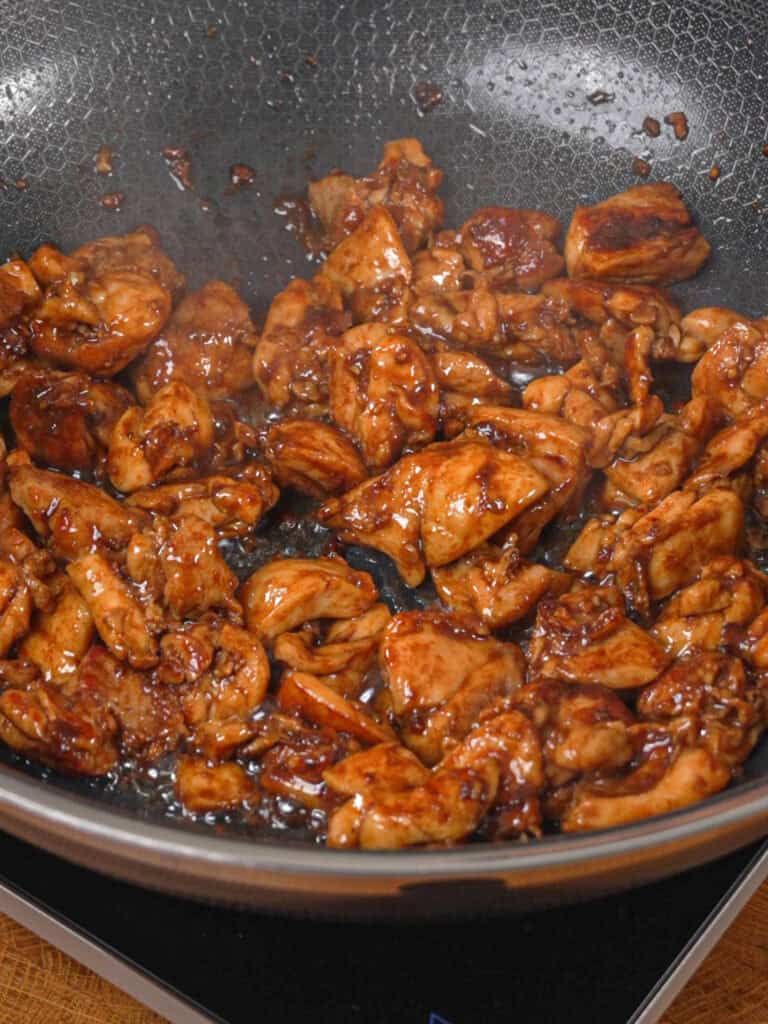
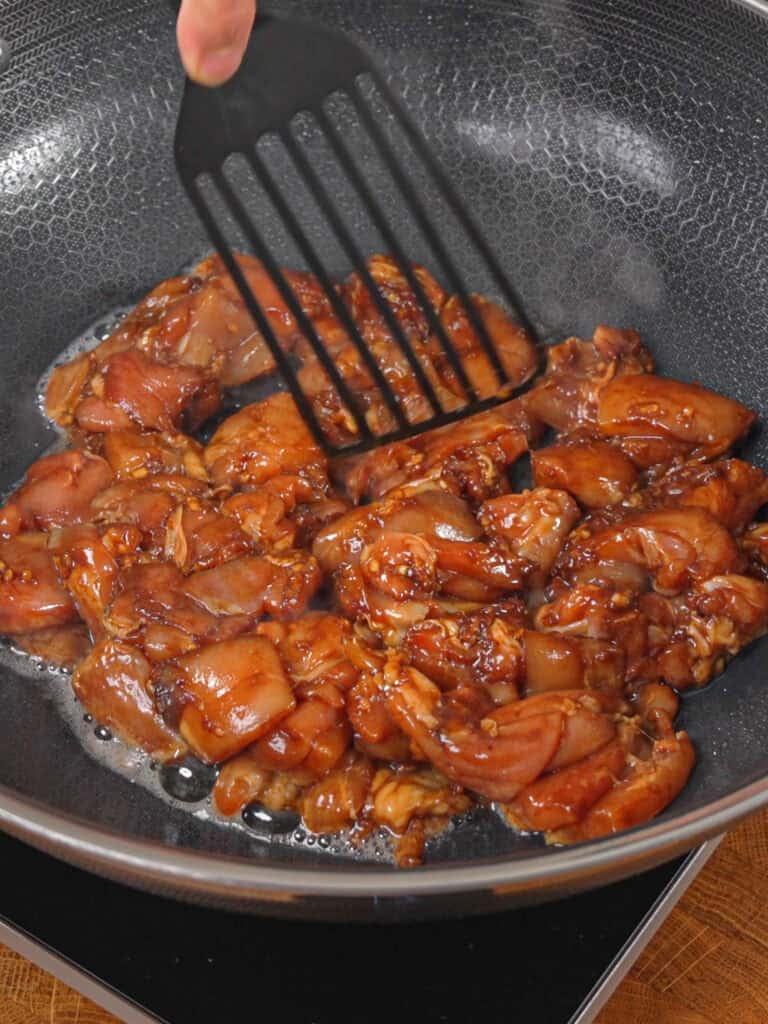
- Heat 2 tablespoon cooking oil in a wok or large pan over medium-high heat.
- Add the marinated chicken and stir-fry until browned and fully cooked.
- Remove the chicken from the pan and set aside.
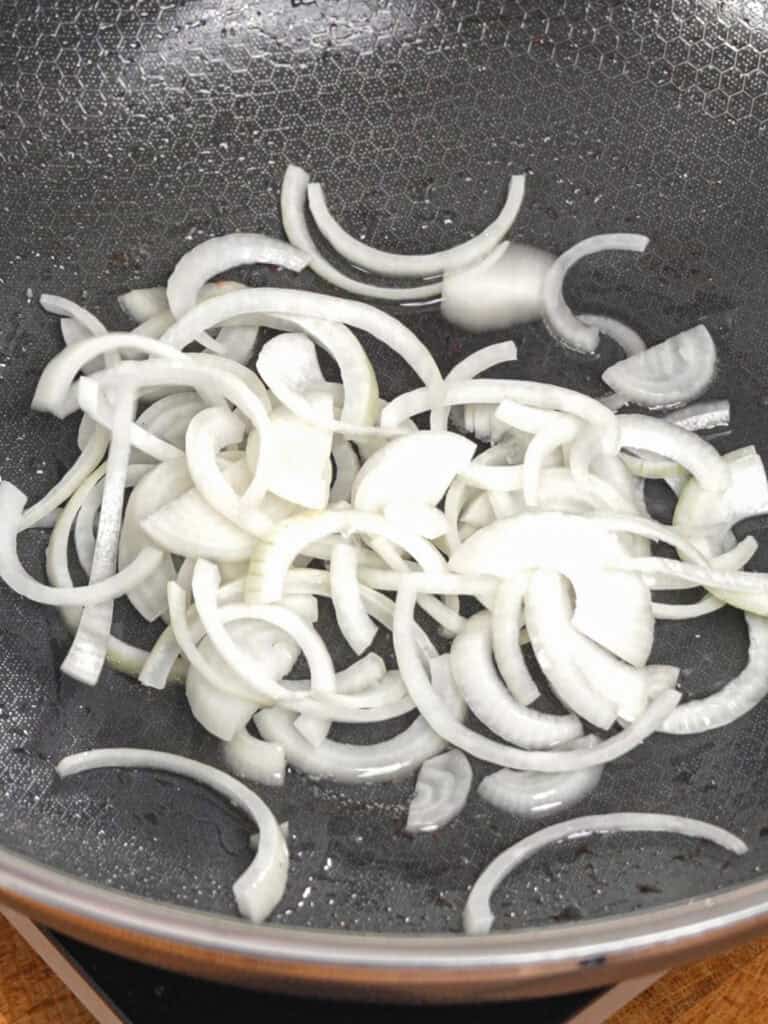
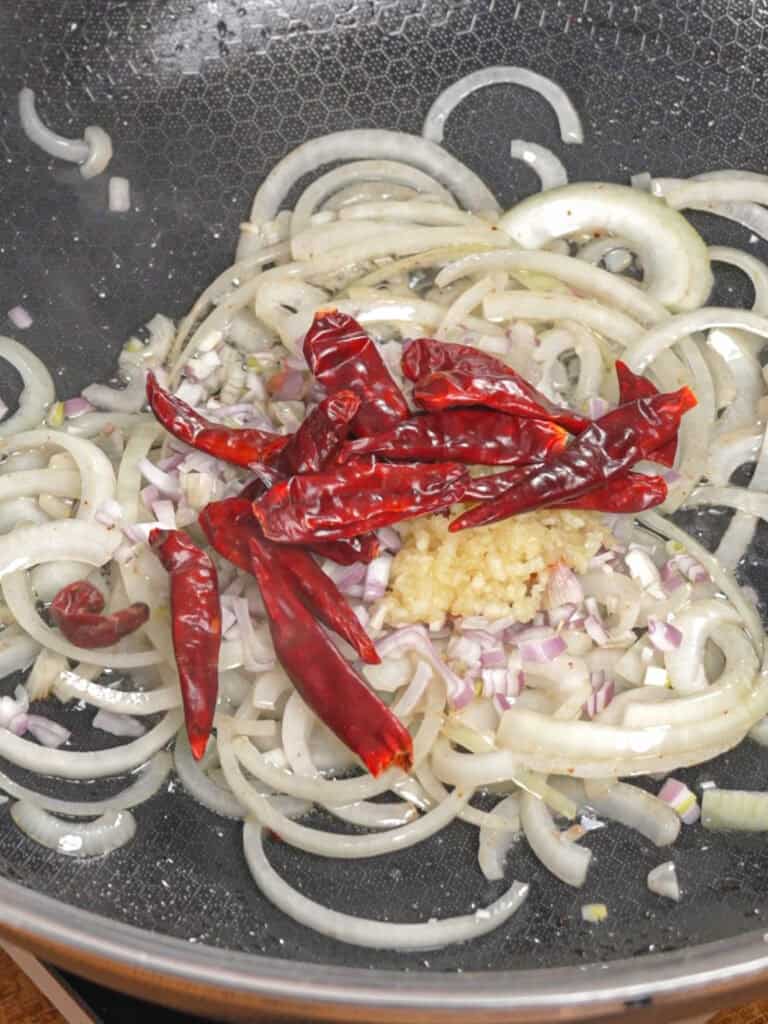
5. Sauté the Aromatics
- In the same wok, add 1–2 tablespoon cooking oil.
- Add minced garlic, diced shallots, sliced onion, and dried chilies.
- Stir-fry for 1–2 minutes until fragrant and the chilies darken slightly.
6. Add the Noodles
- Add cooked chow mein noodles to the wok.
- Toss to combine with the aromatics and lightly fry the noodles.
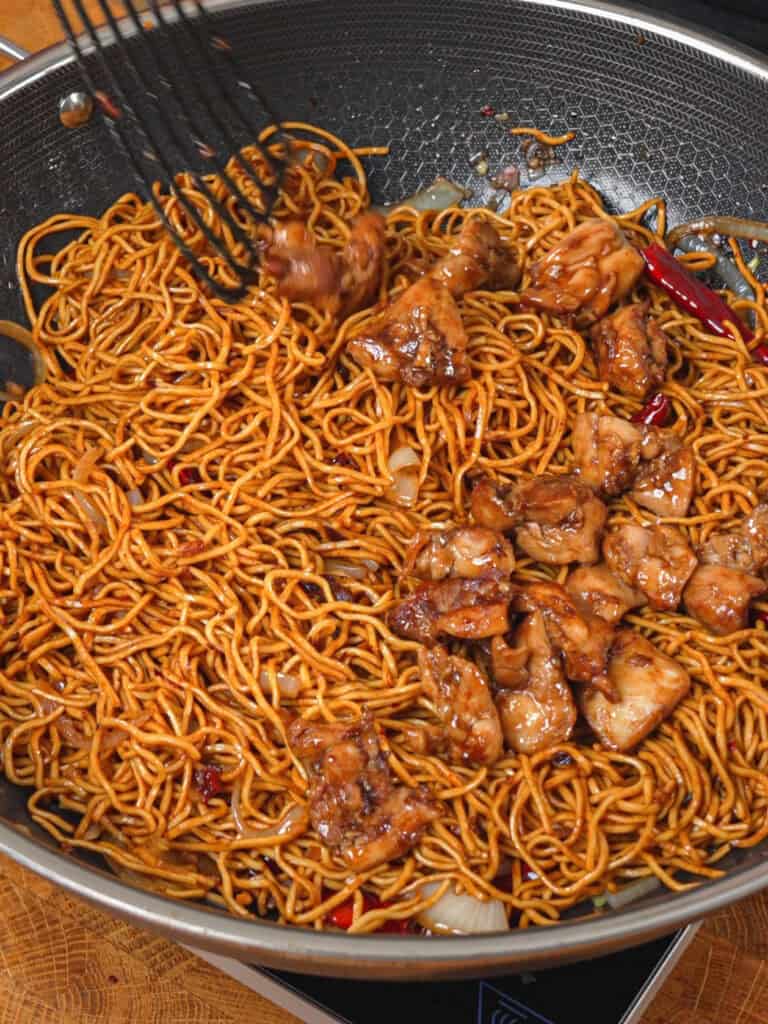
7. Add Chicken and Sauce
- Return the cooked chicken to the wok.
- Pour the prepared sauce over everything.
- Stir-fry for 2–3 minutes until the sauce thickens slightly and coats the noodles and chicken evenly.
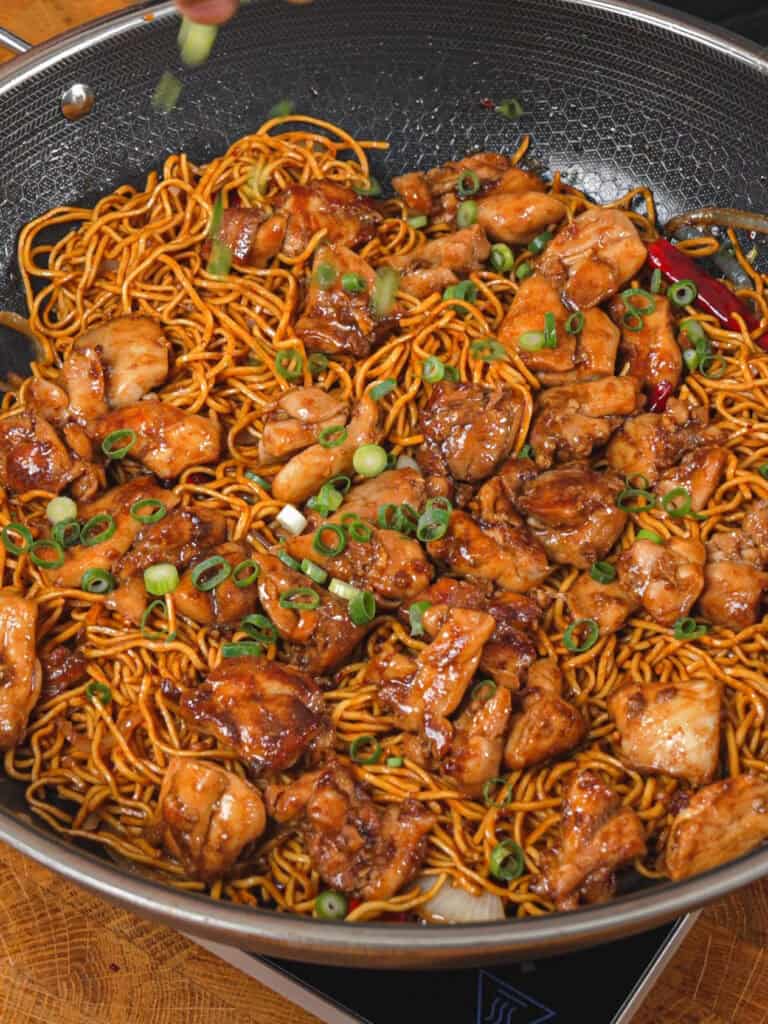
8. Finish With Green Onions
- Add the green onion pieces.
- Toss for 30 seconds to keep them bright and crisp.
9. Garnish and Serve
- Transfer to a plate or bowl.
- Garnish with sesame seeds and sliced scallions.
- Serve hot.
Crispy and Flavorful General Tso-Style Chicken Chow Mein Tips
How to Keep the Chicken Crispy
Fam, crispy chicken in **General Tso-Style Chicken Chow Mein ** isn’t luck — it’s strategy.
The secret starts with a proper cornstarch coating. When you toss your chicken thigh pieces in cornstarch, you’re creating a dry exterior that fries into a delicate, crackly crust. Unlike an all-purpose flour dredge or panko breadcrumbs, cornstarch forms a lighter shell that stays crisp even after meeting that sticky sauce texture.
Now let’s talk oil.
Your oil for frying needs to be hot — around 350°F (175°C). If it’s too cool, the chicken absorbs oil and turns greasy. Too hot? The outside burns before the inside cooks. You want steady bubbling, not violent splattering.
And here’s the big one:
- Fry in batches — overcrowding drops oil temperature.
- Let fried pieces rest on a rack, not paper towels (steam = soggy crust).
- Toss chicken in General Tso sauce only at the very end.
That timing keeps your crispy battered chicken proud and crunchy inside your saucy chow mein.
How to Balance Sweet and Spicy Flavors
Sweet and spicy chicken is all about harmony, not chaos.
The backbone of your General Tso sauce is a soy sauce base layered with hoisin sauce, a touch of rice vinegar, and sugar balance. Think of it like tuning a guitar — each note matters.
Start with sweetness first.
Brown sugar glaze gives body, but add it gradually. Then build heat using dried red chilies and chili oil for controlled chili flakes heat. If it tastes flat, a splash of rice vinegar brightens everything instantly.
To deepen complexity, many restaurant versions secretly include:
- A spoon of ketchup in sauce for subtle tang.
- A dash of oyster sauce for umami sauce richness.
- Garlic and ginger aromatics to anchor the sweetness.
The goal? A sticky sauce texture that clings to noodles without overpowering them. You should taste sweet first, heat second, and savory depth lingering at the end.
Best Noodles to Use for Chow Mein
Noodles are not just filler — they’re the backbone of your wok stir fry.
Traditional chow mein noodles are ideal because they hold structure during high-heat cooking. Egg noodles also work beautifully, offering chewiness that stands up to sauce reduction.
If using dried noodles, cook them just shy of al dente.
Why? Because they’ll finish cooking during the noodle toss. Overcooked noodles break apart and turn your takeout-style noodles into mush.
For best texture:
- Drain completely — excess water dilutes sauce thickening.
- Toss with a little vegetable oil to prevent sticking.
- Add them after vegetables are partially cooked.
That’s how you preserve that slightly smoky wok hei flavor that makes restaurant noodles unforgettable.
How to Avoid Soggy Vegetables
Nothing ruins a wok stir fry faster than limp vegetables.
High-heat cooking is your best friend here. Your pan or wok should be hot enough that vegetables sizzle the second they hit the surface.
Add vegetables in stages:
- Onion slices and bell pepper strips first.
- Broccoli florets and snow peas next.
- Cabbage shreds and bean sprouts last.
This layering keeps textures vibrant and prevents overcooking.
Keep them moving.
A quick skillet stir fry motion ensures even exposure to heat while maintaining crunch. Remember — vegetables should be crisp-tender, not soft. They’ll continue cooking slightly when tossed with hot noodles and sauce.
Time-Saving Preparation Tips
Let’s make this a true quick weeknight stir fry.
Professional kitchens win because of prep. You can too.
Before turning on heat:
- Slice chicken breast strips or thigh pieces evenly for consistent cooking.
- Pre-mix your sauce ingredients so sauce thickening happens smoothly.
- Chop garlic minced and ginger minced ahead of time.
Cooking moves fast once heat starts.
Having everything ready allows you to focus on timing and texture instead of scrambling. It transforms your meal prep noodles into a confident, seamless takeout box dinner moment.
Serving Suggestions and Storage
What to Serve with General Tso-Style Chicken Chow Mein
Your **General Tso-Style Chicken Chow Mein ** is bold, saucy, and layered with sweet and spicy chicken energy. So what balances that richness?
You want contrast.
- A light cucumber salad with rice vinegar to cut through the sticky sauce texture.
- A simple egg drop soup made with chicken stock and savory broth.
- Steamed jasmine rice if you want to stretch the meal.
Because this dish already delivers crispy chicken and noodles together, sides should refresh the palate — not compete with it.
If you're going full takeout box dinner vibes, sprinkle sesame seeds topping and fresh scallion garnish right before serving. That sesame oil finish aroma hits first — and wow, it sets the tone.
Side Dishes That Pair Well
Let’s think in layers — texture, freshness, and heat balance.
Here’s what works beautifully:
- Stir-fried vegetables like bok choy or garlic snow peas.
- Vegetable spring rolls for crunch contrast.
- A chilled Asian slaw with cabbage shreds and carrot matchsticks.
Avoid overly sweet sides. You already have brown sugar glaze notes in your General Tso sauce.
If you want restaurant-level harmony, add something acidic or lightly salted to offset the sugar balance and chili flakes heat.
That contrast is what makes each bite exciting instead of heavy.
How to Store Leftovers Properly
Storage determines whether tomorrow’s meal tastes amazing… or tragic.
First rule: cool everything before sealing.
Steam trapped in containers creates condensation, which softens your cornstarch coating and makes noodles soggy.
For best results:
- Store crispy battered chicken separately from noodles if possible.
- Use airtight containers to preserve moisture balance.
- Keep refrigerated up to 3 days.
Because this is a wok stir fry with sauce reduction, the noodles will continue absorbing sauce overnight. That’s normal — but proper storage prevents mushiness.
How to Reheat Without Losing Texture
Reheating is where most people lose the magic.
Microwaving alone softens everything. Instead:
- Use a skillet stir fry over medium heat.
- Add 1–2 tablespoons chicken stock or water to revive sauce thickening.
- Toss quickly — don’t simmer.
If you stored chicken separately, reheat it in a dry pan first to re-crisp slightly before combining.
The goal is restoring that saucy chow mein feel without killing the wok hei flavor.
Can You Freeze This Dish?
Technically yes… strategically, maybe not.
Freezing fully assembled **General Tso-Style Chicken Chow Mein ** changes noodle texture significantly. Chow mein noodles and egg noodles soften once thawed.
If you must freeze:
- Freeze sauce and fried chicken separately.
- Freeze before tossing with noodles.
- Reheat chicken in oven or sheet pan crisping method to restore crunch.
Avoid freezing stir-fried vegetables — they lose structure.
For best quality, this dish is better enjoyed fresh or within a few days refrigerated.
Variations
Spicy General Tso-Style Chicken Chow Mein
If you’re the kind of person who says “make it hotter” before even tasting it… this one’s for you.
To turn your **General Tso-Style Chicken Chow Mein ** into a heat-lover’s dream, you don’t just dump chili in and hope for the best. You layer heat strategically.
Start by increasing dried red chilies during the wok stir fry. Let them bloom in hot oil for frying alongside garlic minced and ginger minced — this releases their aroma and deep chili flakes heat before sauce even enters the pan.
Then build complexity:
- Add extra chili oil to the General Tso sauce.
- Increase rice vinegar slightly to keep brightness.
- Finish with crushed red pepper after the noodle toss for surface heat.
The goal isn’t just spice — it’s balanced fire. You still want sweet and spicy chicken harmony, not one-note burn. When done right, the sticky sauce texture clings while heat lingers gently at the back of your throat.
Bold. Addictive. Just right.
Mild Family-Friendly Version
Cooking for kids or spice-sensitive eaters? No problem, fam.
This variation keeps the soul of **General Tso-Style Chicken Chow Mein ** while softening the edges.
First, reduce or completely remove dried red chilies and chili oil. Then lean into brown sugar glaze and hoisin sauce to create a gentler sweet-savory profile.
To deepen flavor without heat:
- Add a splash of oyster sauce for umami sauce depth.
- Use savory broth or chicken stock in the sauce for roundness.
- Finish with sesame oil finish for aroma instead of spice.
You still get crispy chicken and noodles — just without the fiery kick.
This version feels comforting and approachable. It’s the “everybody goes back for seconds” edition.
Gluten-Free Option
Yes, you can absolutely make this gluten-free without sacrificing that saucy chow mein experience.
Here’s how to adjust safely:
- Use gluten-free soy sauce (tamari) for your soy sauce base.
- Replace chow mein noodles with gluten-free rice noodles.
- Confirm your hoisin sauce and oyster sauce are certified gluten-free.
Cornstarch coating is naturally gluten-free, so your crispy battered chicken stays intact.
When working with rice noodles, cook them slightly underdone. They soften faster during high-heat cooking, and you don’t want mushy noodles killing that takeout-style noodles texture.
The flavor remains bold, balanced, and absolutely foolproof.
Vegetarian or Tofu Version
Trust me on this one — this variation is wildly satisfying.
Swap chicken thigh pieces with firm tofu cubes. Press the tofu well first to remove excess moisture. This step is critical for achieving a proper cornstarch coating crisp.
For maximum crunch:
- Toss tofu in cornstarch coating.
- Use shallow frying until golden.
- Let rest on a rack before sauce.
The tofu absorbs General Tso sauce beautifully, giving you that sticky sauce texture without meat.
You can also load up stir-fried vegetables — broccoli florets, bell pepper strips, snow peas, cabbage shreds, and bean sprouts — to add bulk and texture.
The result? Still bold. Still saucy. Still comforting.
Low-Carb Alternative
Want the flavor without the noodle carbs? We got you.
Replace chow mein noodles with zucchini noodles or shredded cabbage. Cook them quickly in a skillet stir fry so they stay slightly firm.
Important adjustments:
- Reduce sauce quantity slightly — zucchini releases moisture.
- Keep sauce reduction tighter to avoid watery texture.
- Add extra sesame oil finish for richness.
You still keep the sweet and spicy chicken, the garlic and ginger aromatics, and that irresistible wok hei flavor.
It becomes lighter, fresher, but still deeply satisfying.
Common Mistakes to Avoid
Overcrowding the Pan
This is the silent killer of crispy chicken.
When you overcrowd your pan during frying, the oil temperature drops instantly. Instead of that golden, crackly cornstarch coating forming, the chicken steams. And steamed coating? That’s limp, greasy, sad territory.
Here’s what to do instead:
- Fry in small batches — give each piece breathing room.
- Maintain oil around 350°F (175°C).
- Let oil return to temperature between batches.
High-heat cooking only works when heat is consistent. If your crispy battered chicken isn’t audibly sizzling, something’s wrong.
Space equals crisp. Always.
Overcooking the Noodles
Noodles are fragile little warriors. Treat them right.
Chow mein noodles and egg noodles continue cooking during the wok stir fry. If you boil them until fully soft beforehand, they’ll turn mushy during the noodle toss.
To avoid disaster:
- Cook noodles just shy of al dente.
- Drain thoroughly — excess water weakens sauce thickening.
- Toss with a small amount of vegetable oil to prevent clumping.
Remember, they still face sauce reduction and high-heat cooking in the wok.
You want bounce — not paste.
Adding Too Much Sauce
More sauce does not mean more flavor. It means noodle soup.
The magic of **General Tso-Style Chicken Chow Mein ** is sticky sauce texture that clings lightly to every strand — not drowning everything.
If you pour too much:
- The cornstarch coating softens instantly.
- Stir-fried vegetables lose structure.
- The dish becomes heavy and overly sweet.
Instead, add sauce gradually. Toss. Evaluate. Add more only if needed.
The sauce should glaze — not flood.
Skipping the Cornstarch Coating
Skipping this step changes the entire dish.
Cornstarch coating creates the foundation for crispy chicken and noodles contrast. Without it, you just have sautéed chicken in sauce — and that’s not the same experience.
Why it matters:
- Cornstarch absorbs surface moisture.
- It forms a light crust during shallow frying or deep frying technique.
- It helps sauce adhere evenly.
It also assists in sauce thickening once the chicken hits the wok.
This is not optional. It’s structural.
Using Cold Chicken in Hot Oil
This one surprises people.
If your chicken thigh pieces go straight from fridge to oil for frying, the sudden temperature shock drops oil heat dramatically. That leads to uneven cooking and greasy exterior.
Better approach:
- Let chicken sit at room temperature for 15–20 minutes before frying.
- Pat dry lightly before applying cornstarch coating.
- Ensure oil is fully heated before adding chicken.
Stable temperature equals even crisping.
Control heat. Control texture.
Frequently Asked Questions
Can I Use Store-Bought General Tso Sauce?
Yes, you absolutely can — especially on a busy night.
But here’s the truth: most bottled General Tso sauce leans heavily sweet and lacks depth. It often misses that layered soy sauce base, rice vinegar brightness, and fresh garlic and ginger aromatics that make homemade shine.
If you’re using store-bought:
- Taste it first before adding extra sugar.
- Add a splash of rice vinegar to balance sweetness.
- Boost with garlic minced or ginger minced for freshness.
That quick upgrade transforms it from flat to vibrant.
What Type of Noodles Work Best?
Traditional chow mein noodles are ideal because they hold structure during high-heat cooking and absorb sauce without collapsing.
Egg noodles are a close second, offering that chewy bite you expect from takeout-style noodles. Lo mein noodles work too, but they’re softer and may not give you as much texture contrast.
The real key isn’t just noodle type — it’s cooking them just under al dente before the noodle toss.
That’s what keeps your saucy chow mein from turning mushy.
Is This Dish Very Spicy?
It doesn’t have to be.
The beauty of **General Tso-Style Chicken Chow Mein ** is control. Dried red chilies and chili oil determine heat level, not the base sauce itself.
If you want mild:
- Skip dried red chilies.
- Reduce chili oil.
- Focus on brown sugar glaze and hoisin sauce richness.
If you want bold heat, increase chili flakes heat gradually and balance with sugar balance so it doesn’t become harsh.
It’s customizable — not intimidating.
Can I Make It Ahead of Time?
Yes — with strategy.
For best texture, prepare components separately:
- Fry crispy battered chicken and store separately.
- Cook noodles and toss lightly with vegetable oil.
- Mix General Tso sauce in advance.
When ready to serve, do a quick wok stir fry and sauce reduction.
This keeps your crispy chicken and noodles contrast intact instead of turning everything soft overnight.
How Long Does It Stay Fresh in the Fridge?
Properly stored in airtight containers, it stays fresh for about 3 days.
After that, noodles absorb too much sauce, and stir-fried vegetables begin losing structure. The sticky sauce texture thickens further as it sits due to cornstarch slurry binding.
Reheat gently in a skillet stir fry with a splash of chicken stock to restore balance.
Avoid aggressive microwaving — it softens everything too quickly.
Can I Use Chicken Thigh Instead of Breast?
Absolutely — and many would argue it’s better.
Chicken thigh pieces stay juicier during shallow frying or deep frying technique because they contain more fat. They’re more forgiving during high-heat cooking.
Chicken breast strips work too, but they cook faster and can dry out if overdone.
If using breast:
- Slice evenly.
- Don’t overcook during frying.
- Toss in sauce quickly and remove from heat.
Both work — thighs are simply more foolproof for beginners.
RATE MY DISH!
If you enjoy my dish make sure to leave a comment and rating down below. I highly appreciate it!
Tag me on Instagram @geniuseatss so I can see your creation! Don't forget to follow me on TikTok, Youtube, Pinterest and Facebook for more recipes and contents!
Thank you so much and enjoy my recipes!
PrintGeneral Tso-Style Chicken Chow Mein
Savor General Tso Chicken Chow Mein, spicy-sweet, saucy noodles packed with crispy chicken bliss.
- Prep Time: 25 minutes
- Cook Time: 20 Minutes
- Total Time: 45 minutes
- Yield: 4 Servings 1x
- Category: Chicken
- Method: Easy
- Cuisine: Chinese - American
Ingredients
Marinated Chicken
- 6 boneless, skinless chicken thighs, sliced
- 2 tbsp soy sauce
- 4 tsp dark soy sauce
- 2 tsp chicken powder
- 2 tsp white pepper
- 6 cloves garlic, grated
- 2 tbsp oil
Noodles & Stir-Fry
- 500–600g chow mein noodles
- 6 cloves garlic, minced
- 2 shallots, diced
- 1 onion, sliced
- 8–10 dried chilies (adjust heat)
- 6 green onions (green parts only), cut into 2” pieces
- 3–4 tablespoon cooking oil (total)
Sauce
- 2 tbsp water
- 4 tbsp soy sauce
- 2 tbsp dark soy sauce
- 2 tbsp hoisin sauce
- 2 tbsp rice vinegar
- 2–4 teaspoon sugar (to taste)
- 2 tbsp sesame oil
- 4 tsp chili oil
Garnish
- Sesame seeds
- Sliced scallions
Instructions
- Marinate the Chicken
In a bowl, combine sliced chicken thighs with soy sauce, dark soy sauce, chicken powder, white pepper, grated garlic, and oil.
Mix well and marinate for 15–20 minutes, or longer for deeper flavour.
- Prepare the Noodles
Cook chow mein noodles according to package instructions.
Rinse under cold water, drain thoroughly, and set aside.
- Mix the Sauce
In a small bowl, whisk together water, soy sauce, dark soy sauce, hoisin sauce, rice vinegar, sugar, sesame oil, and chili oil.
Adjust sweetness or tang to your preference.
- Cook the Chicken
Heat 2 tablespoon cooking oil in a wok or large pan over medium-high heat.
Add the marinated chicken and stir-fry until browned and fully cooked.
Remove the chicken from the pan and set aside.
- Sauté the Aromatics
In the same wok, add 1–2 tablespoon cooking oil.
Add minced garlic, diced shallots, sliced onion, and dried chilies.
Stir-fry for 1–2 minutes until fragrant and the chilies darken slightly.
- Add the Noodles
Add cooked chow mein noodles to the wok.
Toss to combine with the aromatics and lightly fry the noodles.
- Add Chicken and Sauce
Return the cooked chicken to the wok.
Pour the prepared sauce over everything.
Stir-fry for 2–3 minutes until the sauce thickens slightly and coats the noodles and chicken evenly.
- Finish With Green Onions
Add the green onion pieces.
Toss for 30 seconds to keep them bright and crisp.
- Garnish and Serve
Transfer to a plate or bowl.
Garnish with sesame seeds and sliced scallions.
Serve hot.
Want more? Browse every chicken recipe in one place.

Leave a Reply