


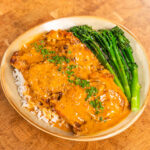


Filipino Beef Tapa is thin slices of beef sirloin soaked in light soy sauce, cane vinegar, brown sugar and a lot of garlic, then fried hard until the edges go dark and sticky.
It is the tapa in tapsilog, the breakfast plate that sets it next to garlic fried rice and a fried egg. One hour in the marinade, about ten minutes in a pan, and you have one of the best known breakfasts in the Philippines on a weekday morning.
Jump to:
- Tapa, Tapsilog and Why This One Is a Marinade, Not a Cure
- What Goes Into the Marinade, and What Each Part Does
- How to Cook Filipino Beef Tapa, Step by Step
- Building the Tapsilog Plate
- Getting Tender Beef Instead of Chewy Strips
- Marinating Ahead, Storing and Freezing
- Frequently Asked Questions
- Filipino Beef Tapa
Tapa, Tapsilog and Why This One Is a Marinade, Not a Cure
Tapa is the Filipino word for meat cut thin and preserved, usually salted and dried so it would keep in a hot country with no fridge. The version everybody actually cooks now skips the drying completely. The beef goes into a wet marinade of soy sauce, vinegar, sugar and garlic, sits for an hour or overnight, and goes straight into a pan. The salt and the sugar are there for flavor and for the caramelized crust, not for keeping it.
That is worth saying plainly, because recipes that call tapa a cured beef dish make it sound like a three day project. It is not. If you start the marinade tonight, breakfast tomorrow takes ten minutes.
Tapsilog is a contraction of the three things on the plate: tapa, sinangag (garlic fried rice) and itlog (egg). The whole silog family is named the same way, so bacon gives you bacsilog and sweet cured pork gives you tocilog. If you want the rice half done properly, the method is in our Filipino Bacsilog recipe, which is built around sinangag made with day old rice.
What Goes Into the Marinade, and What Each Part Does
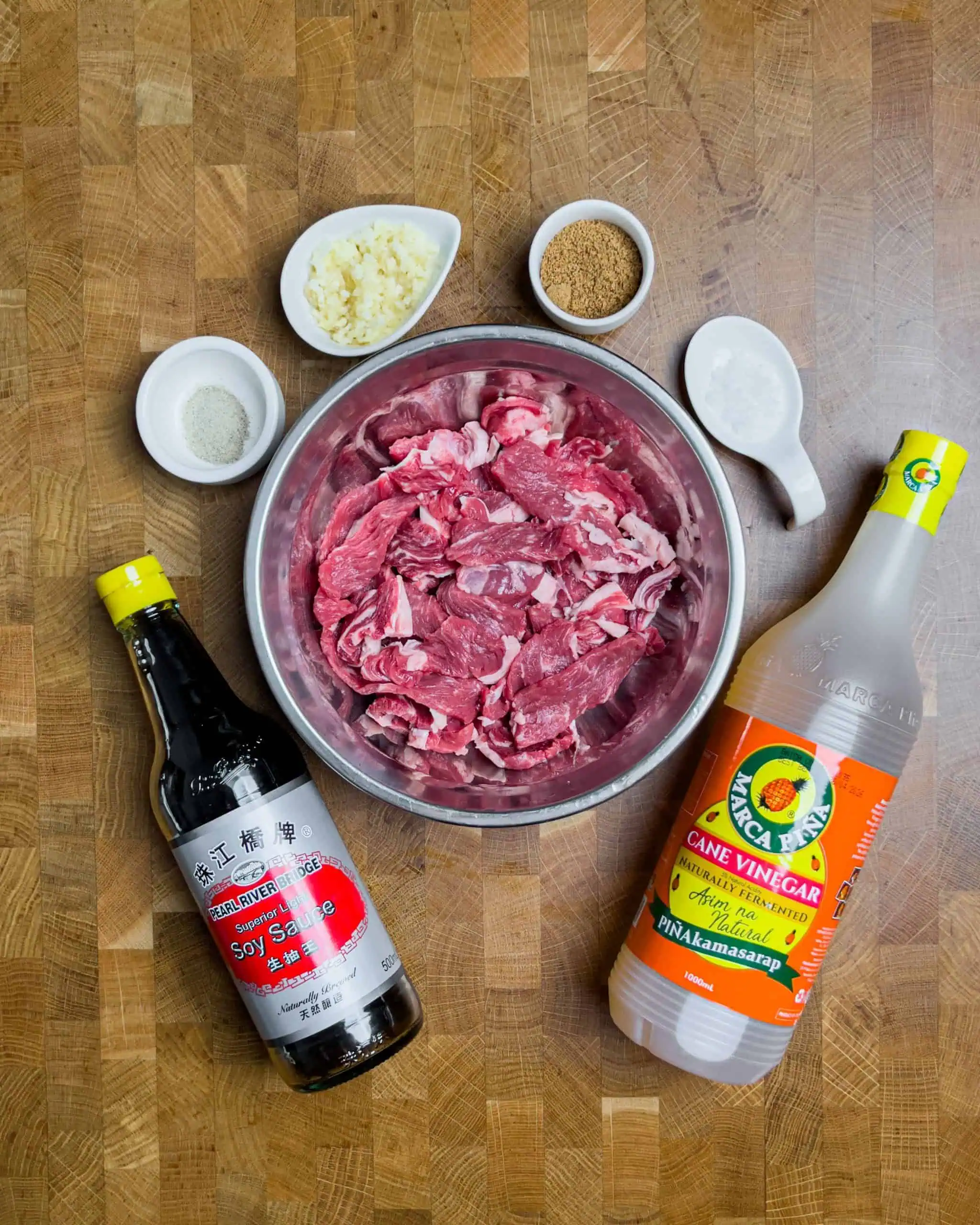
The full amounts are in the recipe card at the bottom. Here is what each one is doing, and what you can get away with changing.
- 450g beef sirloin, sliced thin against the grain: sirloin has enough fat to stay juicy at high heat and it is tender enough that an hour of marinade is sufficient. Ask the butcher for it sliced, or freeze the piece for 30 minutes first so your knife can go thin.
- 3 tablespoon light soy sauce: the salt and most of the savory depth. Light soy sauce, not dark, or the beef goes bitter and almost black.
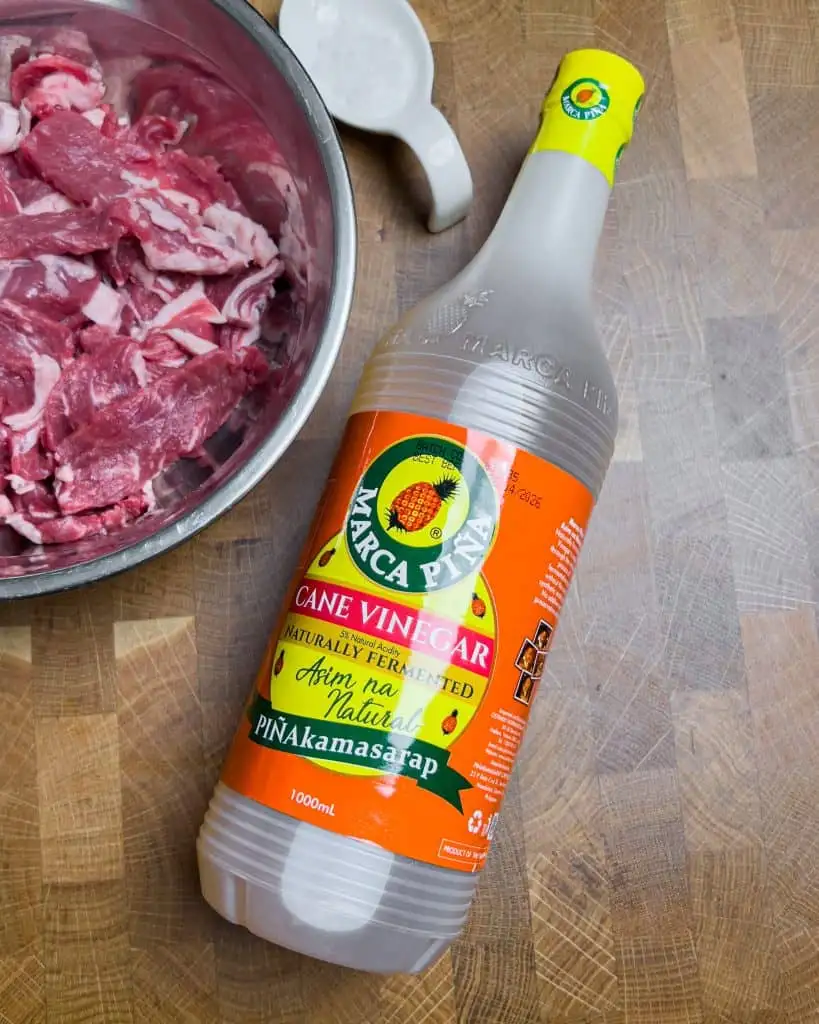
- 2 tablespoon cane vinegar: the sour note that stops the sugar from being cloying, and it softens the meat while it sits. The bottle in the photo is Filipino cane vinegar, sold as sukang maasim in Asian grocers. White vinegar or rice vinegar both work and land slightly sharper.
- 2 tablespoon brown sugar: the reason tapa caramelizes. It is also the reason the pan can catch, so keep an eye on it near the end.
- 8 cloves garlic, minced: not a typo. Garlic is the backbone of this dish and it is in the rice as well.
- ¼ teaspoon black pepper and ¼ teaspoon salt: small amounts, because the soy sauce is already carrying a lot of salt.
- 2 tablespoon cooking oil: for the pan. Anything neutral.
Soy sauce, vinegar and garlic is the same backbone as Filipino Chicken Adobo. The difference is what you do with it: adobo simmers in the liquid until it reduces to a sauce, tapa cooks the liquid off and fries the meat dry.
The last four lines on the card, under Serve with, have no amounts on purpose. Garlic rice, egg, tomato and cucumber are the plate around the tapa rather than part of the marinade, so you take as much as you want.
How to Cook Filipino Beef Tapa, Step by Step
- Slice the beef thin, against the grain. Thin strips take the marinade faster and they stay tender once the pan gets hot.
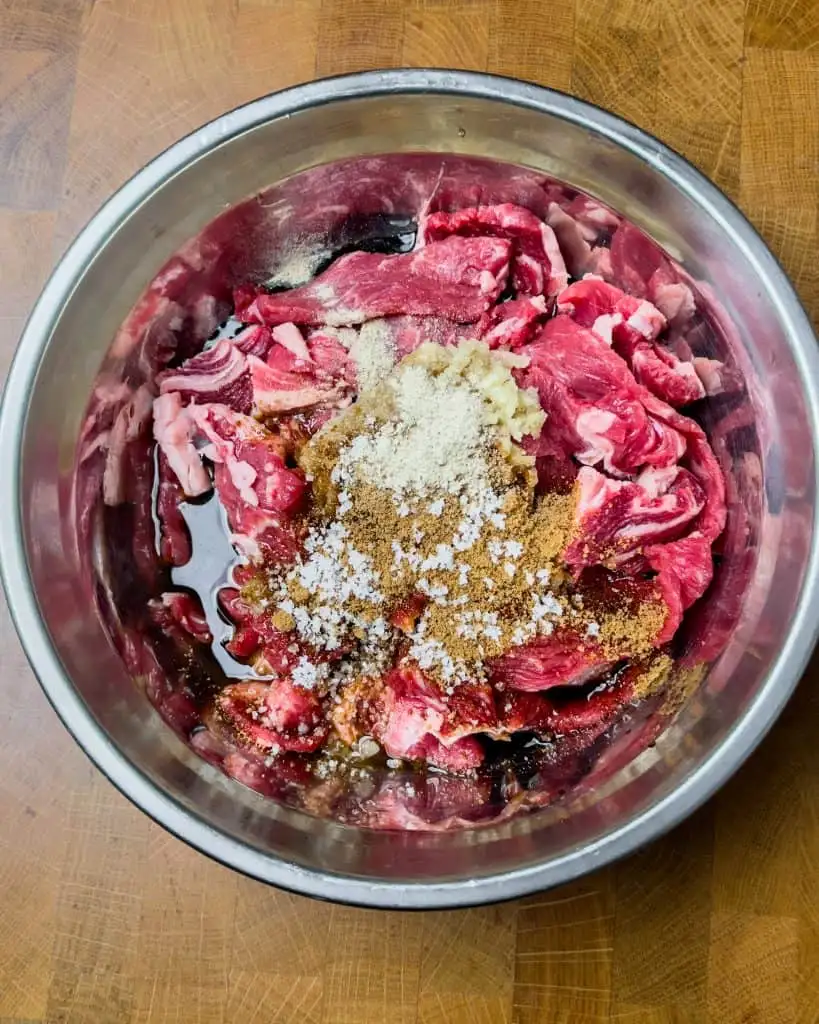
- Add the soy sauce, cane vinegar, brown sugar, garlic, salt and pepper, then mix until every slice is coated. Marinate for 1 hour, or overnight in the fridge for a deeper flavor.
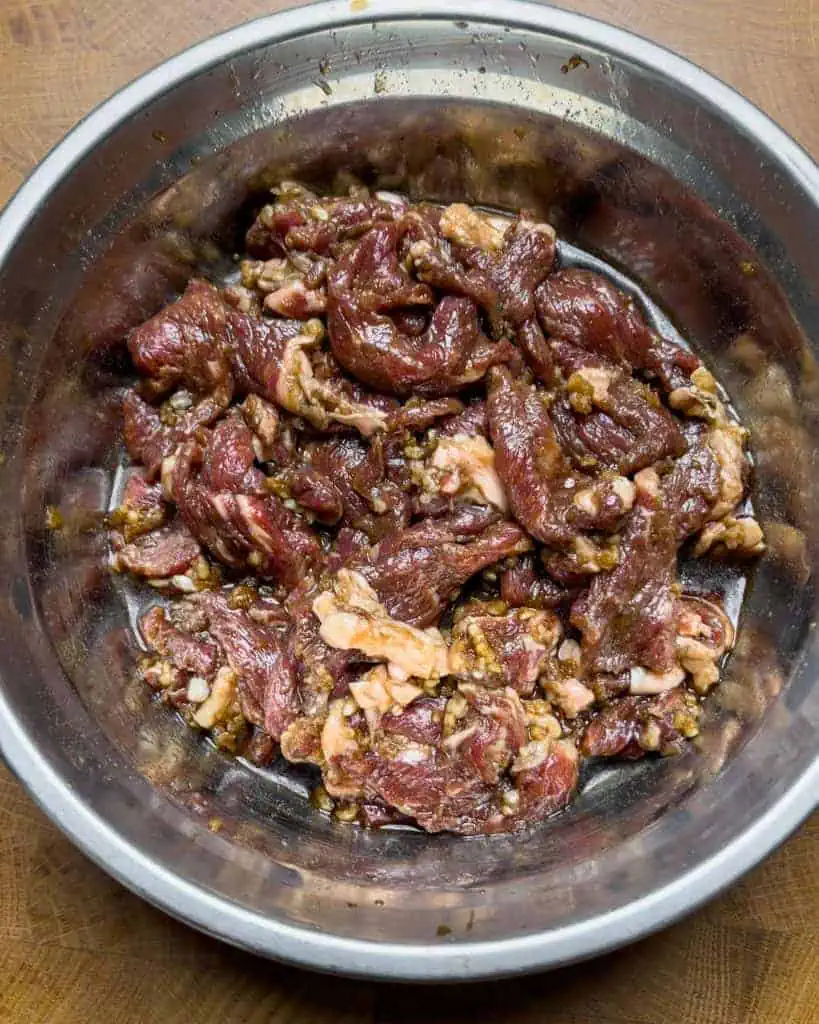
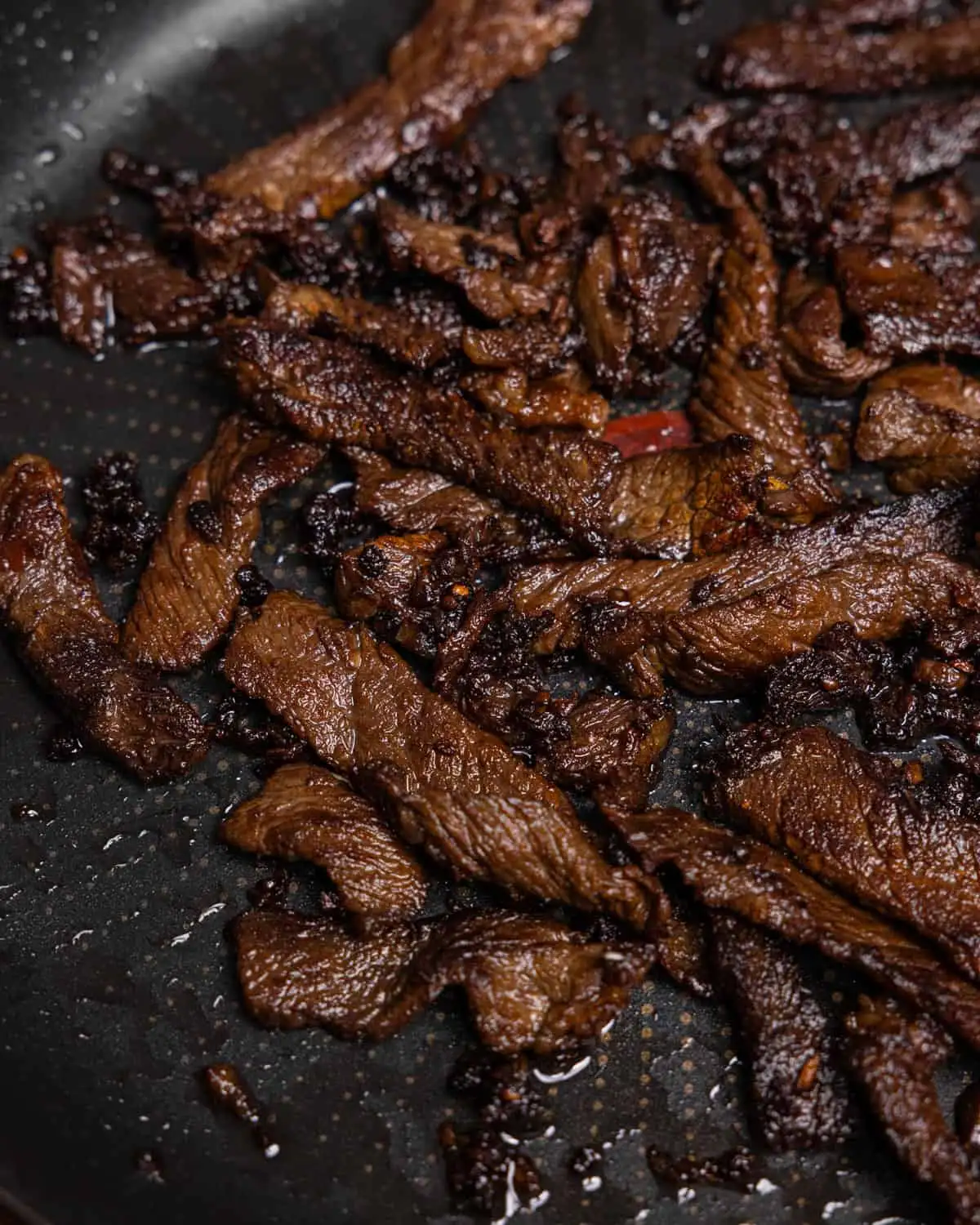
- Heat the oil over medium high heat. Add the beef and cook until it is browned and caramelized. It will release a lot of liquid first, so let that cook off before you expect any color.
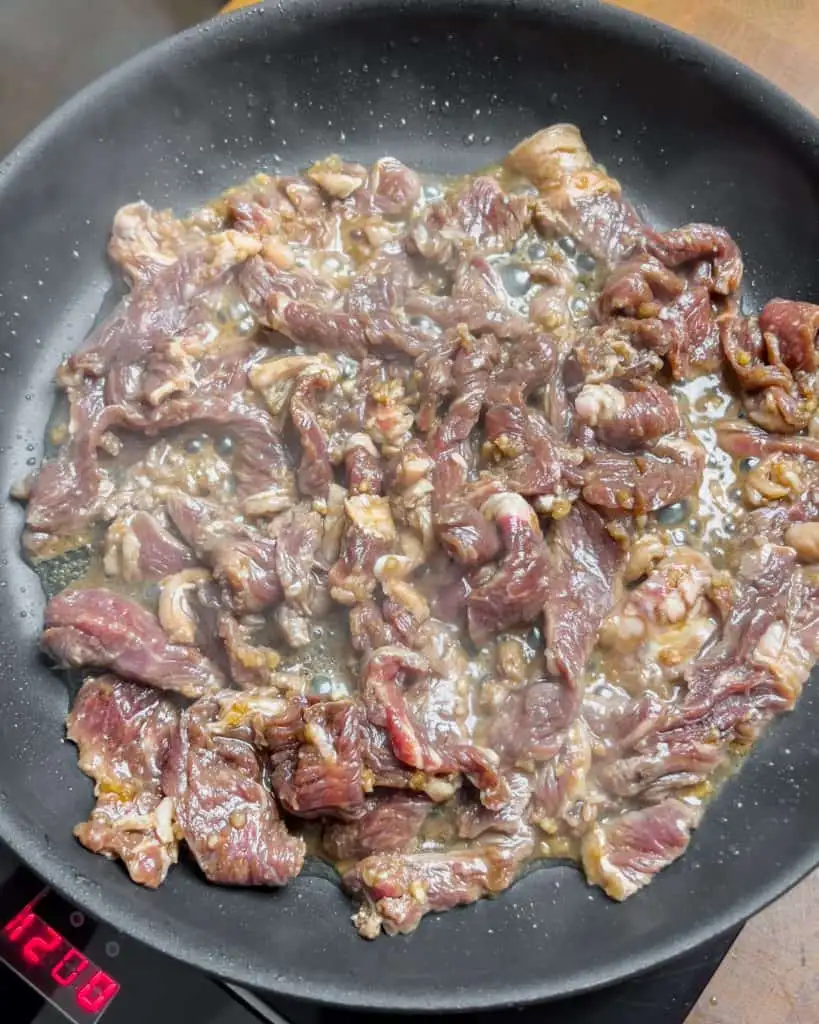
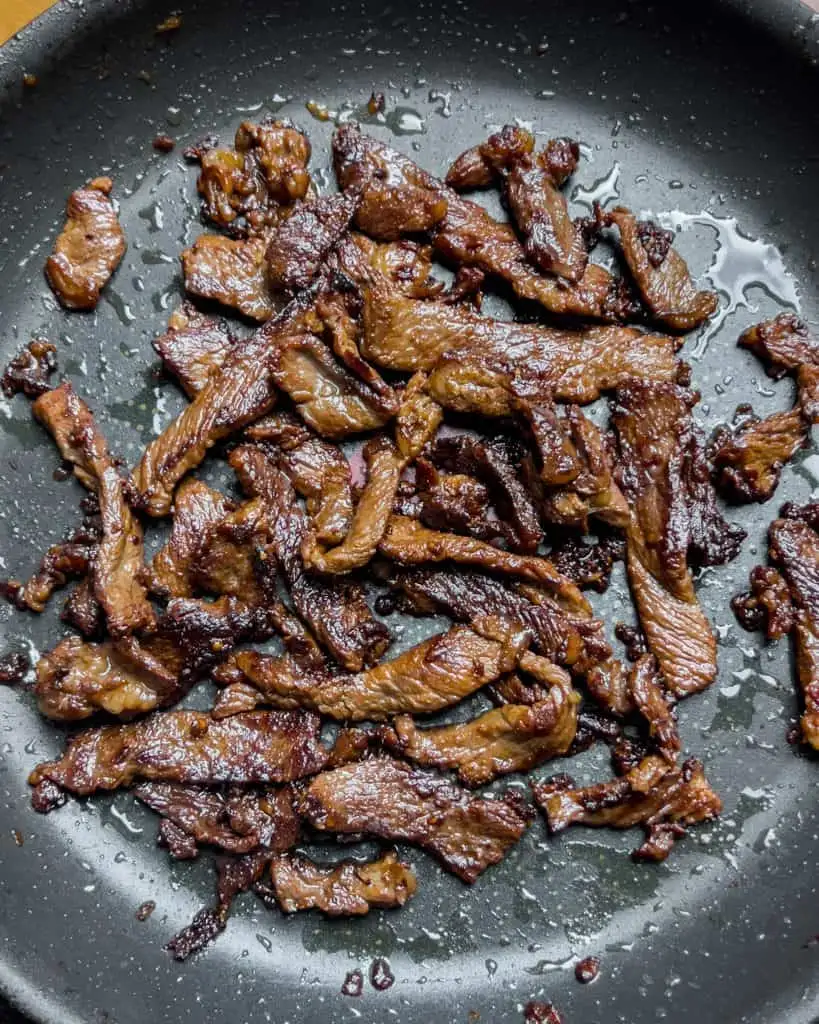
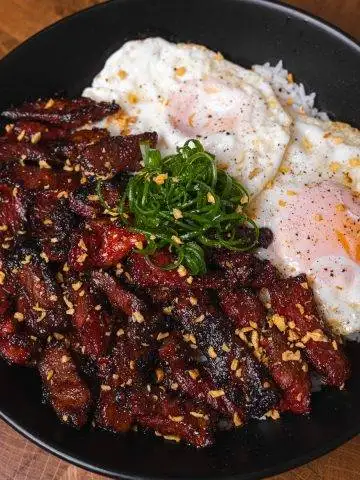
What actually happens in the pan, because the card words it differently. The card says to cook the beef 4 to 5 minutes each side, and the photos show why that is not quite the shape of it. The beef goes in and immediately floods the pan with its own liquid, so for the first few minutes it is simmering, not frying. Nothing browns while that is happening and there is no point flipping it. Once the liquid has boiled away the sugar hits the hot pan and the beef goes dark fast, and that is the part that needs watching and turning. Think of it as a few minutes of waiting and then a few minutes of real attention.
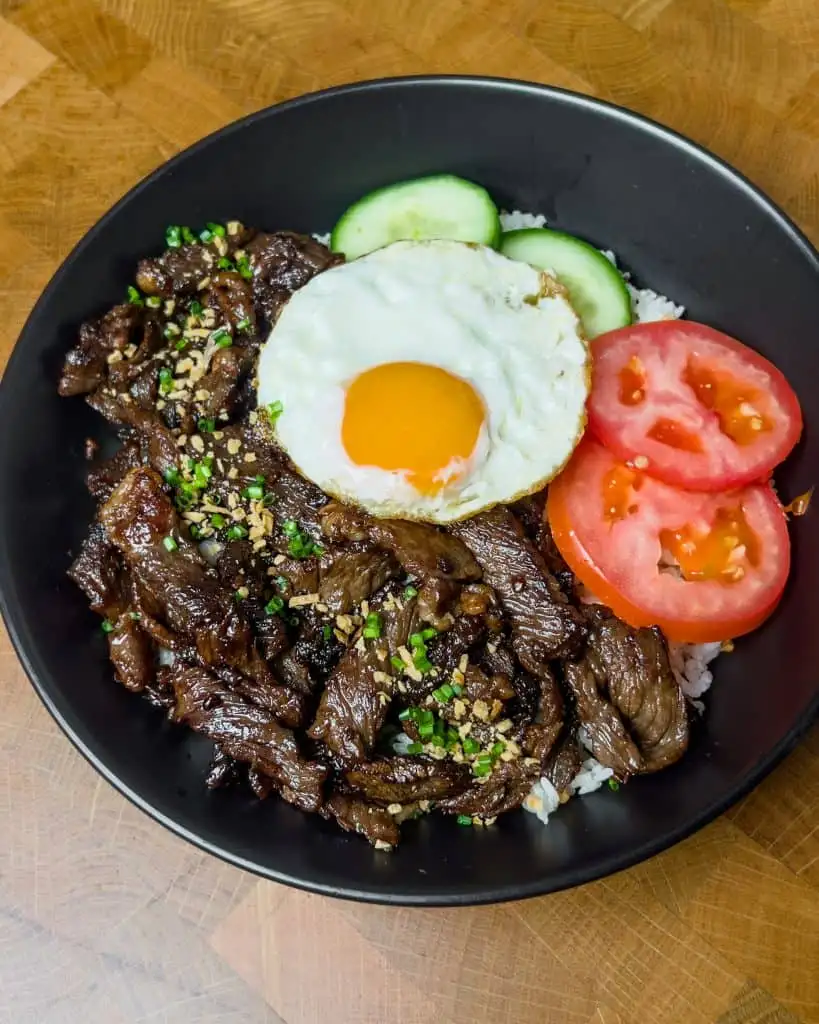
- Serve with garlic fried rice, a fried egg, tomato and cucumber.
Building the Tapsilog Plate
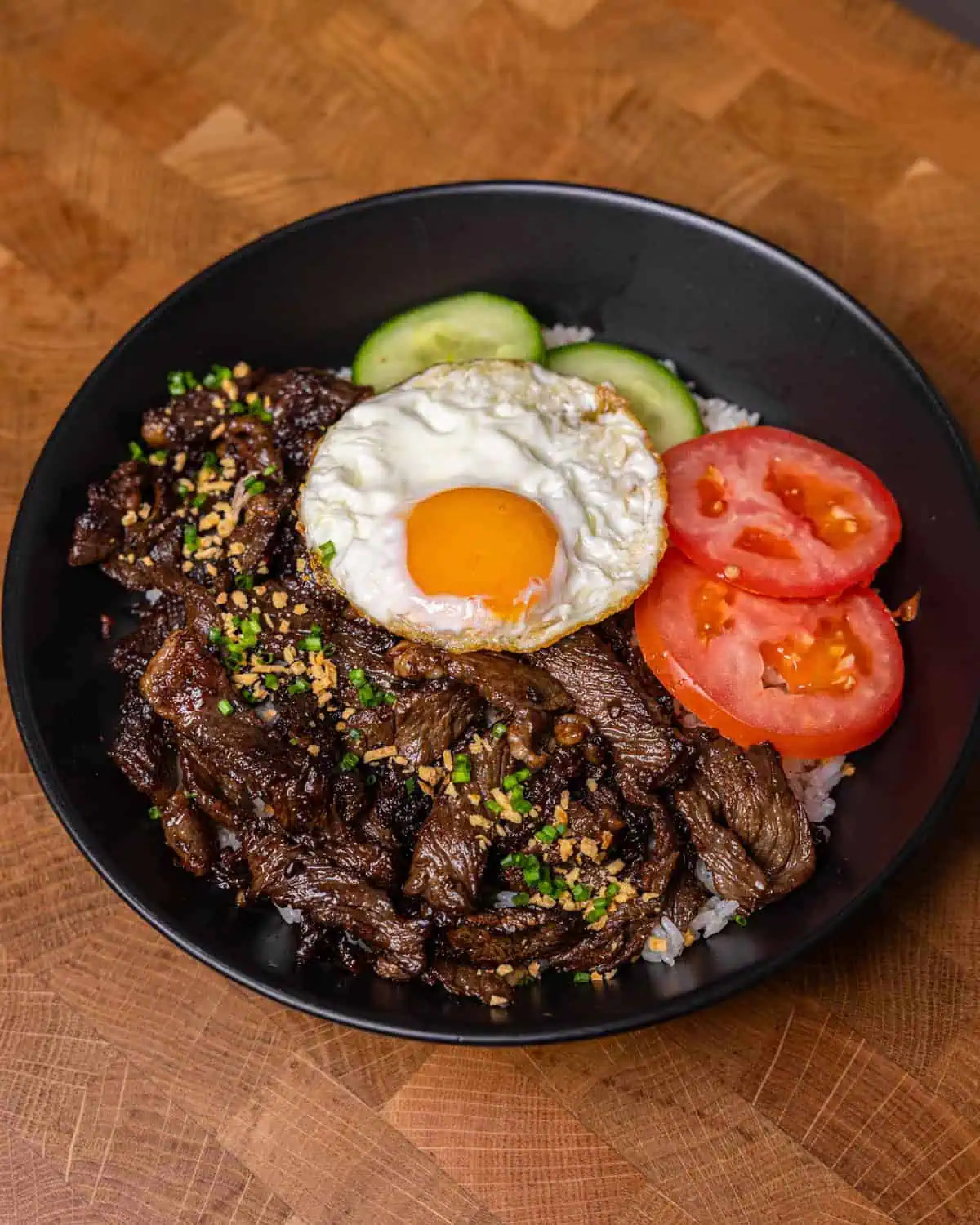
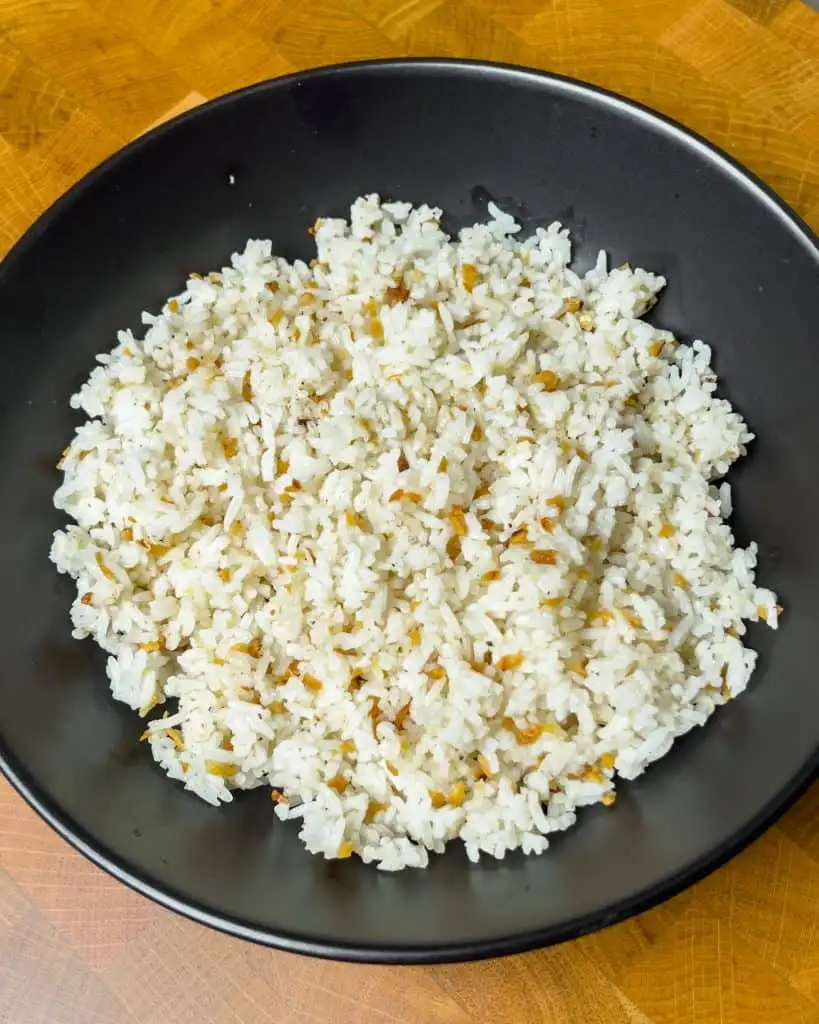
- Garlic fried rice (sinangag): fry minced garlic in oil until golden, then stir through cold day old rice so it fries instead of steaming. Fresh rice turns to paste. The full method is in the bacsilog recipe.
- Fried egg: sunny side up, with the yolk still soft so it runs into the rice. The eggs in these photos are set around the edge and soft in the middle.
- Tomato and cucumber: raw, cold and sliced thick. They are not garnish. Tapa is sweet, salty and fatty all at once, and the fresh slices are what let you eat a whole plate of it.
- Leftovers: cold tapa is good chopped into a soft taco with shredded lettuce and sour cream, or over salad leaves with tomato, cucumber and a light vinaigrette. Both were on this post before and both still work.
- Spring onion and fried garlic: scattered over the beef in the finished photos. Optional, but the fried garlic is worth it if you already have the pan out.
Getting Tender Beef Instead of Chewy Strips
- Slice against the grain, every time. Look for the lines running through the meat and cut across them. This is the single biggest difference between tapa you can chew and tapa you cannot.
- One hour is the minimum, overnight is better. The card gives you both. An hour is enough to season thin slices right through, and a night in the fridge gets you more flavor and softer meat.
- Keep the heat at medium high. Lower heat just stews the beef in its own liquid for longer and dries it out before it ever caramelizes.
- Do not crowd the pan. The beef in these photos sits in a single layer. Piled up, it releases more liquid than the pan can boil off and you never get the dark edges.
- Go easy on the oil. Two tablespoons is enough. The sirloin renders some of its own fat and the sugar does the rest of the work.
If you have sirloin left over and want something saucy instead of dry and caramelized, the same thin cut goes into Jollibee style Garlic Pepper Beef.
Marinating Ahead, Storing and Freezing
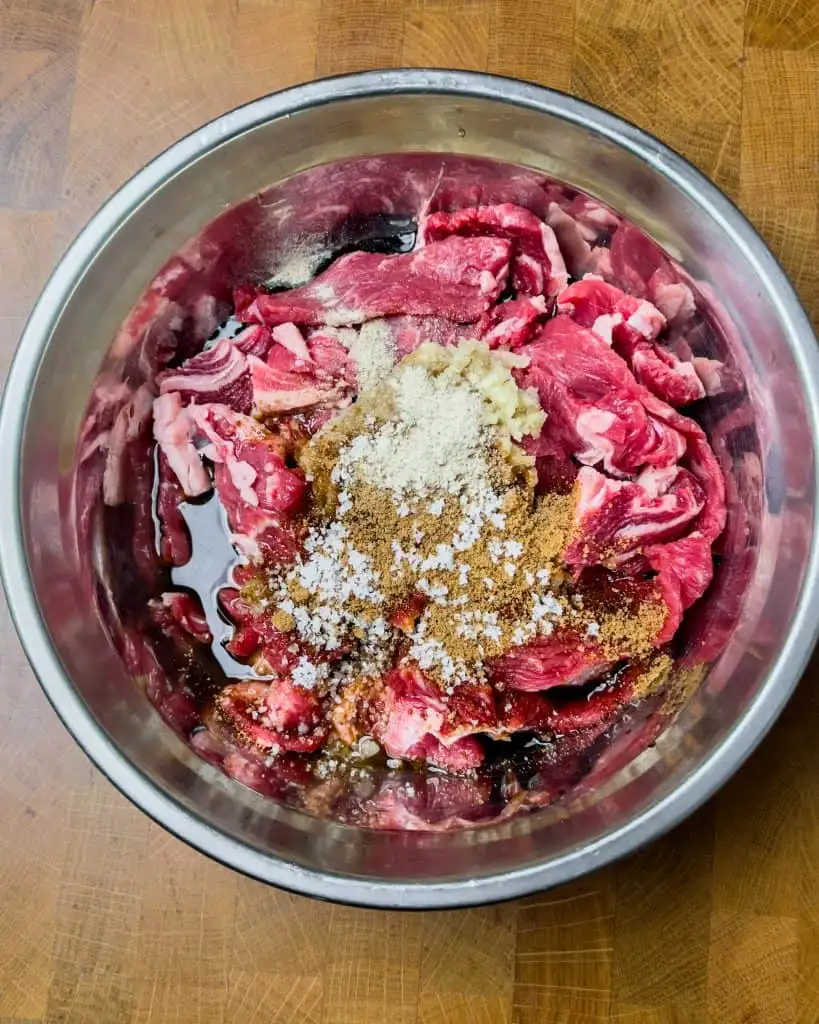
- In the fridge: marinated raw beef keeps up to three days in an airtight container. The vinegar keeps working the whole time, so by day three the texture is very soft.
- In the freezer: freeze the beef in its marinade for up to three months. Portion it before it goes in, because you will not be separating frozen slices later.
- To thaw: overnight in the fridge, then straight into the pan. Do not thaw it on the bench, and do not refreeze it once it is out.
- Cooking for the week: a batch of marinade and a kilo of sirloin split into bags on Sunday gives you four breakfasts that each take ten minutes.
Frequently Asked Questions
What is the best cut of beef for tapa?
Sirloin is the one this recipe uses and the one to buy. It is tender, it has enough fat to survive a hot pan, and it takes the marinade quickly. Tenderloin is softer again if you want to spend more. Avoid very lean cuts such as round, which go stringy once the liquid cooks off.
Why does the recipe card say 15 minutes?
Because that is the hands on time: about 5 minutes of slicing and mixing and about 10 minutes in the pan. The marinating hour is sitting time and is not counted, so plan for it. Starting the marinade the night before is what makes this a real weekday breakfast.
Can I use pork instead of beef?
Yes. Pork tapa uses the same marinade and the same method, and a tender cut such as pork loin or shoulder works well. If what you actually want is the sweet red pork version of a Filipino breakfast, that is a different cure, and it is here: Filipino Pork Tocino.
How long can I store marinated beef tapa in the freezer?
Up to three months in an airtight container or a freezer bag, with as much air pressed out as you can manage so it does not get freezer burn. Thaw it overnight in the fridge before cooking.
What do I serve with beef tapa?
Garlic fried rice and a fried egg make it tapsilog, which is how it is eaten most often. Fresh tomato, cucumber slices or a simple side salad cut through the richness. Plain steamed rice is fine too if you are not making sinangag.
Is beef tapa healthy?
It is a protein heavy breakfast with a lot of salt in it. The card's own numbers put one of the three servings at about 438 calories, 41g of protein and 1,065mg of sodium, and the sodium is the figure to watch, since that is close to half of a normal daily limit before you have added anything to the rice. Low sodium soy sauce and a little less salt bring it down without changing the dish.
Can I cook it in an air fryer?
You can, but you lose the best part. The caramelization here comes from the marinade liquid reducing in a pan and then catching on the sugar. An air fryer drains that liquid away, so the beef dries out instead of glazing. A pan is worth the washing up.
RATE MY DISH!
If you enjoy my Beef Tapa make sure to leave a comment and rating down below. I highly appreciate it!
Tag me on Instagram @geniuseatss so I can see your creation! Don't forget to follow me on TikTok, Youtube, Pinterest and Facebook for more recipes and contents!
Thank you so much and enjoy my recipes!
More where this came from: the rest of the Filipino recipes on Genius Eats.
PrintFilipino Beef Tapa

Savor the sweet and savory symphony of Filipino Beef Tapa, a delightful dance of marinated perfection!
- Prep Time: 5 minutes
- Cook Time: 10 minutes
- Total Time: 15 minutes
- Yield: 3 Servings 1x
- Category: Filipino
- Method: Easy
- Cuisine: Asian
Ingredients
Ingredients:
- Beef Tapa
- 450g of beef sirloin, thinly sliced against the grain
- 3 tbsp of light soy sauce
- 2 tbsp of cane vinegar
- 2 tbsp of brown sugar
- 8 cloves of garlic, minced
- ¼ tsp of black pepper
- ¼ tsp of salt
- 2 tbsp of cooking oil
Serve with:
- Garlic Fried Rice (Sinangag)
- Fried Egg
- Tomato
- Cucumber
Instructions
- Thinly sliced the beef against the grain.
- Mix together with light soy sauce, cane vinegar, brown sugar, garlic, salt and pepper. Marinate for 1 hour or overnight.
- Then, heat the oil over medium-high heat. Once the oil is hot enough, cook the beef each side for 4-5 minutes or until browned and caramelized ( the beef will release lots of liquid and cook until the liquid has been absorbed or evaporated. The cooking is finished when the beef is browned and slightly dried on the outside)
- Serve with garlic fried rice (sinangag), fried egg, tomato and cucumber. Enjoy!
droversointeru
Thank you for any other informative blog. The place else may I am getting that kind of info written in such a perfect method? I have a undertaking that I'm just now operating on, and I have been on the look out for such information.
zoritoler imol
F*ckin¦ remarkable issues here. I¦m very happy to peer your post. Thank you a lot and i'm having a look forward to touch you. Will you kindly drop me a e-mail?
Alonzo
Thank you for the good writeup. It in fact was a amusement account it.
Look advanced to far added agreeable from you! By the way, how could we communicate?